
In This Article
Picture this: you’ve just finished a grueling 12-hour shift, your back aches from sitting in that torture device they call an office chair, and all you want is to sink into something that actually fits your body. That’s where an oversized recliner enters the chat.
Unlike standard recliners that leave you feeling like Goldilocks trying to squeeze into Baby Bear’s chair, an oversized recliner provides genuine generous proportions that accommodate real human bodies. We’re talking about chairs designed for people who refuse to compromise between comfort and functionality. Whether you stand 6’4″ or simply appreciate having room to breathe without your elbows hanging off the armrests, these plus size seating options deliver extended comfort that traditional furniture can’t match.
The wide recliner market has exploded in 2026, with manufacturers finally acknowledging that one-size-fits-all is a myth. Modern extra large recliner models now feature massage functions, heating elements, USB charging ports, and power lift mechanisms that would make your grandfather’s La-Z-Boy weep with envy. But here’s the thing: not all big and tall recliner options are created equal, and picking the wrong one can turn your relaxation sanctuary into an expensive mistake.
In this comprehensive guide, I’ll walk you through the top 7 oversized recliners currently dominating Amazon, compare their features side-by-side, and help you navigate the overwhelming sea of choices. You’ll learn exactly what separates a decent chair from a life-changing investment, discover which models offer the best bang for your buck, and understand the key specifications that matter most for your specific needs.
Quick Comparison Table
| Product | Weight Capacity | Seat Width | Key Feature | Price Range |
|---|---|---|---|---|
| MAHOMICO Swivel Rocker | 350 lbs | 23.6″ | 360° swivel + massage | $350-$450 |
| GarveeHome Leather | 400 lbs | 24″ | Premium PU leather + heating | $400-$500 |
| Catnapper Dixon | 400 lbs | 26.5″ | Power lay-flat + gel foam | $1,200-$1,400 |
| MCombo 7516 Large | 350 lbs | 25″ | TUV certified actuator | $600-$700 |
| MCombo R7510 Wide | 320 lbs | 27.2″ | Extra-wide seat | $550-$650 |
| MCombo R7177 Triple Motor | 380 lbs | 27″ | Adjustable headrest | $700-$850 |
| Generic Rocker Recliner | 330 lbs | 23.6″ | Budget-friendly | $250-$350 |
💬 Just one click – help others make better buying decisions too!😊
Top 7 Oversized Recliners: Expert Analysis
1. MAHOMICO Recliner Chair Oversized Swivel Rocker with Vibration Massage & Lumbar Heating
The MAHOMICO Swivel Rocker redefines what an entry-level oversized recliner can deliver. This chair doesn’t just recline—it swivels 360 degrees, rocks gently, and pampers you with 8-point vibration massage and lumbar heating that actually works.
Key Specifications:
- 360° swivel rotation with 30° rocking function
- 8-point massage system with adjustable intensity
- Reclines up to 150 degrees
- Built-in USB charging port
Customer feedback consistently highlights the smooth swivel mechanism and surprisingly effective massage function. One reviewer mentioned using it daily for three months with zero mechanical issues. The breathable chenille fabric resists pet hair accumulation, which is a massive win for dog and cat owners.
✅ Pros:
- Incredible versatility with swivel and rock features
- Affordable price point without sacrificing quality
- USB charging keeps devices powered
❌ Cons:
- 23.6″ seat width may feel snug for users over 6’2″
- Fabric shows wear faster than leather alternatives
Price: $350-$450
2. GarveeHome Oversized Leather Recliner Chair – Heat and Massage
If you’re hunting for that premium leather aesthetic without the luxury car price tag, the GarveeHome Leather Recliner delivers impressive value. Wrapped in durable PU leather and stuffed with 150% thicker padding than competitors, this chair treats your body like royalty.
Key Specifications:
- Premium PU leather upholstery
- 400 lbs weight capacity
- 8-point vibration with 5 massage programs
- 360° swivel and 30° rocker function
Customers rave about the cloud-like comfort from the high-density sponge cushioning. The lumbar heating function receives particular praise for easing chronic back pain. Several reviewers noted the chair arrived fully assembled in one box, making setup remarkably painless.
✅ Pros:
- Easy-clean PU leather surface
- Exceptional padding thickness
- Strong 400 lbs capacity
❌ Cons:
- PU leather may not appeal to fabric lovers
- Heavier than fabric models
Price: $400-$500
3. Catnapper Dixon Big Man Power Lay Flat Recliner
The Catnapper Dixon represents American manufacturing at its finest—bigger, deeper, and engineered specifically for plus size seating needs. This isn’t your average wide recliner; it’s a power-operated relaxation station built to last.
Key Specifications:
- Lay-flat reclining mechanism
- Individually pocketed coils with cool gel memory foam
- Extra-long footrest extension
- 26.5″ seat width
This chair targets serious comfort seekers who refuse to compromise. The power recline offers infinite positioning at button-press convenience, while the extended footrest accommodates taller users who typically find standard recliners cutting off circulation. One customer reported using it as their primary sleeping spot post-surgery, praising its full recline capability.
✅ Pros:
- Proudly made in USA
- Superior coil and foam construction
- Perfect for recovery and medical needs
❌ Cons:
- Significantly higher price point
- Mixed reviews on long-term durability
Price: $1,200-$1,400
4. MCombo Large Power Lift Recliner Chair Model 7516
The MCombo 7516 brings TUV-certified German engineering to the big and tall recliner category. This power lift chair doesn’t just help you relax—it actively assists you in standing up, making it ideal for anyone with mobility challenges or recovering from injury.
Key Specifications:
- TUV certified lift actuator
- 8 vibration nodes with 3 massage modes
- Reclines up to 140 degrees
- Cup holders and USB/Type-C charging
Customer satisfaction runs high, with particular appreciation for the dual-function remote control design. Users note the clearly visible buttons eliminate fumbling in the dark, and the independent heat and massage controls prevent accidental activation. The chair’s lift mechanism receives consistent praise for smooth, reliable operation.
✅ Pros:
- Medical-grade lift assistance
- Comprehensive 2-year warranty
- Thoughtful ergonomic design
❌ Cons:
- Standard 140° recline angle (less than competitors)
- Requires careful positioning near power outlet
Price: $600-$700
5. MCombo Oversized Power Lift Recliner R7510 with Extra Wide Seat
When it comes to generous proportions, the MCombo R7510 doesn’t mess around. That 27.2″ seat width makes this the widest option in our lineup, perfect for individuals who’ve spent years squeezing into furniture that clearly wasn’t designed with them in mind.
Key Specifications:
- Extra-wide 27.2″ seat
- 150° recline angle (10° more than standard)
- Dual charging ports (USB + Type-C)
- FSC-certified wooden frame
Reviews consistently mention the immediate comfort difference that extra seat width provides. Several users note they can actually shift positions without feeling confined, and couples report successfully sharing the chair for movie nights. The improved 150° recline angle distributes weight more evenly across the body, reducing pressure points.
✅ Pros:
- Industry-leading seat width
- Enhanced recline angle
- Eco-friendly FSC certification
❌ Cons:
- No massage or heating features
- Larger footprint requires more space
Price: $550-$650
6. MCombo Triple Motor Oversized Lay Flat Power Lift Recliner R7177
The MCombo R7177 represents the pinnacle of adjustability in the extra large recliner category. Three independent motors control the backrest, footrest, and headrest separately, allowing you to dial in your perfect position with surgical precision.
Key Specifications:
- Triple motor system for infinite positioning
- Adjustable power headrest
- 165° maximum recline (near lay-flat)
- 4.7″ extended footrest
This chair shines for users between 5’7″ and 6’6″ who need that extended footrest to prevent leg circulation issues. The “Home” button feature receives special mention—it returns the chair to upright position in just 16 seconds when someone knocks at the door. Customers particularly appreciate the ability to watch TV comfortably while fully reclined thanks to the independent headrest adjustment.
✅ Pros:
- Ultimate positioning flexibility
- Extended footrest for tall users
- Quick-return Home button
❌ Cons:
- Higher price reflects premium features
- Three motors mean more potential maintenance
Price: $700-$850
7. Generic Rocker Recliner Chair with Heat and Massage
Don’t let the generic branding fool you—this budget-friendly oversized recliner packs serious value for cost-conscious buyers. While it lacks the brand recognition of competitors, it delivers core functionality without the premium price tag.
Key Specifications:
- 8-point vibration massage
- Lumbar and seat heating
- 145° recline capability
- 330 lbs weight capacity
Customer reviews reveal this chair exceeds expectations for its price range. The massage intensity surprises buyers accustomed to weak vibration motors, and the dual heating zones (lumbar and seat) provide genuine therapeutic benefit. Assembly reportedly takes under 15 minutes with clear instructions.
✅ Pros:
- Exceptional value proposition
- Surprisingly effective massage system
- Quick assembly process
❌ Cons:
- Less robust construction than premium models
- Limited brand warranty support
Price: $250-$350
✨ Don’t Miss These Exclusive Deals!
🔍 Take your relaxation to the next level with these carefully selected products. Click on any highlighted item to check current pricing and availability. These chairs will help you create authentic comfort your body will thank you for!
Understanding Oversized Recliner Construction
The foundation of any quality big and tall recliner starts with its frame. Manufacturers typically use one of three materials: solid hardwood, engineered wood, or steel. Hardwood frames offer traditional durability but add significant weight, while steel frames provide maximum strength with modern design flexibility. Engineered wood represents the middle ground—lighter than hardwood yet stronger than many expect.
Frame construction directly impacts weight capacity. A chair rated for 400 lbs isn’t simply twice as strong as a 200 lb model—it requires fundamentally different engineering. Reinforced joints, thicker gauge steel, and strategic bracing distribute weight across multiple stress points. This is why genuine extra large recliner models command higher prices than standard chairs with marketing claims of “big and tall” compatibility.
The reclining mechanism itself deserves close examination. Manual levers offer simplicity and reliability with zero power requirements, but they demand physical effort that some users find challenging. Power mechanisms eliminate that effort, though they introduce dependency on electrical outlets and occasional motor maintenance. Dual-motor systems allow independent backrest and footrest control, while triple-motor options add adjustable headrests for premium positioning flexibility.
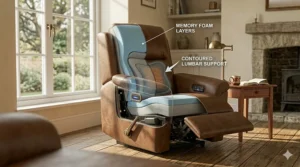
Cushioning quality separates exceptional comfort from mere adequacy. High-density foam maintains its shape over years of use, while cheaper foam compresses into uncomfortable dips within months. Many manufacturers now incorporate gel-infused memory foam or individually pocketed coils similar to premium mattress construction. These materials distribute pressure more evenly, reducing the hot spots and numbness that plague cheaper alternatives.
Upholstery choices extend beyond aesthetics into practical durability considerations. Genuine leather develops beautiful patina but requires regular conditioning and careful cleaning. PU leather (polyurethane) mimics that look while offering easier maintenance and lower cost, though it won’t last as long as real leather. Breathable fabrics like microfiber or chenille resist pet hair and maintain comfort in warm climates, but they show stains more readily than leather options.
Health Benefits Backed by Science
The health advantages of quality extended comfort seating extend far beyond simple relaxation. Research consistently demonstrates measurable physiological improvements from proper reclining positions, particularly for individuals spending significant time seated.
Blood circulation improvement represents perhaps the most significant benefit. When you elevate your legs above heart level in a reclined position, gravity assists venous return—the process of blood flowing back to your heart. This reduces pooling in the lower extremities that causes swelling, particularly problematic for people standing or sitting all day. Studies show that elevated leg positioning can reduce ankle swelling by up to 30% within just 30 minutes.
Spinal decompression occurs naturally when reclining at proper angles. Upright sitting compresses intervertebral discs under your body’s full weight, while reclining distributes that load more evenly. This relieves pressure on nerve roots, explaining why many people with herniated discs or sciatica find recliner use more comfortable than traditional seating. The optimal recline angle for back pain relief typically falls between 120-135 degrees—information worth considering when comparing models.
Respiratory function improves in reclined positions for many individuals. People with sleep apnea, GERD, or congestive heart failure often breathe easier when sleeping in a reclined chair rather than lying flat. The elevated torso position prevents stomach acid reflux while maintaining open airways. This explains why some doctors recommend quality wide recliner seating for patients with these conditions.
Joint pain relief through zero-gravity positioning mimics the posture astronauts adopt during launch—legs elevated, spine in neutral alignment, weight distributed evenly. This position minimizes gravitational stress on joints while promoting muscle relaxation. Many oversized recliner models now market zero-gravity capabilities, though the term gets thrown around loosely. True zero-gravity requires specific angles between seat, back, and footrest that not all chairs achieve.
Sizing Guidelines: Finding Your Perfect Fit
Selecting proper big and tall recliner dimensions demands more than checking weight capacity. You need to match multiple measurements to your body proportions, or you’ll end up with an expensive chair that never feels quite right.
Seat width represents your primary consideration. Measure yourself sitting down, accounting for seasonal clothing variations. Add 3-4 inches to that measurement for comfortable breathing room without feeling confined. Standard recliners offer 20-22″ seat widths, while genuine oversized recliner models start at 24″ and extend beyond 28″. That extra width transforms the experience from tolerable to luxurious.
Seat depth matters tremendously for leg support and circulation. When seated with your back against the backrest, you want 2-3 inches of clearance between the seat edge and your knee backs. Too much depth forces you to slouch forward; too little cuts off circulation behind your knees. Most manufacturers provide this specification, though they sometimes bury it in detailed specs rather than prominently displaying it.
Backrest height determines proper neck and head support. Taller users need higher backrests to prevent their heads from extending beyond the cushioning. Measure from your seat surface to the top of your head while sitting normally, then compare to chair specifications. Many manufacturers now offer adjustable headrests or extend-o-rests specifically addressing this issue.
Reclined length often gets overlooked until you actually try to recline fully. Calculate your height plus 6-8 inches to account for the chair’s recline arc. If that exceeds your available floor space from wall to chair, you’ll smack into the wall mid-recline—not a pleasant discovery at 11 PM when you’re trying to relax. Wall-hugger designs minimize this requirement, reclining by sliding forward rather than backward, though they typically sacrifice some recline angle.
Weight capacity should exceed your current weight by at least 50 lbs. This safety margin accounts for dynamic forces when sitting down or adjusting positions, plus any weight fluctuations over the chair’s lifetime. Manufacturers establish these ratings through standardized testing, but providing yourself buffer room ensures long-term durability and safety.
Power Lift Features Explained
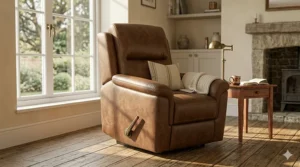
Power lift mechanisms transformed mobility assistance for countless individuals struggling with traditional seating. Understanding how these systems function helps you evaluate whether investing in a power lift oversized recliner makes sense for your situation.
The lift mechanism uses electric actuators—essentially motorized pistons—to elevate the entire chair forward and upward. This tilts you into a standing position without requiring you to push off with your arms or engage your back muscles. For people recovering from surgery, managing arthritis, or dealing with general mobility limitations, this assistance proves invaluable.
Single-motor systems control both the backrest recline and footrest elevation together, moving them proportionally. These offer simplicity and lower cost, though they limit positioning options. When you adjust one element, the other moves correspondingly—you can’t independently control back and leg positions.
Dual-motor configurations provide that independence. Want your legs elevated while keeping your back more upright? Done. Prefer reclining your back while keeping feet lowered? No problem. This flexibility accommodates specific medical needs, reading positions, or TV watching angles that single motors can’t achieve. The trade-off comes in higher cost and slightly more complex operation.
Triple-motor systems add independent headrest adjustment to the dual-motor setup. This luxury feature shines when you’re fully reclined but want to watch television or read without neck strain. The headrest tilts forward independently, providing viewing comfort while maintaining body support. Premium models include this feature, though most users find dual motors sufficient for daily needs.
TUV certification indicates the lift mechanism passed rigorous European safety and quality standards. This third-party testing verifies the actuator can safely support rated weight capacities through thousands of operation cycles. While not legally required in the US, TUV certification provides peace of mind about build quality and longevity.
Massage and Heat Therapy Effectiveness
Modern plus size seating increasingly incorporates therapeutic features that sound impressive in marketing but vary wildly in actual effectiveness. Learning to distinguish genuine therapeutic value from gimmicky add-ons saves money and disappointment.
Vibration massage differs fundamentally from kneading massage. Most chairs use vibration motors—simple devices that shake specific areas at varying intensities. These provide pleasant sensations and some muscle relaxation but lack the deep tissue benefits of professional massage. Eight-point systems distribute these motors across back, lumbar, thighs, and calves, offering broader coverage than four-point systems.
Kneading or rolling massage requires more complex mechanisms with moving components that actually work muscle tissue. These premium systems cost significantly more but deliver superior therapeutic results. If a chair costs under $500 and advertises “massage,” expect vibration rather than true kneading action.
Lumbar heating targets the lower back with gentle warmth that increases blood flow and reduces muscle tension. Most systems use carbon fiber heating elements that warm gradually to safe temperatures around 104-113°F. This proves particularly effective for chronic back pain, though users should limit sessions to 20-30 minutes to prevent skin irritation.
Full-body heating extends warmth to the seat cushion and sometimes upper back areas. This feature appeals to people with circulation issues or those living in colder climates. The dual heating zones operate independently in better models, allowing you to heat your lumbar area without warming the entire chair on a warm evening.
Auto-shutoff timers prevent overheating and reduce fire risk. Quality generous proportions seating includes these safety features, automatically disabling heat and massage after 10, 20, or 30 minutes. This prevents you from falling asleep with features running indefinitely—a legitimate safety concern with budget models lacking this protection.
Material Durability Comparison
Upholstery longevity significantly impacts total ownership cost, yet many buyers focus exclusively on initial price rather than years-of-use value. Understanding material characteristics helps predict maintenance requirements and replacement timelines.
Genuine leather represents the premium choice, developing rich patina as it ages. Top-grain leather resists wear better than bonded leather (which isn’t really leather at all—it’s leather scraps pressed together with adhesive). Quality leather requires regular conditioning every 6-12 months to prevent drying and cracking. Budget $50-100 annually for proper care products. With maintenance, expect 15-20 years of service.
PU leather (polyurethane) offers leather’s look at fraction the cost with minimal maintenance. Simply wipe it clean with damp cloth—no conditioning needed. However, PU leather degrades faster than genuine leather, typically showing cracks and peeling after 5-7 years of heavy use. It works well for buyers planning to update furniture regularly or those prioritizing easy cleaning over ultimate longevity.
Microfiber fabric provides exceptional softness and stain resistance. Modern microfiber treatments repel liquids, allowing quick cleanup of spills before they set. It resists fading from sunlight better than many fabrics and doesn’t pill or fuzz with normal use. Pet owners particularly appreciate microfiber’s resistance to claw damage. Expect 8-12 years of good appearance with basic vacuuming maintenance.
Chenille fabric delivers plush, velvety texture that feels luxurious against skin. Its breathability makes it comfortable in warm weather—unlike leather that can feel sticky in summer. Chenille shows traffic patterns more readily than microfiber and requires professional cleaning for serious stains. With gentle care, quality chenille maintains its appearance for 7-10 years.
Fabric durability ratings use the “double rub” test, measuring how many times fabric can be rubbed before showing wear. Heavy-duty upholstery should exceed 30,000 double rubs. Residential furniture typically uses fabrics rated 15,000-25,000. Commercial-grade materials intended for healthcare facilities often reach 100,000+ double rubs, explaining their higher cost but exceptional longevity.
Smart Features and Modern Conveniences
Technology integration distinguishes contemporary extended comfort seating from traditional recliners. These conveniences enhance usability though they sometimes complicate matters when they malfunction.
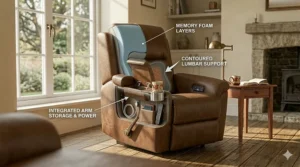
USB charging ports answer modern life’s constant power hunger. Type-A USB ports accommodate most phones and tablets, while newer Type-C ports support fast-charging devices. Port placement matters—armrest-mounted access beats having to reach down to chair bases. Some manufacturers rate their ports at 2.1 amps for rapid charging, while cheaper implementations provide barely enough current to maintain battery level without actually charging depleted devices.
Cup holders prevent that universal frustration of having nowhere to set your beverage except the floor where you’ll inevitably kick it over. Molded cup holders work better than simple indentations, keeping drinks secure during position changes. Dual cup holders accommodate your drink plus a partner’s or provide space for remotes and phones alongside your beverage.
Side pockets offer storage for remotes, magazines, tablets, or reading glasses. Deep pockets prevent items from slipping out when reclining, though they can make retrieval awkward if poorly positioned. Multiple pockets on both sides provide better accessibility than single-sided storage.
Remote control quality varies dramatically between models. Backlit buttons allow nighttime operation without fumbling. Clearly labeled controls with intuitive layouts beat tiny buttons with cryptic symbols. Some premium models use smartphone apps for control, though this introduces complexity many users find unnecessary.
Memory settings store preferred positions on high-end models, allowing quick return to favorite configurations. This matters more on triple-motor chairs with numerous adjustment possibilities than simple single-motor designs. Two-person memory accommodates different users without requiring constant readjustment.
Assembly and Installation Tips
Unboxing your new big and tall recliner brings excitement tinged with anxiety about assembly complexity. Understanding what to expect streamlines the process and prevents common mistakes.
Most chairs arrive partially assembled with backs detached from bases for shipping efficiency. This reduces box dimensions, lowering shipping costs manufacturers pass along as savings. Expect one to three boxes depending on chair complexity and features. Power lift models typically ship in two boxes due to motorized components.
Basic assembly requires connecting the backrest to the base using provided brackets and bolts. Manufacturers include necessary Allen wrenches or tools, though having your own socket set speeds up the process. Clear instruction manuals make this straightforward for most people, requiring 15-30 minutes. Two-person assembly prevents awkward positioning while aligning parts.
Power connections demand attention to safety. Route power cords where they won’t create tripping hazards or interfere with reclining mechanisms. Avoid extension cords when possible—plug directly into wall outlets for optimal power delivery. Some municipalities require electrical work to be performed by licensed electricians; check local codes before installation.
Wall clearance requirements prevent mid-recline collisions. Standard recliners need 12-18 inches behind them when fully reclined. Wall-hugger designs reduce this to 4-6 inches by sliding forward while reclining. Measure your available space before ordering, accounting for the chair’s reclined length plus clearance.
Floor protection matters for homes with hardwood or tile. Felt pads under chair feet prevent scratching when repositioning the chair. Heavier models benefit from furniture coasters that distribute weight across larger areas. Avoid placing recliners on deep-pile carpet—the weight compresses fibers unevenly, creating permanent indentations over time.
Warranty Coverage Essentials
Warranty terms reveal manufacturer confidence in their products while protecting your investment against defects and premature failures. Reading the fine print before purchasing prevents unpleasant surprises when issues arise.
Comprehensive warranties cover multiple components for different durations. Premium manufacturers typically offer lifetime coverage on frames and mechanisms, recognizing these shouldn’t fail under normal use. Cushions and upholstery usually carry shorter warranties—often 1-3 years—acknowledging normal wear affects these components more than structural elements.
Limited warranties restrict coverage to specific failure types or usage scenarios. Most exclude damage from abuse, commercial use, or improper assembly. Some require professional installation to maintain warranty validity—read installation requirements carefully before attempting DIY setup.
Parts-versus-labor coverage significantly impacts total repair costs. Some warranties provide free replacement parts but make you pay technician labor charges. Others cover everything for year one, then parts-only afterward. Factor potential labor costs into total ownership expenses when comparing seemingly similar warranty offerings.
Replacement-versus-repair policies determine whether manufacturers fix problems or simply send new units. Replacement sounds better but often requires you to handle disposal of the defective chair. Some manufacturers provide exchange services, delivering the replacement and removing the old unit simultaneously.
Registration requirements activate many warranties. Manufacturers want your contact information for marketing purposes but also to verify purchase dates and original ownership. Register within the specified timeframe (usually 30-90 days) to avoid coverage disputes later.
Budget-Friendly Alternatives
Quality wide recliner options exist across price spectrums, though understanding what you sacrifice at lower price points helps set realistic expectations.
Entry-level models under $350 typically use manual mechanisms rather than power operation. Frames might incorporate more engineered wood than solid hardwood, and cushioning tends toward standard density foam rather than gel-infused or memory foam upgrades. These chairs function adequately for light-to-moderate use but may show wear faster than premium alternatives.
Mid-range $500-800 chairs balance features and quality effectively. Expect power operation, basic massage and heating functions, and improved cushioning. Frames use better materials with longer expected lifespans. This price tier offers excellent value for most buyers—enough quality to satisfy without paying for premium features you might rarely use.
Premium $1000+ options target buyers prioritizing maximum comfort, advanced features, or specific medical needs. Triple motors, genuine leather, medical-grade lift mechanisms, and American manufacturing justify higher costs. These chairs often include comprehensive warranties and superior customer service.
Sales and seasonal discounts dramatically affect effective pricing. Major holidays (Memorial Day, July 4th, Black Friday, Presidents Day) see substantial promotions. End-of-year clearances make room for new models, offering 20-40% discounts on current inventory. Patience often rewards you with premium features at mid-range prices.
Refurbished or open-box options provide additional savings for risk-tolerant buyers. Manufacturer refurbishment typically includes warranty coverage similar to new units. Amazon Warehouse deals offer returned items at reduced prices, though carefully review return reasons and condition descriptions. These can save 30-50% off new pricing.
✨ Don’t Miss These Exclusive Deals!
🔍 Take your relaxation to the next level with these carefully selected products. Click on any highlighted item to check current pricing and availability. These chairs will help you create authentic comfort your body will thank you for!
Common Mistakes to Avoid
Shopping for generous proportions seating involves numerous decisions, each with potential pitfalls. Learning from others’ mistakes helps you avoid regrettable purchases.
Ignoring actual measurements tops the mistake list. Many buyers eyeball dimensions rather than measuring their bodies and available space. Then they discover their supposedly “oversized” chair feels cramped or doesn’t fit their room. Grab a tape measure before shopping—five minutes of measurement prevents months of discomfort.
Overlooking weight capacity buffers leads to premature mechanical failures. Buyers sometimes order chairs at their exact weight, not accounting for dynamic forces or weight fluctuations. That 300 lb capacity means sustained static weight—sitting down creates momentarily higher forces. Order at least 50 lbs above your current weight for safety and longevity.
Prioritizing features over core comfort seduces many shoppers. They choose models with massage, heating, USB ports, and cup holders while accepting inadequate cushioning or poor back support. Remember: you’ll spend 99% of your time simply sitting. Get the comfort foundation right, then consider bells and whistles.
Neglecting return policies and assembly creates problems when chairs don’t meet expectations. Amazon’s return window for furniture may differ from standard items. Understand whether you pay return shipping (potentially $100-200 for heavy recliners) and who handles disassembly and reboxing. Some manufacturers offer white-glove delivery with setup and old furniture removal—worth considering for complex power lift models.
Skipping customer review analysis wastes valuable real-world intelligence. Read beyond star ratings into actual review content. Look for patterns in complaints—one person mentioning uncomfortable armrests might reflect personal preference, but ten people saying the same thing indicates design issues. Pay particular attention to reviews from buyers with similar body types and use cases as yours.
Environmental and Sustainability Considerations
Furniture production significantly impacts environmental resources through material sourcing, manufacturing processes, and eventual disposal. Environmentally conscious buyers can make choices reducing this impact.
FSC certification (Forest Stewardship Council) indicates wood components came from responsibly managed forests. This third-party verification ensures timber harvest practices maintain biodiversity and benefit local communities. Many MCombo models advertise FSC certification, appealing to buyers prioritizing sustainable forestry.
CertiPUR-US certified foam contains no heavy metals, formaldehyde, or harmful flame retardants. Standard foam manufacturing can use problematic chemicals, while CertiPUR certification indicates safer alternatives. This matters both for environmental impact and for reducing your exposure to potentially harmful compounds during daily use.
OEKO-TEX Standard 100 certified fabrics passed extensive testing for harmful substances. This covers not just finished textiles but every component in the supply chain. Buyers with chemical sensitivities or those prioritizing clean manufacturing appreciate this certification.
Longevity represents the most significant sustainability factor. A premium chair lasting 15 years beats replacing a cheap model every 3-4 years, regardless of certifications. Consider total lifecycle impact when comparing options—sometimes paying more upfront for quality construction delivers better environmental outcomes through reduced replacement frequency.
Disposal and recycling options remain limited for upholstered furniture. Few municipal recycling programs accept old recliners due to mixed materials making separation difficult. Some manufacturers now participate in takeback programs, refurbishing and reselling returned units rather than landfilling them. Ask about these options when purchasing if end-of-life disposal concerns you.
FAQ
❓ How much space does an oversized recliner need to fully recline?
❓ Can an oversized recliner help with back pain and poor circulation?
❓ What's the difference between single motor and dual motor power lift recliners?
❓ How long do oversized recliners typically last with regular use?
❓ Are oversized recliners suitable for people under 5'8' tall?
Conclusion: Making Your Final Decision
Choosing the right extra large recliner ultimately depends on matching specific features to your individual needs rather than simply selecting the highest-rated model. A $1,400 Catnapper might represent the perfect investment for someone recovering from surgery who needs medical-grade lift assistance, while that same person’s friend finds complete satisfaction in a $400 mid-range option for weekend relaxation.
Consider your primary use case honestly. If you’re buying this chair for nightly 3-hour television sessions, prioritize cushioning quality and lumbar support over fancy massage features you might use occasionally. Conversely, if managing chronic pain motivates your purchase, invest in therapeutic features like quality heating elements and legitimate kneading massage rather than settling for basic vibration motors.
The generous proportions category no longer forces trade-offs between comfort and features. Modern manufacturing has democratized previously premium capabilities, bringing power lift mechanisms, massage functions, and smart conveniences to reasonable price points. However, this abundance of choice demands careful evaluation—more features don’t automatically equal better value.
Take time to visit showrooms when possible. Online reviews provide valuable data, but nothing replaces actually sitting in a chair for 15-20 minutes. Notice whether the seat width truly accommodates you comfortably, whether armrests hit at proper height for your frame, and whether the recline angle feels natural rather than forcing awkward positions. Your body knows what works—trust those signals.
Remember that an oversized recliner represents furniture you’ll use daily for years. Amortized over 10-15 years of service, even premium models cost just pennies per day of use. This perspective helps justify investing in quality construction and features genuinely improving your daily comfort rather than fixating on initial sticker shock.
Your perfect chair awaits somewhere in this diverse market. Whether you prioritize the swivel versatility of the MAHOMICO, the luxurious width of the MCombo R7510, or the American-made quality of the Catnapper Dixon, each option serves specific buyer needs effectively. Match those needs to your situation, trust your research, and prepare to discover why so many people consider their plus size seating purchase among their best home investment decisions.
Recommended for You
- 7 Best Wall Hugger Recliners That Save Space in 2026
- 7 Best Lift Chair Recliners for Elderly Independence 2026
- 7 Best Swivel Rocker Recliners That Transform Your Nursery 2026
Disclaimer: This article contains affiliate links. If you purchase products through these links, we may earn a small commission at no additional cost to you.
✨ Found this helpful? Share it with your friends! 💬🤗
