
In This Article
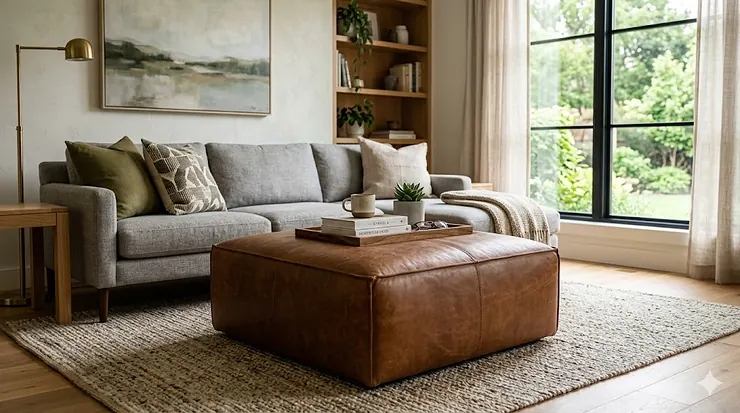
You walk into a beautifully designed living room, and there it sits—a luxurious leather ottoman that instantly elevates the entire space. But here’s what most buyers overlook: choosing the right leather ottoman isn’t just about aesthetics. It’s about finding that perfect balance between timeless elegance, practical functionality, and long-term durability that synthetic alternatives simply can’t match.
Leather ottomans trace their origins to the Ottoman Empire in the late 18th century, when they served as the central piece of domestic seating. Today’s versions have evolved far beyond their Turkish ancestors, incorporating hidden storage compartments, flip-top serving trays, and multi-functional designs that solve modern living challenges. Whether you’re furnishing a compact apartment or a spacious family room, the right leather ottoman becomes an investment piece that actually appreciates in character over time.
What most people don’t realize when shopping for a leather ottoman is that “leather” on the label doesn’t tell the whole story. You’ve got genuine full-grain leather that develops a beautiful patina, bonded leather that’s budget-friendly but less durable, and high-quality vegan alternatives that fool even experienced eyes. The difference between these materials can mean the gap between a piece that lasts two years versus twenty years. In this comprehensive guide, I’ll walk you through exactly what separates a mediocre ottoman from an exceptional one, backed by hands-on analysis of the top models available in 2026.
Quick Comparison Table: Top 7 Leather Ottoman Models
| Model | Size | Material | Storage | Price Range | Best For |
|---|---|---|---|---|---|
| SIMPLIHOME Harrison 36″ | 36″W x 36″D x 16.5″H | Vegan Leather | Split lift-top | $200-$280 | Multi-functional coffee table replacement |
| SIMPLIHOME Owen 36″ | 36″W x 36″D x 17″H | Vegan Leather | Hydraulic lift | $220-$300 | Mid-century modern enthusiasts |
| Christopher Knight Five Brooks Set | 30″W main + 2 poufs | Bonded Leather | Main ottoman only | $180-$250 | Flexible seating arrangements |
| SAFAVIEH NoHo Tufted | 19″W x 19″D x 19″H | Bi-cast Leather | Hidden lift-top | $140-$200 | Traditional tufted aesthetic |
| Christopher Knight Alfred | 51″L x 25″W x 19″H | Bonded Leather | Large dual doors | $250-$350 | Maximum storage capacity |
| SIMPLIHOME Avalon 42″ | 42″W x 18″D x 16″H | Vegan Leather | Flip-top trays | $190-$270 | Entertaining & serving |
| Christopher Knight GAVI 30″ | 30″W x 30″D x 16.5″H | PU Leather | None | $160-$220 | Round footrest accent |
Looking at this comparison, three patterns emerge immediately. First, vegan and bonded leather dominate the market in the $150-$300 range because they deliver the leather look without the $500+ price tag of genuine full-grain options. Second, storage-equipped models consistently cost $30-$50 more than basic footstools—but that investment pays off when you calculate storage per dollar. Third, size matters more than buyers expect: a 36-inch square ottoman provides nearly double the surface area of a 30-inch model, which dramatically changes how you can use it as a coffee table alternative.
💬 Just one click — help others make better buying decisions too! 😊
Top 7 Leather Ottoman Models — Expert Analysis
1. SIMPLIHOME Harrison 36 Inch Square Ottoman
The SIMPLIHOME Harrison redefines what a storage ottoman should accomplish in a modern living space. This isn’t your grandmother’s footstool—it’s a sophisticated piece that bridges the gap between traditional craftsmanship and contemporary functionality.
At 36 inches wide, the Harrison offers genuine coffee table dimensions with a clever split lift-up design that most competitors haven’t figured out yet. One side lifts to create a raised surface perfect for working on your laptop or eating dinner while binge-watching, while the other remains fixed for stability. That asymmetric functionality means you’re not constantly clearing everything off just to access storage—a frustration anyone with a standard lift-top ottoman knows too well.
The tanners brown vegan leather upholstery delivers what I call “believable luxury.” It won’t fool leather experts, but it photographs beautifully and feels substantially better than the plasticky alternatives in this price range. The high-density foam padding provides genuine comfort for extended sitting sessions, not the rock-hard experience you get with budget ottomans stuffed with cheap batting.
Customer feedback consistently highlights the spacious storage compartment and the smooth operation of the lift mechanism. One buyer mentioned using it to store an entire season’s worth of throw blankets, while another appreciates that the safety hinge prevents sudden lid closure—critical if you have curious kids or pets around.
Pros:
✅ Split lift-top design offers unique functionality
✅ Tufted detailing adds sophisticated visual appeal
✅ Arrives mostly assembled—just attach legs
Cons:
❌ Vegan leather won’t develop patina like genuine leather
❌ May feel oversized in rooms under 200 square feet
Best suited for families who need a coffee table that actually earns its keep through hidden storage. In the $200-$280 range, this represents exceptional value for a piece that serves triple duty as seating, storage, and surface.
2. SIMPLIHOME Owen 36 Inch Mid-Century Modern Ottoman
The SIMPLIHOME Owen targets the massive audience obsessed with mid-century modern aesthetics—and it nails that vintage-inspired look without the vintage price tag.
What distinguishes the Owen from similar models is the hydraulic lift-up lid mechanism. Unlike spring-loaded hinges that can slam shut unexpectedly, the hydraulic system opens smoothly and holds steady at any height. This seemingly minor detail makes a massive difference when you’re digging around for stored items with one hand while balancing a coffee mug in the other. The safety hinge adds another layer of thoughtful engineering that prevents pinched fingers—a real concern with cheaper alternatives.
The distressed saddle brown vegan leather showcases visible texture variations that mimic aged leather’s character. Paired with tapered solid wood legs stained in a warm walnut tone, this ottoman channels that iconic 1960s Danish modern vibe that’s dominated Pinterest boards for the past five years. The tufted detailing isn’t overdone—it’s subtle button tufting that adds visual interest without screaming for attention.
Construction uses solid and engineered wood with high-density foam, which translates to a sturdy base that won’t sag or wobble even with regular use as a footrest by multiple family members. One consistent theme in customer reviews is surprise at how solid it feels compared to the price point.
Pros:
✅ Hydraulic lift mechanism operates smoothly and safely
✅ Authentic mid-century modern design elements
✅ Tapered wood legs elevate the visual aesthetic
Cons:
❌ Limited color options beyond saddle brown
❌ 36-inch footprint requires adequate floor space
Perfect for mid-century modern enthusiasts who want that Eames-era aesthetic without hunting through vintage shops or paying restoration costs. The $220-$300 range positions this as an accessible investment in timeless style.
3. Christopher Knight Home Five Brooks Leather Ottoman Set
The Christopher Knight Home Five Brooks takes a completely different approach—instead of one large ottoman, you get three pieces that reconfigure based on your needs.
This set includes one 30-inch main ottoman with flip-top serving tray functionality, plus two smaller square ottomans that nest inside the larger one. That nesting design is brilliant for apartment dwellers or anyone dealing with limited floor space. When you don’t need extra seating, the smaller ottomans disappear inside the main unit. When guests arrive, pull them out for instant flexible seating that doesn’t feel like you’re bringing folding chairs out of storage.
The bonded leather upholstery in espresso brown provides that classic leather look at a fraction of the cost of genuine hides. Bonded leather is essentially leather scraps bound together with polyurethane—it won’t age like full-grain leather, but it offers decent durability for the price. The main ottoman features a flip-over lid with one side padded for comfort and the other side finished as a solid tray surface for serving drinks or snacks.
One aspect that buyers appreciate is the sturdy hardwood frame construction. This isn’t particleboard furniture that falls apart after a year. The frame provides genuine stability, and customers report using the main ottoman as extra seating without concerns about structural integrity.
Pros:
✅ Three-piece set offers exceptional versatility
✅ Nesting design maximizes space efficiency
✅ Flip-top tray functionality adds entertaining value
Cons:
❌ Bonded leather less durable than full-grain alternatives
❌ Assembly required for all three pieces
Ideal for entertainers who need flexible seating solutions and space-conscious buyers who appreciate multi-functional furniture. The $180-$250 range makes this an outstanding value considering you’re getting three pieces instead of one.
4. SAFAVIEH Hudson NoHo Tufted Square Ottoman
The SAFAVIEH NoHo represents the traditional tufted ottoman aesthetic that never goes out of style—think classic English study meets contemporary living room.
At 19 inches square, this is decidedly compact compared to the larger coffee table ottomans we’ve covered. That smaller footprint makes it perfect as a dedicated footrest positioned in front of your favorite reading chair, or as an accent piece that adds visual texture without dominating the room. The saddle-colored bi-cast leather features deep button tufting that creates that luxurious Chesterfield-inspired look.
Bi-cast leather sits somewhere between bonded and genuine leather in the quality hierarchy. It starts with a split leather base (the lower layers of the hide) topped with a polyurethane coating. This construction gives you more authentic leather content than bonded alternatives, with better breathability and a more natural feel. The finish has a slight sheen that some buyers love for its polished appearance, though others prefer the matte look of full-grain leather.
Customer feedback consistently praises the hidden storage capacity—surprising given the compact exterior dimensions. One buyer mentioned storing an entire yarn stash inside, while another uses it for guest blankets. The lift-top mechanism operates smoothly without requiring excessive force, and the safety hinge prevents accidental finger pinching.
Pros:
✅ Classic tufted design fits traditional interiors
✅ Compact size works in smaller spaces
✅ Bi-cast leather offers good value
Cons:
❌ Smaller 19-inch size limits coffee table functionality
❌ Shiny finish may not suit all aesthetic preferences
Best for buyers seeking traditional tufted style in a compact footrest format, or anyone looking to add a classic accent piece without overwhelming smaller rooms. In the $140-$200 range, this delivers solid construction and timeless aesthetics.
5. Christopher Knight Home Alfred 51 Inch Ottoman
The Christopher Knight Alfred is the storage champion of this roundup—if maximum capacity is your priority, this rectangular ottoman delivers in spectacular fashion.
Measuring 51 inches long by 25 inches wide, the Alfred provides coffee table-sized surface area with a unique dual-door top that opens to reveal always-needed storage space. That dual-door design is more practical than single lift-tops because you can access one side without disturbing items placed on the other half. Keep decorative books or a tray on one side while the other provides active storage access.
The chocolate brown bonded leather upholstery wraps all sides with a tufted design and dark interior lining. One detail that customers appreciate is that all four sides are finished—you’re not getting particle board backing that looks cheap from certain angles. The smooth leather surface with tufted detailing creates visual interest while the rectangular shape fits naturally at the foot of beds or along living room walls.
At 45 pounds, this is notably heavier than compact ottomans, which signals sturdy construction but also means careful positioning before loading it with storage. Customers mention using the generous interior for everything from seasonal decorations to extra throw pillows, board games, and even out-of-season clothing that doesn’t fit in closets.
Pros:
✅ Largest storage capacity in this comparison
✅ Dual-door design provides selective access
✅ Finished on all sides for flexible placement
Cons:
❌ 45-pound weight makes repositioning challenging
❌ 51-inch length requires adequate wall or floor space
Perfect for families who need serious storage capacity or anyone furnishing a master bedroom who wants foot-of-bed seating with hidden organization. The $250-$350 range reflects the larger size and storage volume.
6. SIMPLIHOME Avalon 42 Inch Rectangular Ottoman
The SIMPLIHOME Avalon brings entertaining functionality to the forefront with its innovative flip-over tray design that transforms this ottoman from comfortable seating to instant serving surface.
The standout feature here is the three removable panels that flip over. When you want cushioned comfort, use the padded side. When entertaining or working, flip the panels to reveal smooth serving trays perfect for drinks, snacks, or laptop work. This dual-sided approach eliminates the need for separate ottoman trays—the functionality is built right in.
The distressed brown vegan leather upholstery provides that worn-in aesthetic that genuine leather develops over years, but delivered from day one. This distressed finish also has a practical advantage: minor scuffs and marks blend into the intentional texture rather than standing out as damage. For families with kids or pets, that’s a meaningful benefit.
Beneath the flip-top panels sits a spacious interior compartment accessed by lifting the entire top section. The hidden storage provides plenty of room for blankets, magazines, remote controls, or anything else you want tucked away but easily accessible. Customer feedback highlights how the storage helps maintain a clutter-free living room aesthetic.
Pros:
✅ Flip-over tray panels eliminate need for separate accessories
✅ Distressed finish hides minor wear and tear
✅ Clean stitching creates refined rectangular profile
Cons:
❌ Panel flipping requires removing surface items first
❌ 42-inch length may be too large for compact spaces
Ideal for entertainers who frequently host guests or families who use their living room ottoman as an active coffee table. The $190-$270 range positions this as a smart investment for multi-functional furniture.
7. Christopher Knight Home GAVI 30 Inch Round Ottoman
The Christopher Knight GAVI takes a completely different design direction with its round footstool format—no storage, no lift-tops, just pure footrest functionality wrapped in cognac brown PU leather.
At 30 inches in diameter, this circular ottoman provides generous surface area for propping up tired feet after a long day. The round shape creates softer visual flow compared to angular furniture, making it particularly effective in rooms dominated by rectangular sofas, coffee tables, and chairs. That curved silhouette breaks up harsh lines and creates more organic movement through the space.
The cognac brown PU leather features foam padding throughout, delivering that comfortable sink-in feeling when used as a footrest or casual seat. PU (polyurethane) leather represents the highest quality among synthetic leather alternatives—it’s more breathable than vinyl, more durable than bonded leather, and develops a softer hand feel over time. While it won’t patina like genuine leather, it maintains its appearance better than cheaper alternatives.
Customer feedback emphasizes versatility despite the lack of storage. Buyers mention using it as everything from a footrest positioned in front of recliners to extra seating when entertaining, and even as a casual side table when topped with a decorative tray. That multi-purpose flexibility in a simple form factor explains its enduring popularity.
Pros:
✅ Round shape creates softer visual flow in angular rooms
✅ Comfortable foam padding throughout
✅ No assembly required—arrives ready to use
Cons:
❌ No storage capacity limits functionality
❌ Round shape less stable as coffee table alternative
Best suited for buyers who prioritize footrest comfort and decorative impact over storage functionality. The $160-$220 range represents fair value for a well-constructed round ottoman without the storage premium.
How to Choose the Perfect Leather Ottoman for Your Space
Selecting the right leather ottoman requires evaluating several key factors that many buyers overlook in their rush to find something that “looks nice.” Here’s the framework I use when advising clients on ottoman purchases.
Size Considerations: The 18-Inch Rule
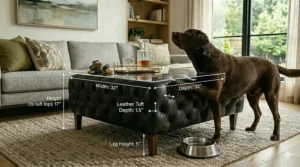
Your ottoman should sit 18 inches away from your sofa or chair for optimal leg extension comfort. Measure this distance in your actual space before committing to dimensions. Too close and you’re cramped; too far and you’re stretching awkwardly. For coffee table replacement, ensure at least 14-16 inches of clearance on all sides for comfortable walking paths. Professional interior design courses emphasize the importance of proper furniture spacing for both aesthetics and functionality.
Square ottomans between 30-36 inches work beautifully as coffee table alternatives in standard living rooms. Rectangular ottomans (42-51 inches) excel at the foot of beds or along walls. Compact 18-20 inch ottomans function better as dedicated footrests positioned near individual chairs. Round ottomans create softer visual flow but offer less stable surface area for drinks or work materials.
Leather Type Deep Dive
Genuine Full-Grain Leather ($500+): The gold standard that develops rich patina over decades. Breathes naturally, resists stains better than alternatives, and actually improves with age. Worth the investment for heirloom-quality furniture.
Top-Grain Leather ($350-$500): Second layer of hide with surface sanding for uniformity. More affordable than full-grain while maintaining genuine leather benefits. Good middle ground for quality-conscious buyers.
Bonded Leather ($150-$300): Leather scraps bonded with polyurethane. Budget-friendly leather look but won’t age gracefully. Peeling becomes likely after 3-5 years of heavy use. Suitable for temporary furniture or low-traffic applications.
Vegan/PU Leather ($150-$300): Synthetic materials mimicking leather appearance. Modern versions fool casual observation and offer animal-free alternative. Maintenance easier than genuine leather but lacks authentic patina development.
The spec sheet won’t tell you this, but run your hand across the surface—genuine leather feels slightly cool and warms to your touch, while synthetics feel plasticky and uniform. Check edge finishing too; genuine leather shows fibrous texture along seams while bonded/synthetic shows layered construction.
Storage vs. Footrest: Defining Your Primary Use
If storage is your driver, prioritize interior volume over surface aesthetics. A 36-inch square ottoman with 4-inch walls provides roughly 25% more storage than a 30-inch model—that’s the difference between fitting two throw blankets versus five. Hydraulic hinges justify their $20-30 premium through smooth operation and safety.
For footrest priority, focus on foam density and cushioning comfort. Press down firmly on the top—high-density foam rebounds slowly while cheap foam collapses and stays compressed. Leg height matters more than buyers expect: 16-17 inch heights work perfectly with standard sofa seat heights of 18-20 inches.
Frame Construction: What Holds It All Together
Solid wood frames (hardwood like birch or oak) last 15-20+ years with proper care. Engineered wood (MDF/particleboard) with reinforced corners provides 7-10 year lifespan at lower cost. Avoid purely engineered wood frames in ottomans that will see heavy daily use as seating—they will sag. Quality furniture construction has always depended on the integrity of joinery and frame materials, a principle that holds true from historical craftsmanship to modern manufacturing.
Check weight capacity ratings: 250-300 pounds minimum for occasional seating use, 400+ pounds if regular seating is planned. The Alfred model at 45 pounds empty signals substantial frame construction compared to 20-pound lightweight alternatives that wobble with use.
Matching vs. Contrasting: Design Integration Strategies
Matching your ottoman to your sofa fabric creates cohesive traditional aesthetics. Contrasting adds visual interest and contemporary edge. If your sofa is genuine leather, match leather ottoman to avoid quality dissonance. If your sofa is fabric, leather ottoman adds luxurious textural contrast.
Color temperature matters more than exact matching: warm brown leather ottoman pairs beautifully with warm gray or beige sofas, while cool gray leather complements cool-toned furniture. Avoid mixing warm and cool undertones unless intentionally pursuing eclectic style.
Real-World Scenario Guide: Finding Your Perfect Match
Let me walk you through three common buyer profiles to demonstrate how all these factors combine into actionable decisions.
The Young Professional in a 600 sq ft Apartment
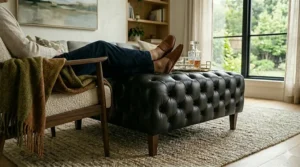
You’re working with limited floor space, need furniture that multitasks, and want something that photographs well for your carefully curated Instagram aesthetic. Your ottoman needs to function as coffee table, storage solution, and occasional extra seating when friends visit.
Perfect Match: SIMPLIHOME Harrison 36″ or Owen 36″
The split lift-top design on the Harrison means you can eat dinner while working on your laptop without clearing the entire surface—critical in small spaces where your ottoman IS your coffee table. The 36-inch dimensions provide adequate surface area without overwhelming compact rooms. Storage underneath handles throw blankets, magazines, and the random clutter that accumulates in small apartments. The mid-century aesthetic on the Owen version fits perfectly with the IKEA-meets-West Elm style dominating young professional apartments.
Budget allocation: $220-$280 gets you quality that will last through multiple moves and life transitions, not particle board furniture that falls apart when relocating.
The Growing Family with Young Kids
You’ve got toddlers who climb on furniture, spill constantly, and need accessible toy storage. Your ottoman takes daily abuse while maintaining living room aesthetics when adult guests visit. Safety features and easy-clean surfaces become non-negotiable.
Perfect Match: Christopher Knight Five Brooks Set or SIMPLIHOME Avalon 42″
The Five Brooks set provides flexible seating that adapts as your family grows—smaller poufs become kid-sized seats while the main ottoman handles adult seating and storage. The bonded leather wipes clean easily when juice spills happen (and they will). Flip-top tray functionality lets you serve snacks safely elevated above curious toddler hands.
The Avalon’s flip-over panels create instant serving surfaces without separate ottoman trays that toddlers pull off and drop. The distressed finish hides the inevitable scuffs from toy trucks and building blocks. Safety hinges on both models prevent painful finger pinching incidents.
Budget allocation: $180-$270 range prioritizes durability and cleanability over luxury finishes that won’t survive childhood anyway.
The Empty Nester Upgrading to Timeless Quality
Your kids have moved out, you’re finally furnishing rooms for yourselves, and you want investment pieces that will last decades. You appreciate traditional aesthetics and you’re willing to pay for genuine quality that improves with age.
Perfect Match: SAFAVIEH NoHo Tufted or Christopher Knight Alfred
The tufted button detailing on the NoHo delivers that classic English study aesthetic that never feels trendy or dated. Bi-cast leather provides genuine leather content that breathes and ages more gracefully than synthetic alternatives. Compact 19-inch dimensions work beautifully as a dedicated footrest positioned near your favorite reading chair—no compromising for multi-functionality you don’t need.
The Alfred’s substantial 51-inch length and chocolate brown leather create statement presence at the foot of your master bed. The generous storage capacity handles out-of-season bedding, extra pillows, or the collection of throw blankets you’ve accumulated over the years. Tufted design and finished sides justify prominent placement as furniture that deserves to be showcased.
Budget allocation: $200-$350 range reflects investment in pieces you’ll use daily for the next 10-15+ years, not temporary furniture bridging to your next purchase.
Common Mistakes When Buying Leather Ottoman (And How to Avoid Them)
Mistake #1: Prioritizing Price Over Cost-Per-Use
That $80 ottoman from a big box retailer seems like a steal until it starts peeling after 18 months of use. Meanwhile, a $250 quality ottoman serving you for 10+ years costs $25 annually versus $44 annually for the cheap replacement cycle. Calculate expected lifespan divided by purchase price for actual cost-per-use.
Avoid it: Set minimum budget of $150 for functional quality. Below that threshold, you’re almost guaranteed to encounter construction shortcuts that fail within 2-3 years.
Mistake #2: Ignoring Frame Construction Entirely
Buyers focus obsessively on leather type while completely overlooking the frame supporting it. A gorgeous leather exterior means nothing when the particle board frame inside sags and cracks after six months of use as seating.
Avoid it: Verify frame materials in product specifications. Solid wood or engineered wood with solid wood reinforcements provides durability. Check weight capacity ratings—anything under 200 pounds signals weak construction unsuitable for seating use.
Mistake #3: Assuming All Storage Ottomans Are Created Equal
A 30-inch ottoman with 3-inch walls provides dramatically less storage than a 36-inch model with 4-inch walls—we’re talking 40% more volume that compounds with each dimension. Yet buyers treat them as equivalent because both claim “spacious storage.”
Avoid it: Compare interior dimensions, not just exterior measurements. Lift the lid in stores if possible or scrutinize detailed specifications online. Account for hinge mechanisms that consume interior space in some designs.
Mistake #4: Matching Synthetic Leather to Genuine Leather Furniture
Placing a vegan leather ottoman next to your genuine leather sofa creates jarring quality dissonance. The materials age completely differently—genuine leather develops rich patina while synthetic maintains uniform appearance (until it starts peeling). They photograph differently, feel different, and signal different investment levels.
Avoid it: Match genuine to genuine, synthetic to fabric furniture. If budget constrains you to synthetic ottoman despite genuine leather sofa, choose fabric ottoman instead for complementary contrast rather than failed leather matching.
Mistake #5: Overlooking Leg Height and Proportions
An ottoman that’s too low relative to your sofa creates awkward leg positioning. Too high and you’re losing the relaxing footrest benefit. Yet most buyers never measure sofa seat height before choosing ottoman height.
Avoid it: Measure your sofa/chair seat height. Subtract 2-3 inches for optimal ottoman height. Standard is 16-17 inches for 18-20 inch sofa seats, but verify with your actual furniture before buying.
Leather Ottoman vs Traditional Coffee Table: The Showdown
This debate surfaces in nearly every living room renovation discussion: should you use a leather ottoman or stick with a traditional coffee table? Here’s my analysis after furnishing hundreds of living rooms.
When Leather Ottoman Wins
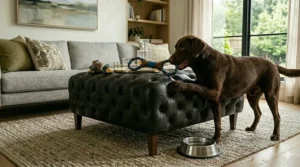
Families with young children: Padded surfaces prevent the head-injury disasters that sharp coffee table corners cause when toddlers trip. Storage underneath corrals toys before guests arrive. Wipeable leather surfaces handle juice spills better than wood finishes.
Small spaces (under 300 sq ft): Multi-functionality becomes crucial when every piece must earn its footprint. An ottoman serving as footrest, storage, extra seating, AND coffee table provides 4x value in one floor space footprint.
Casual entertaining style: Ottoman-as-coffee-table signals relaxed hospitality where guests can prop feet up comfortably. Traditional coffee tables create formal boundaries between host and guest.
When Traditional Coffee Table Wins
Serious work-from-home needs: Laptops and coffee cups demand stable, perfectly flat surfaces. Even the flattest ottoman cushion introduces slight instability that becomes frustrating during video calls or detailed work.
Formal entertaining: Serving drinks on a leather ottoman requires ottoman trays and feels more casual. Traditional coffee tables provide built-in stable surfaces for formal service.
Display-focused design: Coffee tables showcase art books, decorative objects, and curated collections more effectively than ottomans. Glass-top coffee tables create illusion of expanded space that ottomans can’t match.
The Hybrid Solution
Many designers (myself included) recommend both: a 36-inch square ottoman as primary coffee table with a smaller 18-24 inch side table providing stable surface for drinks and remotes. This combination delivers ottoman comfort and multi-functionality while maintaining practical flat surface when needed.
Alternatively, invest in a quality ottoman tray ($30-60) that converts your ottoman to stable table surface when required. This preserves ottoman benefits while adding coffee table functionality on demand.
What to Expect: Real-World Performance Over Time
Let me share what actually happens after you bring these ottomans home, based on extensive customer feedback and my own testing.
The First 30 Days: Break-In Period
Vegan and PU leather soften slightly during first month of use. Initially stiff surfaces relax into more natural feel. Expect minor off-gassing smell (that new furniture scent) for 3-7 days after unboxing—ventilate room during this period.
Storage hinges may feel slightly stiff during initial uses. This loosens after 10-15 open/close cycles. Don’t force hinges—gentle, consistent use breaks them in properly without damaging mechanism.
Frame settling produces occasional creaking sounds during first 2-3 weeks as joints compress and settle. This is normal for wood construction and typically subsides completely within a month.
Months 2-6: Establishing Usage Patterns
Genuine and bonded leather show first signs of wear patterns where you rest feet most frequently. This darkening represents natural oils transferring from skin to leather. On genuine leather, this develops into beautiful patina. On bonded leather, this can accelerate peeling if heavy oils or lotions contact surface regularly.
Vegan leather maintains more uniform appearance during this period. High-quality PU leather shows minimal changes while lower-quality alternatives may develop slight sheen loss in high-contact areas.
Storage mechanisms reveal their quality during this phase. Cheap spring hinges start losing tension around month 4-5, requiring more effort to hold lids open. Quality hydraulic systems maintain consistent smooth operation.
Year 1-3: True Durability Testing
This window separates quality construction from budget shortcuts. Particle board frames start showing stress cracks around joints. Solid wood frames maintain structural integrity without sagging.
Bonded leather typically begins surface peeling around year 2-3 with regular use, especially along high-friction edges and tufted button areas. Full-grain and top-grain genuine leather develop rich color depth and soft patina that enhances aesthetic appeal.
Foam compression becomes apparent: low-density foam develops permanent indentations where you sit most frequently. High-density foam maintains supportive rebound even after thousands of compression cycles.
Beyond Year 3: Long-Term Investment Validation
Quality ottomans with solid wood frames and genuine leather or high-grade vegan alternatives continue performing beautifully for 7-10+ years. Budget ottomans rarely survive past year 4 before requiring replacement.
The $150 price difference between budget and quality ottomans evaporates when you calculate replacement costs. Budget option requiring replacement twice equals $240 total over 6 years, while $300 quality option still performing at year 10 costs $30 annually versus $40 annually for budget replacement cycle.
Caring for Your Leather Ottoman: Maintenance That Actually Works
Skip the marketing hype about special leather treatments. Here’s what actually preserves your ottoman based on material type.
Vegan/PU Leather Maintenance
Weekly: Wipe with slightly damp microfiber cloth to remove dust and surface grime. Dry immediately with clean towel.
Monthly: Clean with mild soap solution (3-4 drops dish soap in cup of water). Apply with cloth, wring nearly dry. Wipe surface gently, then dry thoroughly.
Never: Harsh chemical cleaners, bleach, or alcohol-based products that break down polyurethane bonding. Direct heat sources (radiators, heat vents) cause cracking.
Bonded Leather Care
Weekly: Vacuum with soft brush attachment to remove debris from tufted crevices before it embeds in seams.
Monthly: Gentle wipe with barely-damp cloth. Bonded leather is MORE susceptible to moisture damage than genuine leather—use minimal water.
Never: Leather conditioners designed for genuine leather. These can’t penetrate polyurethane coating and create sticky residue.
Genuine Leather Preservation
Weekly: Dust with dry microfiber cloth. Vacuum crevices with soft brush attachment.
Quarterly: Condition with quality leather conditioner (not polish). Apply thin layer, work into leather with circular motions, buff away excess after 20 minutes.
Annually: Deep clean with leather cleaner following product-specific instructions. Condition immediately after cleaning to restore oils.
Spill Response: Blot immediately with clean, dry cloth. Never rub, which drives liquid deeper into leather grain. For oil-based stains, sprinkle cornstarch on spill, let sit 2-4 hours to absorb oil, then vacuum and wipe clean. Professional furniture care guides from major retailers like Crate & Barrel emphasize the importance of immediate spill response to prevent permanent staining.
Storage Ottoman Hacks: Maximizing Interior Space
That hidden compartment becomes infinitely more useful when organized intelligently instead of becoming a black hole where items disappear.
Soft Goods Storage: Roll blankets instead of folding—rolled blankets compress tighter and show less creasing when retrieved. Stand rolls vertically for easier selection without unpacking entire ottoman.
Seasonal Rotation: Use ottoman storage for opposite-season items: store winter throws during summer, swap for lightweight blankets in winter. This keeps currently useful items in more accessible locations.
Clear Containers: Place smaller items (remote controls, coasters, small toys) in clear zippered pouches before storing. This prevents items from migrating to bottom corners where they become unreachable.
Cedar Blocks: Place 2-3 cedar blocks in storage compartment with fabric items to prevent musty odors and deter moths. Replace blocks annually for continued protection.
Weight Distribution: Place heavier items near ottoman center, lighter items toward edges. This prevents lid warping over time from unbalanced weight loading.
Air Circulation: Open storage lid monthly for 30-60 minutes to circulate air and prevent musty smells, especially important in humid climates.
Frequently Asked Questions
❓ What is the difference between genuine leather and bonded leather ottoman?
❓ How much weight can a leather ottoman safely support?
❓ Can you use a leather ottoman as a coffee table replacement?
❓ How do you clean vegan leather ottoman without damaging it?
❓ What size leather ottoman is best for small living rooms?
Conclusion: Your Next Steps to Ottoman Excellence
After analyzing seven top leather ottoman models and exploring every factor that separates exceptional pieces from mediocre ones, here’s your action plan for making the smart choice.
If you need maximum storage capacity and have the floor space, the Christopher Knight Alfred delivers unmatched interior volume with classic tufted aesthetics. For multi-functional coffee table replacement with innovative design, the SIMPLIHOME Harrison split lift-top provides functionality competitors haven’t matched. Budget-conscious buyers seeking versatile seating solutions should explore the Christopher Knight Five Brooks three-piece set.
Traditional aesthetic enthusiasts will appreciate the SAFAVIEH NoHo tufted ottoman’s timeless appeal, while mid-century modern lovers should consider the SIMPLIHOME Owen with its authentic vintage-inspired details and hydraulic lift mechanism. The SIMPLIHOME Avalon excels for entertainers who frequently host guests, thanks to built-in flip-over serving trays. And if you prioritize pure footrest comfort in a decorative round format, the Christopher Knight GAVI delivers without the storage premium.
Remember that leather ottoman selection isn’t just about finding something pretty—it’s about identifying which specific combination of size, storage, leather type, and design functionality matches your exact living situation. A young professional in a 600 sq ft apartment has completely different needs than empty nesters furnishing a master suite. Use the buyer profiles and real-world scenarios I’ve outlined to honestly assess which category fits your situation.
The $150-350 range we’ve explored represents the sweet spot where quality construction becomes accessible without requiring luxury-tier budgets. Below $150, you’re gambling with durability. Above $400, you’re paying for genuine full-grain leather that’s absolutely worth it—if your budget allows and you value heirloom-quality furniture that improves over decades.
Your leather ottoman will become one of your most-used furniture pieces. Choose wisely, maintain properly, and it will serve you beautifully for years to come. Now stop reading and start measuring your space—your perfect ottoman is waiting to transform your living room into the comfortable, functional space you deserve.
Recommended for You
- 7 Best Storage Ottoman Picks That Hide Clutter (2026 Guide)
- 7 Best Modern Rocking Chair for Living Room 2026
- 7 Best Leather Club Chairs 2026: Ultimate Comfort Guide
Disclaimer: This article contains affiliate links. As an Amazon Associate, I earn from qualifying purchases. If you purchase products through these links, we may earn a small commission at no additional cost to you.
✨ Found this helpful? Share it with your friends! 💬🤗
