
In This Article
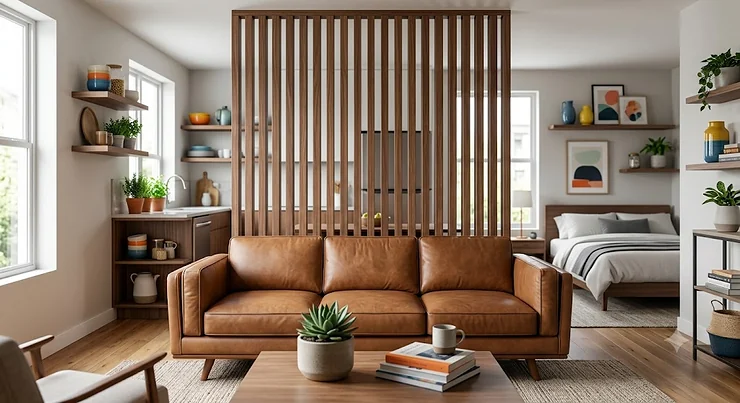
Here’s a little secret nobody tells you when you sign a lease on a studio: the hardest part isn’t the square footage, it’s the psychology of it. Your bed is six feet from your couch. Your dinner table can see your pillows. And somehow you’re supposed to feel like you live in more than one room. A headboard for a room-divider look behind a sofa solves that problem in a way drywall never could — no contractor, no security deposit drama, just one tall, upholstered piece of furniture doing double duty as a backrest for your sofa on one side and a proper headboard for your bed on the other. It’s the furniture equivalent of a really good editor: it doesn’t add anything extraneous, it just makes the existing space make more sense.

This idea has been quietly trending in small-space design circles for a reason. Floating your sofa away from the wall and anchoring a tall headboard behind it creates an instant visual “wall” that costs zero square feet of floor space, because the same object is doing furniture duty on both sides. It’s a natural fit for the modern studio apartment — a single-room home where every surface needs to earn its keep. Renters love it because it’s fully reversible. Designers love it because it reads as intentional rather than improvised. And anyone who has ever hosted a dinner guest while their unmade bed loomed in the background loves it for reasons that need no further explanation.
Below, we’ve researched seven real headboards — spanning budget wall-mount panels to tall upholstered wingback statements — that are built (or easily adapted) to function as a sofa backdrop. We’ll walk through what actually matters when shopping for one, how to lay out a studio apartment around it, and where people tend to go wrong. Expect honest analysis grounded in real specs and aggregated reviewer feedback, not manufactured hype.
Quick Comparison Table
Before the deep dive, here’s the fast version for anyone skimming on their lunch break.
| Product | Height | Style | Price Range | Best For |
|---|---|---|---|---|
| VECELO Adjustable Wingback Headboard | 40″–49.8″ | Linen wingback, headboard-only | Under $150 | Renters on a tight budget |
| Zinus Dachelle Upholstered Platform Bed | ~40″ | Squared tufted | $250–$350 range | First apartment, simple style |
| Jocisland 51.2″ Wingback Platform Bed | 51.2″ | Linen wingback | $300–$400 range | Maximum privacy screening |
| SHA CERLIN Vertical Channel Wingback Bed | 51.2″ | Velvet channel-tufted | $350–$500 range | Design-forward studios |
| Allewie Velvet Wingback Platform Bed | ~48″ | Velvet wingback | $300–$450 range | Color-forward interiors |
| Baxton Studio Avignon Headboard | ~53″ | Glam nailhead, headboard-only | $200–$300 range | Freestanding placement without a bed frame |
| Room Divider with Shelves 4-Panel Screen | 5.75 ft | Folding wood screen | Under $200 | Renters who want a true divider, not a bed |
A pattern jumps out immediately: taller isn’t automatically better, and headboard-only pieces (no attached bed frame) are often the smartest pick for this specific use case, because you’re not obligated to match your existing bed frame to a brand-new one. The Baxton Studio Avignon Headboard and VECELO Adjustable Wingback Headboard both stand independently on their own legs, which matters enormously if your bed frame is already perfectly fine and you just need the visual wall. Meanwhile, the Room Divider with Shelves 4-Panel Screen isn’t a headboard at all — it’s included because, for some studio apartment room divider furniture shoppers, a folding screen behind the sofa achieves the same zoning effect with even more flexibility to reposition.
💬 Just one click — help others make better buying decisions too!😊
Top 7 Headboards for a Room-Divider Look Behind a Sofa: Expert Analysis
1. VECELO Adjustable Wingback Headboard — cheapest true freestanding option
The VECELO Adjustable Wingback Headboard is the budget entry point for this whole category, and it earns that spot honestly. Its linen upholstery and nailhead trim give it a tailored look rather than a cheap one, and the height adjusts from 40 to 49.8 inches, which matters because you can dial it in based on how much of the bed you actually need to hide from the living room side.
Here’s the part most listings gloss over: because this is a headboard-only piece that attaches to its own legs rather than a full bed frame, it doesn’t require you to replace your existing mattress setup at all. You’re buying the wall, not the bed. That’s a meaningfully different purchase decision than a full platform bed, and it’s why this model shows up so often in studio apartment layout discussions on renter forums. Reviewers consistently note that assembly takes under 30 minutes with two people, and the adjustable height legs are the feature people mention wanting more of in competing products.
Who should buy this: renters furnishing their first place who need the room-divider effect now and don’t want to commit hundreds of dollars to find out if the layout even works. It’s not going to fool anyone into thinking it’s a $600 upholstered wall panel, but from six feet away on the sofa side, nobody’s checking the thread count.
Reviewers report the linen fabric shows creasing out of the box that relaxes within a week of use, and a handful mention wishing the legs felt sturdier under heavier lateral pressure — worth knowing if you plan to lean against it from the sofa side regularly.
Pros:
- ✅ Freestanding legs mean no full bed frame purchase required
- ✅ Height adjusts from 40″ to 49.8″ for custom screening
- ✅ Nailhead trim reads more expensive than the price suggests
Cons:
- ❌ Fabric ships with visible creasing that takes time to relax
- ❌ Legs feel less rigid under sustained lateral pressure
Priced under $150, this is the value pick of the group, and honestly a smart way to test whether the whole headboard-as-sofa-backdrop concept even suits your space before spending more.

2. Zinus Dachelle Upholstered Platform Bed — simplest tufted silhouette
The Zinus Dachelle Upholstered Platform Bed is the furniture equivalent of a white t-shirt — unremarkable in the best way, which is exactly what a lot of studio apartments need. Its squared-off headboard with button tufting sits at roughly 40 inches, built on a steel-reinforced frame that Zinus rates for up to 700 pounds on queen and king sizes.
What the spec sheet won’t tell you, but reviewers note repeatedly, is how genuinely fast the assembly is: everything ships in one box with the hardware zipped into a compartment on the back of the headboard itself, and most people report finishing setup solo in under an hour. That matters more than it sounds like for this specific use case, because if your room-divider experiment doesn’t work out, you’re not stuck disassembling a nightmare of a bed frame to try a different configuration.
Based on the spec comparison against taller wingback options on this list, the Dachelle’s more modest height means it reads less as an imposing “wall” and more as a soft visual break — a good match for studios that still want sightlines to stay fairly open rather than fully screened.
Aggregated reviews describe the fabric as holding up well to daily use, though a few buyers note the neutral gray tone runs slightly darker in person than product photography suggests.
Pros:
- ✅ Full bed frame and headboard included in one purchase
- ✅ No box spring needed, supports up to 700 lbs
- ✅ Assembly hardware conveniently packed inside headboard
Cons:
- ❌ Lower profile height than dedicated wingback models
- ❌ Fabric color reads slightly darker than online photos
In the $250–$350 range, it’s an easy recommendation for anyone who also needs a new bed frame anyway and wants the divider effect as a bonus, not the primary purchase driver.
3. Jocisland 51.2″ Wingback Platform Bed — tallest for maximum screening
If your main goal is genuinely hiding the bed from the sofa — not just softening the view but actually blocking it — the Jocisland 51.2″ Wingback Platform Bed is the tallest true wingback on this list, and height is the single biggest lever for how effective a headboard-as-divider setup feels.
The wingback design extends the upholstered panel out to the sides as well as up, which does double duty: it blocks peripheral sightlines from an angled sofa position, not just a straight-on view. Reviewers frequently mention that this “side coverage” is what finally made the living room feel like its own space, rather than the bed simply being visible from a different angle. Solid wood legs support the linen-upholstered frame, and wooden slats mean no box spring is needed.
Here’s what most buyers overlook about tall wingback headboards generally: a 51-inch headboard changes the visual proportions of a room more than people expect, especially in a studio with standard 8-foot ceilings. It’s not a downside exactly, but it is a design decision — this piece reads as a statement, not a whisper.
Real customer sentiment on this model skews positive for build quality and coverage, with the most repeated complaint being that the linen fabric attracts pet hair more visibly than darker velvet alternatives.
Pros:
- ✅ Tallest wingback on this list at 51.2 inches
- ✅ Wingback sides block angled as well as direct sightlines
- ✅ Solid wood legs with no box spring required
Cons:
- ❌ Large visual footprint may overwhelm smaller studios
- ❌ Light linen fabric shows pet hair and dust more readily
In the $300–$400 range, this is the pick for anyone whose primary goal is genuine privacy screening, not just a decorative boundary.
4. SHA CERLIN Vertical Channel Wingback Bed — most design-forward velvet option
The SHA CERLIN Vertical Channel Wingback Bed brings a genuinely elevated look to this category, with a 51.2-inch velvet headboard finished in vertical channel tufting — the kind of detail that shows up in hotel lobby lounges more often than starter bed frames. It’s built on a reinforced steel frame with a rated capacity up to 800–900 pounds depending on the specific listing, and the wingback shape provides the same side-coverage benefit discussed above.
Based on the spec comparison, velvet upholstery specifically matters for a sofa-backdrop application in a way linen doesn’t: velvet has a visual depth and light-catching quality that reads intentional from across a room, which is exactly the effect you want when the “back” of your headboard is functioning as art behind your couch. Reviewers frequently describe the fabric as feeling noticeably plusher than the price point implies, and several mention it photographs beautifully for the inevitable apartment tour on social media.
The spec sheet won’t tell you this, but user reports suggest the channel tufting pattern hides minor wrinkling and settling far better over time than flat upholstered panels — a small but real long-term maintenance advantage.
Pros:
- ✅ Velvet channel tufting adds visual depth from the living-room side
- ✅ Rated weight capacity up to 900 lbs on some configurations
- ✅ Tufting pattern conceals wrinkling better than flat panels over time
Cons:
- ❌ Velvet requires more careful spot-cleaning than linen
- ❌ Premium look comes with a correspondingly higher price tag
Sitting in the $350–$500 range, this is the choice for renters who want the room-divider look to double as a genuine style statement rather than a purely functional fix.
5. Allewie Velvet Wingback Platform Bed — most color options for coordinated interiors
The Allewie Velvet Wingback Platform Bed rounds out the mid-range velvet category, and its biggest strength is sheer color range — Allewie has built a reputation on offering the same wingback silhouette across an unusually wide palette, from deep jewel tones to soft neutrals. That matters a lot more than it sounds like when you’re trying to make a headboard “match” a sofa on the opposite side; color coordination is doing half the work of making the divider look deliberate rather than accidental.
Structurally, it follows the same playbook as its category-mates: steel-reinforced frame, no box spring required, wooden slat support. What most buyers overlook about this model specifically is how the vertical channel tufting is spaced slightly wider than the SHA CERLIN option above, giving it a marginally more casual, less hotel-lobby aesthetic — a genuine style distinction, not just a marketing difference.
Reviewers consistently mention easy two-person assembly and note the velvet feels durable under regular use, with the most common critique being that darker colorways show dust and lint more visibly than one might expect from velvet.
Pros:
- ✅ Widest color selection in the wingback velvet category
- ✅ Wider channel spacing gives a more casual aesthetic
- ✅ Steel frame construction with no box spring needed
Cons:
- ❌ Darker colorways show dust more visibly than expected
- ❌ Assembly instructions could be clearer per some buyer reports
At $300–$450, this is the pragmatic choice for anyone building a color-coordinated open-concept living space where the headboard needs to visually belong with existing decor.

6. Baxton Studio Avignon Headboard — best standalone for an existing bed frame
The Baxton Studio Avignon Headboard is a headboard-only piece — no attached frame, no mattress foundation — built on a solid rubberwood frame with double silver nailhead trim along the edges. At roughly 53 inches, it’s among the tallest options here, and because it stands independently on adjustable legs, it’s arguably the cleanest solution for anyone who already owns a bed frame they like and simply needs the tall upholstered “wall” behind it.
This is the category most studio apartment room divider furniture shoppers actually need and don’t realize exists: you don’t have to buy an entire new bed just to get a divider-height headboard. The Avignon attaches to the legs rather than the frame, so it works with most standard bed setups. Reviewers frequently mention the cut-out corner detailing and nailhead trim look substantially more expensive than the price tag, and the adjustable leg heights let you fine-tune exactly how much of the bed disappears from the sofa’s sightline.
Aggregated feedback is largely positive on the glam aesthetic, with the recurring critique being that some buyers found the assembly instructions sparse for a piece with this many finishing details.
Pros:
- ✅ Attaches to legs, not a full bed frame — works with your existing bed
- ✅ Nailhead trim and cut-out corners read premium
- ✅ Adjustable leg height fine-tunes screening coverage
Cons:
- ❌ Assembly instructions are thinner than the piece’s complexity suggests
- ❌ No storage or charging features, unlike some platform-bed competitors
In the $200–$300 range, this is the smartest pick if a full new bed frame isn’t part of your plan — which, for most people solving this exact problem, it shouldn’t be.
7. Room Divider with Shelves 4-Panel Screen — best true room divider alternative
Not every studio apartment layout wants a headboard at all, and that’s exactly why the Room Divider with Shelves 4-Panel Screen earns its spot on this list. Standing 5.75 feet tall in solid wood with louvered shelf sections built into the panels, it folds flat for storage and can be repositioned in minutes — no bolts, no bed frame commitment, no permanence whatsoever.
Here’s the honest trade-off: this isn’t a headboard, so it won’t function as an actual backrest for your bed. But for renters who want the visual “wall” effect purely on the sofa side — and who’d rather adjust the exact angle and position on moving day rather than have it fixed to a bed frame — a folding screen accomplishes the room-divider goal more flexibly than any headboard on this list. The identical finish on both faces means it looks intentional from either room, and the open shelves double as display space for books or plants, adding function a solid headboard panel simply can’t.
Reviewers describe it as lightweight enough to reposition solo, and several specifically mention using it in exactly this headboard-adjacent role — angled behind a sofa in a studio to create a soft visual boundary. The most common critique is that the lightweight build means it’s less effective as true sound dampening compared to a heavily upholstered headboard.
Pros:
- ✅ No assembly bolts — fully foldable and repositionable
- ✅ Identical finish on both sides looks intentional from any angle
- ✅ Built-in shelves add display and storage function
Cons:
- ❌ Doesn’t function as an actual bed headboard
- ❌ Lighter build offers less sound dampening than upholstered options
Priced under $200, it’s the most flexible pick here — ideal for renters who move often or who simply aren’t ready to commit to a permanent headboard-behind-sofa arrangement.
Practical Usage Guide: Setting Up Your Headboard-Behind-Sofa Layout
Getting the visual effect right is less about the furniture itself and more about the six inches of clearance around it. Start by measuring the depth of your chosen headboard, including any legs or wingback wings that extend backward — most of the pieces above run 4 to 8 inches deep once you account for the frame. Float your sofa roughly that same distance away from the headboard’s back face, leaving enough of a gap that neither piece bumps the other when someone flops onto the cushions.
In the first 30 days, the single most common mistake is skipping a rug under the sofa. Without one, the “zone” reads as furniture floating awkwardly in the middle of an otherwise open studio apartment layout, rather than a deliberately anchored living area. A rug large enough that at least the front two sofa legs sit on it does more zoning work than people expect.
For maintenance, upholstered headboards benefit from a monthly vacuum with a soft brush attachment on both faces — yes, both, since the sofa-facing side collects just as much dust as the bed-facing side. Velvet options specifically should be brushed in the direction of the nap to avoid visible pressure marks. If you’ve gone with a folding screen instead, wipe wood panels with a barely damp cloth rather than saturating them, since standing moisture can warp thinner panel wood over time.
One optimization trick that rarely makes it into product listings: mount a slim floating shelf or console table directly behind the sofa, tucked into the gap between sofa back and headboard. It gives you a spot for a lamp or books without adding floor-space-hungry furniture, and it visually reinforces the boundary the headboard is already creating.
Real-World Scenario: Three Studio Layouts That Actually Work
Picture Maya, a 26-year-old grad student in a 420-square-foot studio in a mid-sized city. Budget-conscious and renting short-term, she went with the VECELO Adjustable Wingback Headboard precisely because it didn’t require replacing her existing bed frame — she simply floated her secondhand sofa a few feet forward, set the headboard’s legs behind it, and adjusted the height down to 42 inches so it still let light from her single window reach the sleeping area. Total cost stayed under $200, and because the headboard isn’t bolted to anything, she can disassemble it in ten minutes when the lease ends.
Then there’s Devon, working from home full-time in a 550-square-foot open-concept living space that doubles as office, bedroom, and living room. He needed maximum screening — video calls happening four feet from an unmade bed is a genuine professional liability — so he chose the Jocisland 51.2″ Wingback Platform Bed for its side-blocking wings. Paired with a jute rug under his desk-adjacent sofa and a floor lamp tucked into the gap behind it, the setup reads as two distinct rooms on video calls, even though it’s technically one 550-square-foot rectangle.
And then Priya, who rents furnished but wanted more personality in her 380-square-foot studio without violating her no-permanent-alterations lease clause. She skipped headboards entirely and went with the Room Divider with Shelves 4-Panel Screen, angling it diagonally behind her loveseat rather than flush against the wall. The diagonal placement, combined with the screen’s built-in shelves holding trailing plants, created a softer, more boho boundary than a straight headboard wall would have — proof that the room-divider look doesn’t require a bed frame at all if your priorities lean decorative over strictly functional.
How to Choose a Headboard for a Room-Divider Look Behind a Sofa
- Measure your actual clearance first, not last. Before falling in love with a specific style, measure the depth from where your sofa currently sits to where your bed begins. This single number eliminates half the options on any list instantly.
- Decide if you need a new bed frame at all. If your current mattress setup works fine, a headboard-only piece like the Baxton Studio Avignon Headboard or VECELO Adjustable Wingback Headboard saves money and moving-day hassle compared to a full platform bed.
- Prioritize height based on your actual privacy goal. A 40-inch headboard softens sightlines; a 51-inch wingback like the Jocisland 51.2″ Wingback Platform Bed or SHA CERLIN Vertical Channel Wingback Bed genuinely blocks them.
- Match fabric to your maintenance tolerance. Velvet options like the Allewie Velvet Wingback Platform Bed look plush but need more careful cleaning than linen or wood alternatives.
- Consider wingback shape if angled seating is involved. Straight-backed headboards only block direct sightlines; wingback designs cover peripheral angles too, which matters if your sofa sits at any angle to the headboard.
- Weigh permanence against flexibility. A folding screen like the Room Divider with Shelves 4-Panel Screen repositions in minutes; a bolted platform bed frame does not.
- Check weight capacity if the headboard doubles as lounging support. If anyone plans to lean back against it from the sofa side occasionally, confirm the frame’s rated capacity rather than assuming all headboards handle lateral pressure equally.
Common Mistakes When Buying a Headboard for This Purpose
The most frequent misstep is buying based on bedroom photography alone, without considering how the piece looks from the living-room side. Most product listings only photograph the front (bed-facing) face, so buyers are sometimes surprised that the back of a budget headboard looks unfinished or plain compared to the front. Reversible or double-sided upholstered options — most wingback designs, thankfully — sidestep this entirely, but it’s worth confirming before purchase rather than after unboxing.
A second common error: underestimating how much of a “wall” a tall headboard actually creates in a room with standard 8-foot ceilings. What looks proportionate in a showroom photo, shot in a room with 10- or 12-foot ceilings, can feel oppressive in a real apartment. If you’re unsure, measure out the headboard’s height with painter’s tape on the actual wall before ordering.
Third, people frequently skip planning for stability. A headboard that’s only secured to a bed frame on one side, floating freely in the middle of a room, needs either a heavier base or a wall anchor point to avoid wobble — especially with kids, pets, or a habit of leaning back against it from the couch side. Finally, buyers sometimes forget that a headboard-behind-sofa layout changes your walking path through the apartment; measure the resulting walkway width before committing, since anything under about 30 inches starts to feel genuinely cramped in daily use.
Headboard Backdrop vs Traditional Room Divider Screens
Choosing between an upholstered headboard and a classic folding screen comes down to what kind of boundary you actually want. A headboard like the SHA CERLIN Vertical Channel Wingback Bed creates a soft, padded wall that also functions structurally — it’s attached to your bed, provides lounging support, and reads as intentional bedroom furniture rather than an obvious “divider” trick. The trade-off is permanence: once it’s bolted to a frame, repositioning means real disassembly.
A folding screen like the Room Divider with Shelves 4-Panel Screen, by contrast, wins on flexibility. It repositions in seconds, doesn’t require any bed-frame compatibility, and can angle diagonally for a softer, less rigid boundary line. What it sacrifices is the dual-purpose function — a screen doesn’t support your back while you sleep, and thinner wood panels dampen sound less effectively than a foam-padded, fully upholstered headboard.
For studios prioritizing genuine privacy and sound reduction, the upholstered headboard route wins clearly; for renters who move frequently or want to experiment with angles before committing, the screen route offers a lower-stakes trial. Several people in our research actually used both in sequence — testing the concept with a cheap folding screen before investing in a permanent wingback headboard once they confirmed the layout worked for their space.
What to Expect: Real-World Performance
On paper, a 51-inch wingback headboard sounds like it should completely block the bed from view. In practice, expect it to fully block direct sightlines while sitting on the sofa, but corner-of-the-eye visibility can persist when standing near the kitchen or entryway, depending on your studio’s exact dimensions. This isn’t a flaw in the furniture — it’s simply geometry, and it’s why wingback designs with side panels consistently outperform flat headboards for genuine screening in real apartments, not just marketing photos.
Sound dampening is real but modest: a fully upholstered, foam-padded headboard measurably softens voice carry-through compared to an open sightline, though it won’t approach the noise reduction of an actual wall. Reviewers across multiple products in this category describe the psychological effect — feeling like you have “two rooms” — as more pronounced than the literal acoustic change, which tracks with what interior designers often say about visual zoning doing more emotional work than physical blocking in small spaces.
Expect a short adjustment period, too. Several reviewers mention that a headboard positioned mid-room felt strange for the first week or two, simply because it disrupts a previously open sightline people had grown used to. That feeling reliably fades once the new layout becomes the default mental map of the space.
Multi-Purpose Furniture for Studio Apartment Layouts
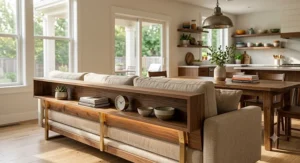
The headboard-behind-sofa trick is really just one example of a broader principle: in a studio, every piece of furniture should ideally serve at least two jobs. A headboard that also acts as a room divider is doing exactly that, but the same logic extends outward. A console table wedged into the gap behind the sofa becomes both a lamp perch and an additional layer of the visual boundary. A storage ottoman at the foot of the bed becomes extra seating when guests come over. Even the choice of a headboard with built-in shelving — several products in this category include a slim ledge — turns a purely decorative piece into functional bedside storage accessible from either room.
The real skill in studio apartment layout planning isn’t finding more furniture, it’s finding furniture that quietly does more than one thing. A headboard that blocks sightlines, supports your back while reading, and provides a display shelf on the living-room-facing side is worth more per square foot than three separate pieces that each do only one job. When shopping this category, it’s worth asking of every candidate: what’s the second function here, beyond the obvious one?
Open-Concept Living: Making Zones Without Walls
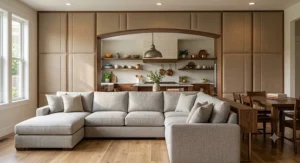
Open-concept living has become the default in new apartment construction over the past two decades, largely because it photographs well and feels spacious on a listing page. The tricky part nobody mentions during the apartment tour is that open-concept spaces require the resident to do the zoning work that walls used to handle automatically. According to the general concept of open floor plans, the appeal has always centered on flexibility and light — but that same flexibility means every function within the space needs a deliberate visual cue to feel distinct. For more real-world layout inspiration, this roundup of small studio apartment room dividers shows how renters have solved the same problem with everything from bookshelves to floating sofas.
A headboard-as-divider is one of the simplest tools for that job because it borrows a trick interior designers have used for decades: change the plane, not the footprint. Where paint color and rugs create zoning through flat, ground-level cues, a tall vertical element like a headboard interrupts sightlines at eye level, which the brain reads as a much stronger boundary signal than color alone. Combining both — a headboard-height boundary plus a distinct rug and lighting choice on each side — tends to outperform either technique used alone, based on the layouts reviewed for this piece.
Long-Term Cost & Maintenance
Total cost of ownership for this category runs lower than most furniture categories precisely because a single piece is replacing what would otherwise be two: a headboard and a room divider bought separately. A mid-range wingback option in the $300–$450 range, expected to last 7-plus years with reasonable care, works out to roughly $45–$65 per year — cheaper than most standalone folding screens people replace every couple of moves due to wear on hinges.
Maintenance costs stay minimal if you stick to routine vacuuming and occasional fabric-safe spot cleaning; velvet options may benefit from a professional upholstery clean every year or two if used heavily as lounging support from the sofa side, adding a modest but real ongoing cost that linen and wood alternatives avoid. Structurally, most platform-bed-frame options in this list carry 5-year warranties, while headboard-only pieces like the Baxton Studio Avignon Headboard typically come with more limited manufacturer coverage, since there’s no full frame assembly to warranty. Factor that into your calculation if longevity matters more to you than upfront price.
Safety and Regulatory Considerations
Upholstered furniture sold in the United States, including headboards, is subject to federal flammability standards under the Flammable Fabrics Act, which is worth knowing if you’re comparing imported budget options against established domestic brands. The Consumer Product Safety Commission’s flammability regulations set baseline requirements for fabric and filling materials used in items like the upholstered headboards featured above, and reputable listings will reference compliance in their product documentation. Beyond flammability, stability matters most for a freestanding headboard-behind-sofa setup: since the piece isn’t wall-anchored the way a traditional headboard against a bedroom wall would be, confirming a wide, weighted leg base — or adding a simple wall strap for households with kids or large pets — is a sensible precaution regardless of which model you choose.
Buyer’s Decision Framework
If your top priority is cost and you’re not sure the layout will even work, choose a headboard-only or folding-screen option under $200, since it minimizes the risk of an expensive experiment. If your top priority is genuine privacy and sound dampening, choose a tall wingback platform bed in the 48- to 51-inch range, because height and side coverage do the heaviest lifting. If you already own a bed frame you like, choose a standalone headboard that attaches to legs rather than a full platform bed, since it avoids an unnecessary and costly duplicate purchase. And if you move apartments frequently, prioritize a folding screen over anything bolted to a bed frame — flexibility will save you more moving-day frustration than any single design feature.
✨ Don’t Miss These Exclusive Deals!
🔍 Take your studio apartment layout to the next level with these carefully selected picks. Click on any highlighted item to check current pricing and availability. These pieces will help you create the open, zoned home your family will love!
Frequently Asked Questions
❓ Can any headboard work as a room divider behind a sofa?
❓ How tall should a headboard be to divide a room?
❓ Do I need to buy a whole new bed frame for this look?
❓ Will a headboard behind a sofa actually reduce noise?
❓ Is a folding screen a better option than a headboard for a studio apartment?
Conclusion
The beauty of using a headboard for a room-divider look behind a sofa is that it asks so little of you. No permits, no drywall dust, no landlord negotiations — just one well-chosen piece of furniture, positioned with a little intention, and suddenly your studio apartment stops feeling like one long run-on sentence and starts reading like two clean paragraphs. Whether you land on the budget-friendly VECELO Adjustable Wingback Headboard, the maximum-coverage
[Add your blog post link 1] Jocisland 51.2″ Wingback Platform Bed, or the endlessly flexible Room Divider with Shelves 4-Panel Screen, the underlying logic stays the same: let one object do two jobs, and the room stops fighting itself.
Start with an honest measurement of your space, decide how much privacy you actually need versus how much you’re just trying to soften, and choose fabric and height accordingly. The right piece won’t just separate your bed from your sofa — it’ll make the whole apartment feel like it was designed on purpose, which, once it’s in place, it finally was.
Recommended for You
- 7 Best Headboards With Built-In Storage Shelves in 2026
- Headboard for Adjustable Bed Frame Attachment: 7 Best Kits 2026
- Queen Headboard Under $150: 7 Best Picks for 2026
Disclaimer: This article contains affiliate links. As an Amazon Associate, I earn from qualifying purchases. If you purchase products through these links, we may earn a small commission at no additional cost to you.
✨ Found this helpful? Share it with your friends! 💬🤗
