

In This Article
Here’s a scene almost every plus-size sleeper knows by heart: you climb into a “supportive” mattress that felt fine in the showroom, and within four months there’s a valley where your hips used to be. You wake up with a stiff lower back, roll toward the middle of the bed no matter how you position yourself, and start Googling at 2 a.m. why your mattress feels like a hammock. If that sounds familiar, you’re not imagining things, and you’re definitely not alone. The mattress industry has quietly admitted that most beds are built around a 250-pound-per-side assumption, which means anyone heavier is essentially sleeping on a product that was never engineered for their body in the first place.

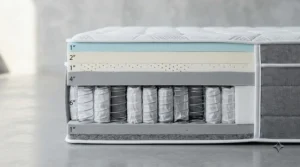
A genuinely good mattress for heavy people over 250 lbs isn’t just a firmer version of a regular bed — it’s a different construction entirely. Think thicker gauge steel coils, high-density foams instead of the cheap stuff that flattens out, and reinforced perimeters so the edges don’t collapse when you sit down to tie your shoes. According to the Sleep Foundation, most mattresses are designed for people up to around 250 pounds, but heavier sleepers sink deeper and need extra support to maintain healthy spinal alignment, which is exactly why a specialty category of “plus-size” or “heavy-duty” mattresses exists. Below, we’ve dug into seven real mattresses — budget through premium — with actual coil counts, foam densities, and honest analysis of who each one actually fits.
Quick Comparison Table
| Mattress | Height | Support Core | Weight Capacity | Firmness | Price Range | Best For |
|---|---|---|---|---|---|---|
| Titan Hybrid | 11″ | 961 encased coils | Up to 1,000 lbs | 6/10 (Medium-Firm) | $700-$950 | Budget-conscious first-timers |
| Helix Plus | 11.5″-13″ | 8″ reinforced coils | Up to 1,000 lbs | 7-7.5/10 (Firm) | $1,100-$1,600 | Best value for the money |
| Titan Plus Luxe | 13″ | 8″ TitanCore coils | Up to 1,000-1,200 lbs | 6/10 (Medium) | $1,600-$2,200 | Side sleepers wanting plush + support |
| Big Fig | 13″ | 1,600 wrapped coils | Up to 1,100 lbs combined | 7/10 (Slightly Firm) | $1,400-$1,900 | Highest weight capacity |
| WinkBed Plus | 14.5″ | 7.5″ zoned coils | Up to 900 lbs combined | 7-8/10 (Firm) | $1,900-$2,500 | Stomach and back sleepers |
| Nolah Evolution Comfort+ | 15″ | 8″ tri-zone coils | Up to 1,000 lbs | 5-8/10 (3 options) | $1,600-$2,500 | Sleepers who want firmness choice |
| Saatva HD | 15.5″ | 12.5-gauge coils + latex | Up to 1,000 lbs combined | 7/10 (Medium-Firm) | $2,200-$3,500 | Long-term durability seekers |
Looking at the table above, the pattern that jumps out is height: every mattress here sits at 11 inches or taller, which isn’t a coincidence. Thinner budget mattresses simply don’t leave enough room for a support core substantial enough to keep a 250-plus-pound body from bottoming out on the frame beneath it. The Helix Plus and Titan Hybrid prove you don’t need to spend premium money to get real reinforced coils, but the Saatva HD and WinkBed Plus justify their higher price tags with thicker profiles and denser latex comfort layers that simply last longer under sustained heavy loads.
💬 Just one click — help others make better buying decisions too!😊
Top 7 Mattresses for Heavy People: Expert Analysis
Choosing the right mattress for heavy people over 250 lbs comes down to matching your body type, sleep position, and budget to a construction that’s actually reinforced — not just marketed that way. Here’s our full breakdown of seven real products, from budget-friendly to premium.
1. Titan Hybrid — most affordable entry point for plus-size sleepers
The Titan Hybrid from Brooklyn Bedding proves that a genuinely reinforced mattress doesn’t have to carry a premium price tag. Its support core uses up to 961 individually encased TitanCaliber coils packed into a 6-inch layer, topped by 2 inches of TitanFlex foam and a 1-inch gel memory foam quilt.
In practice, this means the coil density is meaningfully higher than what you’d find in a standard big-box mattress, which translates to less flex under sustained weight and a firmer overall feel — a 6 out of 10 on most firmness scales. Based on the spec comparison with pricier Titan siblings, this is the model to pick if you want reinforced coil support without paying for extra plushness you may not need.
Reviewers who purchased the Titan line consistently report solid initial support and appreciate the cooling gel layer, though a subset of larger-framed testers note the edge support isn’t as robust as the step-up Luxe version. If perimeter stability matters to you specifically, weigh that trade-off before buying.
Pros:
- ✅ Lowest price point of any true plus-size hybrid on this list
- ✅ 961 reinforced coils resist the sagging cheaper beds develop
- ✅ CertiPUR-US foams with no fiberglass in the fire barrier
Cons:
- ❌ Edge support noticeably weaker than the Luxe or WinkBed Plus
- ❌ Single firmness option limits choice for softer-preference sleepers
At around $700-$950 for a queen, the Titan Hybrid delivers legitimate heavy-duty mattress support at a price point most specialty beds can’t touch, making it the clear value verdict for first-time plus-size mattress shoppers.
2. Helix Plus — best value for reinforced coil support
The Helix Plus earns its reputation as the budget-conscious shopper’s favorite by pairing an 8-inch reinforced coil support layer with Dynamic Response Foam and a firm memory foam transition — all while routinely selling for less than half the price of premium competitors. What most buyers overlook about this model is that its coil unit measures thicker than the category average specifically to handle higher body weights, which is why independent lab testing consistently rates its support performance as excellent across all sleep positions. There’s no zoned support here, which is a fair trade-off at this price, but the medium-firm feel (roughly 7-7.5 out of 10) works well for combination sleepers who shift positions often. Aggregated reviewer sentiment across independent test labs points to strong marks for edge stability and motion isolation, with the main critique being the lack of lumbar-specific zoning found on pricier hybrids.
Pros:
- ✅ Excellent support-to-price ratio in independent lab testing
- ✅ High bounce and strong motion isolation for couples
- ✅ 15-year non-prorated warranty on a budget-tier mattress
Cons:
- ❌ No zoned coils for extra lumbar reinforcement
- ❌ Heavier than standard queens, harder to maneuver solo
With sale pricing frequently bringing a queen into the $1,100-$1,600 range, the Helix Plus is arguably the smartest dollar-for-dollar pick if reinforced coil support is your top priority.
3. Titan Plus Luxe — best all-around plush comfort for plus-size sleepers
Stepping up from the base Titan Hybrid, the Titan Plus Luxe adds an extra inch of Energex transition foam and swaps in thicker 13.5-gauge coils across an 8-inch TitanCore core, which the spec sheet won’t tell you outright but reviewers note translates into noticeably deeper contouring without losing the underlying firmness.
This is the model Forbes Vetted and Sleep Foundation testers both named their top overall pick for heavy sleepers in 2026, largely because it balances a medium feel with genuine sag resistance.
Here’s what to weigh: side sleepers who want pressure relief at the shoulders and hips tend to love this bed, but some larger-framed testers report the edges sink more than expected when sitting to put on shoes, so if you regularly perch on the mattress edge, factor that in. GREENGUARD Gold and CertiPUR-US certifications confirm the foams meet strict chemical-emissions standards, which matters for indoor air quality over the mattress’s decade-plus lifespan.
Pros:
- ✅ Named top overall pick by multiple independent testing outlets
- ✅ Fiberglass-free fire barrier with dual safety certifications
- ✅ Strong cooling from coil airflow plus optional GlacioTex cover
Cons:
- ❌ Edge support softer than category leaders like WinkBed Plus
- ❌ Premium GlacioTex cooling cover costs extra
Queen pricing typically lands in the $1,600-$2,200 range before promotions, positioning the Titan Plus Luxe as the mid-tier sweet spot for anyone hunting a genuinely comfortable mattress for heavy people over 250 lbs.
4. Big Fig — highest weight capacity for extra-large frames
If raw weight capacity is your deciding factor, the Big Fig currently tops this list with a combined 1,100-pound rating (550 pounds per single sleeper), built around 1,600 individually wrapped 15-gauge coils — roughly 50% more coils than the average competing plus-size hybrid.
Based on the spec comparison, that coil density is the single biggest differentiator here: more individually wrapped springs means the weight-bearing load gets distributed across more contact points, which is precisely what prevents the “taco effect” sagging that heavier sleepers describe with cheaper beds.
The gel-infused, ventilated latex comfort layer adds responsive bounce rather than the slow-recovery hug of standard memory foam, and dense foam rails around the perimeter genuinely hold up edge-to-edge, something reviewers who previously owned sagging budget mattresses specifically praise. Reviewers note the mattress itself is unusually heavy and dense to the touch, which is a byproduct of the reinforced materials rather than a flaw.
Pros:
- ✅ Highest published weight capacity on this list at 1,100 lbs
- ✅ 1,600 coils deliver exceptional weight distribution
- ✅ ThermoGel cover actively dissipates heat overnight
Cons:
- ❌ Heaviest mattress to move or rotate without help
- ❌ Requires a sturdy foundation with slats no wider than 2-3 inches
Full retail sits around $1,800-$1,900 for a queen, though seasonal sales frequently bring it down into the $1,400-$1,600 range — worth watching if timing your purchase around a holiday sale event.
✨ Don’t Miss These Exclusive Deals!
🔍 Take your sleep setup to the next level with these carefully selected mattresses. Click on any highlighted option to check current pricing and availability. The right heavy-duty mattress support system can transform your mornings for years to come!
5. WinkBed Plus — best for stomach and back sleepers needing zoned support
The WinkBed Plus distinguishes itself with a genuinely zoned coil system: 13-gauge steel coils (among the thickest used in any mattress) run through the central third where hips and midsection concentrate the most weight, while softer 15-gauge coils flank the head and foot for a more responsive feel.
This zoning isn’t just a marketing footnote — what it means in practice is meaningfully firmer lumbar support exactly where heavier bodies need it most, without turning the whole mattress into an unyielding slab. A 2.5-inch layer of natural Talalay latex replaces the standard WinkBed’s gel foam, adding durability that outlasts foam over years of nightly compression.
Aggregated reviews consistently highlight that owners who previously dealt with a “canoe” dip in older mattresses report the WinkBed Plus staying flat well past the one-year mark, alongside noted relief from morning back pain — legitimate praise, though it’s worth noting this bed is genuinely heavy and difficult to set up without a second pair of hands.
Pros:
- ✅ Thickest central-zone coils (13-gauge) of any bed reviewed here
- ✅ Natural latex comfort layer resists long-term compression
- ✅ Best-in-class edge support for sitting and lying near the perimeter
Cons:
- ❌ Not the highest overall weight limit in this category
- ❌ Extremely heavy and awkward to set up solo
Expect a queen to run $1,900-$2,500 depending on cover upgrades, which puts this firmly in premium territory but with the zoned support to back it up.

6. Nolah Evolution Comfort+ — best for sleepers who want a firmness choice
Where most plus-size mattresses lock you into a single firmness, the Nolah Evolution Comfort+ offers Plush, Luxury Firm, and Firm variants built around the same 8-inch, patented Tri-Zone coil system wrapped in Edge-Tech support foam. Reviewers consistently note this bed works well for back and stomach sleepers under roughly 230 pounds, but the Comfort+ configuration specifically increases coil gauge and foam density to extend that comfort zone up toward 300-plus pounds and a total capacity of 1,000 pounds.
What most buyers overlook is that firmness needs shift by sleep position just as much as by weight: stomach sleepers over 230 pounds who choose the base Plush option often report sinking too deep at the hips, so the spec sheet’s advice to size up to Firm for that combination is worth taking seriously.
The AirFoam graphite infusion and breathable cotton cover help offset heat retention, a common complaint with dense memory-foam hybrids.
Pros:
- ✅ Three firmness options let you match sleep position precisely
- ✅ Patented Tri-Zone coils improve lumbar and hip support
- ✅ No fiberglass fire barrier in any Nolah construction
Cons:
- ❌ Firmness sensitivity means picking the wrong option hurts performance
- ❌ Heat retention still noted by some hot sleepers despite cooling features
Pricing typically runs $1,600-$2,500 for a queen, with the brand’s periodic “Almost Perfect” clearance sales occasionally bringing steep discounts on specific firmness levels.
7. Saatva HD — best long-term durability investment
At the top of this list sits the Saatva HD, engineered around 12.5-gauge tempered offset coils — roughly 35% thicker wire than the 14.5-gauge standard used in most mainstream mattresses — paired with a 5-zone natural Talalay latex comfort layer and a hand-tufted organic cotton pillow top.
The spec comparison here tells a clear story: thicker coil gauge combined with a high-density polyfoam base and reinforced foam edge rails is precisely what independent testers point to when explaining why this bed resists the premature sagging that plagues cheaper hybrids after a few years of heavy nightly use.
Reviewers who tested it specifically for heavier body weights report the 15.5-inch profile sleeps noticeably cooler than dense memory-foam alternatives, thanks to latex’s natural breathability plus the open coil structure underneath. The honest trade-off: this is Saatva’s most expensive plus-size option, and only one firmness level is available, so there’s no customizing feel to your preference the way you can with the Nolah Evolution.
Pros:
- ✅ Thickest coil gauge (12.5) of any mattress reviewed here
- ✅ 365-night trial, longest of any product on this list
- ✅ Lifetime warranty backs the reinforced construction
Cons:
- ❌ Highest price point in this roundup by a meaningful margin
- ❌ Only one firmness level; no customization for feel preference
Queen pricing generally sits in the $2,200-$3,500 range depending on promotions, positioning the Saatva HD as the long-haul investment pick for anyone prioritizing a heavy-duty mattress support system built to last 15-plus years.
Top 7 Products: Specs & Value Comparison
| Mattress | Coil Gauge | Coil Count/Height | Weight Cap. (Total) | Trial Period | Warranty |
|---|---|---|---|---|---|
| Titan Hybrid | Standard | 961 coils / 6″ | 1,000 lbs | 120 nights | Limited lifetime |
| Helix Plus | Reinforced | 8″ core | 1,000 lbs | 100 nights | 15 years |
| Titan Plus Luxe | 13.5-gauge | 900 coils / 8″ | 1,000-1,200 lbs | 120 nights | Limited lifetime |
| Big Fig | 15-gauge | 1,600 coils / 8″ | 1,100 lbs | 120 nights | 20 years |
| WinkBed Plus | 13-gauge (zoned) | 7.5″ core | 900 lbs | 120 nights | Lifetime |
| Nolah Evolution Comfort+ | Tri-zone | 8″ core | 1,000 lbs | 120 nights | Lifetime |
| Saatva HD | 12.5-gauge | N/A (offset) | 1,000 lbs | 365 nights | Lifetime |
This table makes one thing obvious: coil gauge and coil count don’t scale neatly with price. The Big Fig actually has more individual coils than the pricier Saatva HD, but the HD compensates with genuinely thicker steel wire and a longer 365-night trial that lets you test the mattress through every season before committing. If you’re deciding between the two, prioritize coil count if you and a partner both weigh well over 250 pounds and want maximum distribution, or prioritize gauge and trial length if long-term durability and return flexibility matter more to your decision.

Benefits vs Traditional Alternatives
| Factor | Standard Mattress | Mattress for Plus-Size Sleepers |
|---|---|---|
| Coil Gauge | 15.5-17 gauge (thinner) | 12.5-13.5 gauge (thicker) |
| Comfort Foam Density | 1.5-1.8 PCF | 2.5-5 PCF (high-density foam) |
| Edge Reinforcement | Minimal or none | Dense foam rails or reinforced perimeter coils |
| Expected Lifespan (250+ lbs sleeper) | 3-5 years before sagging | 8-15 years with proper care |
| Weight Capacity | 250-300 lbs per side | 450-550 lbs per side |
The gap here isn’t cosmetic — it’s structural. Standard mattresses use thinner coil wire and lower-density comfort foams because they’re engineered around an average body weight assumption, and once you exceed that threshold consistently, those materials compress permanently far faster than they’re rated to. A genuine mattress for plus-size sleepers swaps in thicker coil gauge and high-density foam specifically to push that failure point out by years, not months, which is the entire reason these specialty beds command a higher price.
How to Choose a Mattress for Heavy People Over 250 lbs
Picking the right mattress for heavy people over 250 lbs comes down to seven concrete criteria, not vague marketing language. Here’s how to evaluate any option methodically:
- Check the per-side weight rating, not just the total. A “1,000-pound capacity” queen split between two sleepers means 500 pounds per side — read the fine print before assuming a bed fits your specific body weight.
- Prioritize coil gauge over coil count when comparing hybrids. Thicker wire (12.5-13.5 gauge) resists compression longer than a higher count of thinner coils, based on the durability patterns independent labs consistently report.
- Look for high-density foam, specifically 2.5 PCF or higher. Standard memory foam runs 1.5-1.8 PCF and will develop body impressions far faster under sustained heavy weight.
- Favor a minimum 12-inch profile. Thinner mattresses simply can’t fit a support core substantial enough to prevent bottoming out for sleepers over 250 pounds.
- Test edge support mentally against your habits. If you sit on the mattress edge daily to dress, reinforced perimeter coils or dense foam rails aren’t optional.
- Match firmness to sleep position, not just body weight. Stomach and back sleepers generally need firmer support (7-8/10) than side sleepers (5-7/10), regardless of weight.
- Confirm the trial period covers your break-in window. Reinforced coils and dense foams often need 30-60 nights to soften slightly and reveal their true feel.
Reinforced Coil Support vs High-Density Foam: What Actually Matters
Here’s a distinction that gets blurred constantly in mattress marketing: reinforced coil support and high-density foam solve two different problems, and the best mattress for heavy people over 250 lbs needs both working together, not one compensating for the other’s absence. Reinforced coils — typically 12.5 to 13.5 gauge steel, individually wrapped — handle the structural load-bearing job. Thicker gauge wire resists the permanent compression that happens when hundreds of pounds press down nightly for years, which is exactly why the Saatva HD’s 12.5-gauge coils and the WinkBed Plus’s zoned 13-gauge coils get singled out repeatedly in independent testing for long-term stability.
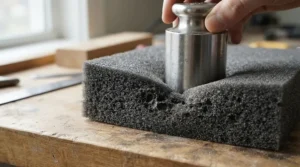
High-density foam, by contrast, handles pressure relief and body contouring — the part of the mattress your shoulders and hips actually feel against your skin. Standard memory foam runs around 1.5-1.8 pounds per cubic foot (PCF), and while that’s fine for lighter sleepers, it compresses permanently far faster under 250-plus pounds of consistent pressure. The foams used in the Titan Plus Luxe and Big Fig, by comparison, run notably denser, which is what allows them to spring back night after night instead of holding a body-shaped dent. What most buyers overlook is that neither material alone solves the sagging problem — a mattress with only reinforced coils and thin, cheap foam on top will still feel uncomfortable and develop pressure points, while all high-density foam without adequate coil support will still bottom out over time. The mattresses that consistently earn top marks from testers, like the WinkBed Plus and Saatva HD, pair both elements deliberately.
Common Mistakes When Buying a Mattress for Plus-Size Sleepers
Even well-intentioned shoppers make predictable errors when selecting a mattress for plus-size sleepers, and most of them are avoidable with a little upfront research.
Mistake #1: Assuming “firm” always means “durable.” Firmness is a feel rating, not a construction spec — a firm mattress with thin, low-density foam over standard coils can still sag within a year despite feeling hard in the showroom.
Mistake #2: Ignoring the foundation requirement. Reinforced coils and dense foam add substantial weight, and pairing a heavy-duty mattress with a flimsy foundation or widely spaced slats voids most warranties and accelerates sagging regardless of how good the mattress itself is.
Mistake #3: Buying based on total capacity alone. A “1,000-pound” rating split across two sleepers isn’t the same as a true single-sleeper rating — check both numbers before assuming the bed fits a solo heavier sleeper’s needs.
Mistake #4: Skipping the trial period fine print. Some trials require a minimum number of nights (often 14-30) before you’re eligible to return, and return fees vary significantly between brands, from free to nearly $100.
Mistake #5: Overlooking sleep position entirely. A mattress engineered for back and stomach sleepers, like the WinkBed Plus, can feel too firm and unforgiving for a side sleeper who needs more shoulder and hip give — weight capacity means nothing if the firmness doesn’t match how you actually sleep.
Mattress for Plus-Size Sleepers vs Standard Mattresses
The core difference between a genuine mattress for plus-size sleepers and a standard mattress isn’t marketing — it’s material specification, tested and documented by independent labs repeatedly. Standard hybrid mattresses generally use 15.5 to 17-gauge coils and comfort foams in the 1.5-1.8 PCF range, materials chosen to balance cost and comfort for an average body weight around 150-200 pounds. Push a 250-plus-pound body onto that same construction night after night, and the coils flex past their design tolerance while the foam compresses unevenly, creating the sagging “valley” so many plus-size shoppers describe.
Specialty mattresses correct for this at every layer. Research on spinal alignment has found that individuals with higher body weight tend to have better spinal alignment when sleeping on firmer mattresses, which is precisely why brands like Saatva, WinkBeds, and Brooklyn Bedding engineer their plus-size lines toward the firmer end of the spectrum by default rather than offering a soft option at all. The trade-off is upfront cost — expect to pay 20-40% more than a comparable standard mattress in the same size — but the payoff is a support structure that’s rated to handle your actual body weight for its full expected lifespan rather than failing within a couple of years.
Long-Term Cost & Maintenance for Heavy-Duty Mattress Support
Sticker price tells only part of the story when evaluating heavy-duty mattress support — the real number that matters is cost-per-year of actual use. A budget mattress at $600 that sags and needs replacing within three years works out to $200 per year. A reinforced hybrid like the Helix Plus at roughly $1,300 that lasts a genuine eight to ten years drops that cost to around $150 per year or less, and premium options like the Saatva HD at $2,800 stretched across a 15-year lifespan land closer to $190 per year — competitive with far cheaper mattresses once durability is factored in honestly.
Maintenance matters just as much as the initial purchase. Rotating a heavy-duty mattress head-to-foot every six months (never flipping one-sided constructions like the Titan line or Big Fig) evens out compression across the surface and meaningfully extends usable life. Pairing your mattress with an appropriately rated foundation — solid platform slats spaced no more than 2-3 inches apart, or a manufacturer-specific reinforced base — is non-negotiable; using a mismatched or worn-out foundation is one of the fastest ways to void a warranty and accelerate sagging regardless of how well-built the mattress itself is.
Safety, Regulations & Certifications for Heavy-Duty Mattresses
Every mattress sold in the United States, regardless of weight capacity or price point, must comply with the federal open-flame flammability standard. The CPSC defines a mattress set as a resilient material or combination of materials enclosed by ticking, intended or promoted for sleeping upon, and this standard establishes flammability requirements that all mattress sets must meet before sale. Reputable plus-size brands meet this requirement through fire-resistant fabric barriers rather than older chemical flame retardants, and several mattresses on this list — including the Titan line and Nolah Evolution — specifically market themselves as fiberglass-free, which matters because fiberglass-based fire socks can shed particles into the air if the inner cover is ever damaged or removed.
Beyond flammability, look for CertiPUR-US certification, which confirms foams are made without ozone depleters, certain flame retardants, and heavy metals, and GREENGUARD Gold certification, which screens for low chemical emissions affecting indoor air quality. Both certifications appear on the Titan Plus Luxe and several other mattresses reviewed here, and they’re a reasonable proxy for material safety even when a brand doesn’t publish every manufacturing detail.
Setting Up Your Heavy-Duty Mattress Support System
Getting a reinforced mattress into place correctly makes a measurable difference in how long it performs at its rated weight capacity, and the first 30 days set the tone for everything after. Start with the foundation: a heavy-duty mattress support system needs either a solid platform with slats spaced no more than 2-3 inches apart or the manufacturer’s specific reinforced base — a standard box spring rated for lighter mattresses will flex and eventually crack under sustained heavier loads, voiding most warranties in the process. Once the mattress is in place, resist the urge to judge firmness in the first night or two; dense foams and reinforced coils, particularly on models like the Big Fig or Saatva HD, often need one to two weeks to fully expand and settle into their intended feel after arriving compressed in a box.
During the first month, rotate the mattress head-to-foot at least once, even though most modern hybrids don’t require flipping. This evens out the earliest compression patterns before they become permanent. Avoid the common mistake of skipping the recommended break-in period before deciding whether a specific firmness works for you — a mattress that feels slightly too firm on night three frequently softens into the intended feel by night twenty. Finally, keep the original packaging or photograph the setup process; most plus-size mattress warranties require proof of a compliant foundation if you ever need to file a sagging claim.
Real-World Scenarios: Which Heavy-Duty Mattress Fits Your Life
If you’re a 280-pound side sleeper sharing a bed with a partner who’s average weight, the Titan Plus Luxe or Nolah Evolution Comfort+ in a softer firmness setting are worth prioritizing — both offer enough shoulder and hip contouring for side sleeping while still resisting sag under your specific weight, and neither forces your partner into an uncomfortably firm surface just to accommodate you.
If you’re a 320-pound back or stomach sleeper dealing with recurring lower back pain, the WinkBed Plus or Saatva HD should be your first stops — the zoned, thick-gauge coils in both are specifically engineered to support the lumbar region under exactly this combination of weight and sleep position, and reviewers consistently cite back pain relief as a primary benefit.
If you and a partner both weigh over 250 pounds and your combined weight regularly exceeds 500 pounds, the Big Fig stands out as the only mattress on this list explicitly rated to handle that scenario without derating support, thanks to its 1,600-coil count and 1,100-pound combined capacity — genuinely built for two larger-framed sleepers sharing one bed rather than accommodating one heavy sleeper alongside a lighter partner.
Mattress Sagging Prevention: Solving the Top Problems Heavy Sleepers Face
Problem: The mattress develops a permanent dip within the first year. This almost always traces back to insufficient coil gauge or foam density for your actual body weight. The fix is proactive mattress sagging prevention: choose a bed with at least 12.5-13.5 gauge coils, like the Saatva HD or WinkBed Plus, rather than assuming any “hybrid” label guarantees adequate reinforcement.
Problem: The edges collapse when sitting to get dressed. Standard mattress construction rarely reinforces the perimeter. Look specifically for dense foam edge rails (Big Fig, Titan Plus Luxe) or a reinforced coil perimeter (WinkBed Plus) rather than assuming edge support is a given feature.
Problem: Sleeping hot despite a “cooling” label. Dense foams naturally retain more heat than open coil structures. Prioritize hybrids with substantial coil cores and breathable covers — the Saatva HD’s latex-and-coil combination and the Big Fig’s ThermoGel cover both address this directly rather than relying on a thin cooling gel layer alone.
Problem: Partner disturbance from motion transfer. Individually wrapped coils isolate motion far better than open-coil innerspring designs. The Helix Plus and Big Fig both score well here specifically because of their high per-mattress coil counts.
Problem: Uncertainty about whether a mattress will actually last. Cross-reference the manufacturer’s stated weight capacity against your actual combined household weight, and prioritize warranties of 15+ years, which signal genuine manufacturer confidence in long-term durability rather than marketing language alone.
Frequently Asked Questions
❓ What weight capacity should a mattress for heavy people over 250 lbs have?
❓ Do heavy-duty mattresses need a special foundation?
❓ How long should a mattress for plus-size sleepers last?
❓ Is a firmer mattress always better for heavier sleepers?
❓ How much more does a mattress for heavy people over 250 lbs typically cost?
Conclusion
Finding the right mattress for heavy people over 250 lbs really does come down to matching construction specifics — coil gauge, foam density, and weight rating — to your actual body weight and sleep position, rather than trusting a “plus-size” label at face value. Budget shoppers get genuine reinforced coil support from the Titan Hybrid and Helix Plus without paying premium prices, while sleepers prioritizing long-term durability and zoned lumbar support should look hardest at the WinkBed Plus and Saatva HD. The Big Fig remains the standout for combined household weight over 500 pounds, and the Nolah Evolution Comfort+ offers a rare middle path for shoppers who want firmness flexibility built in.
Whichever option you land on, pair it with an appropriately rated foundation, give it the full break-in period before judging firmness, and rotate it regularly. A mattress engineered around your real body weight, rather than an industry-average assumption, is the difference between waking up refreshed and waking up with the same lower-back ache you were trying to solve in the first place.
✨ Ready to stop waking up sore? Compare current pricing on today’s top plus-size picks and find the support your body actually deserves! 🛏️💪
Recommended for You
- Mattress for Platform Bed Frame Compatibility: 7 Best Picks for 2026
- Mattress Under $500 for a Guest Bedroom: 7 Best 2026 Picks
- 7 Best Adjustable Bed Base for Snoring Relief Picks (2026)
Disclaimer: This article contains affiliate links. As an Amazon Associate, I earn from qualifying purchases. If you purchase products through these links, we may earn a small commission at no additional cost to you.
✨ Found this helpful? Share it with your friends! 💬🤗
