

In This Article
Here’s the myth nobody in the mattress industry wants to bust: that “hybrid” and “affordable” can’t share the same sentence. A hybrid mattress under $700 is a bed built from a foam-coil combination — comfort foam layered over pocketed coils — designed to blend the contouring of foam with the airflow and bounce of a traditional spring bed, and it typically runs about $200 to $700 for a queen. Walk into any mattress showroom and the salesperson will happily walk you toward the $1,800 model with the cashmere-blend cover, because that’s where the commission lives. But spend a weekend actually comparing spec sheets, and you’ll notice something curious — a lot of that markup buys marketing, not materials.

That doesn’t mean every cheap hybrid is a hidden gem. Some absolutely are built down to a price, with coil gauges so thin they feel more like a rumor of support than actual support. The trick is knowing which corners were cut on purpose (fine) and which were cut carelessly (not fine). Getting that right matters more than you’d think — most healthy adults need between 7 and 9 hours of sleep each night, and the mattress you’re lying on for a third of your life deserves more scrutiny than a coffee maker.
This guide breaks down seven real, currently sold mattresses that keep a queen size at or near that $700 ceiling, all genuine foam-coil combination builds with pocketed coils in the support core. We looked at actual specs, aggregated review sentiment from testing sites and verified buyers, and where a bed’s list price occasionally creeps past $700 without an active deal, we say so plainly. No invented five-star reviews, no “I tested this for 30 nights” fiction — just honest analysis of what the data and the reviewers actually say. If you’re chasing an affordable hybrid mattress that won’t leave your back — or your bank account — worse off, keep reading.
Quick Comparison: 7 Hybrid Mattresses Under $700
| Mattress | Price Range (Queen) | Firmness | Best For |
|---|---|---|---|
| Zinus Cooling Copper Adaptive Hybrid | ~$230–$300 | Medium (6/10) | Guest rooms, budget-first buyers |
| Linenspa 12″ Memory Foam Hybrid | ~$230–$280 | Medium-Firm (7/10) | Cheapest true pillow-top feel |
| Allswell Hybrid (Original) | ~$280–$350 | Firm (7/10) | Back/stomach sleepers, couples |
| Allswell Supreme | ~$450–$550 | Medium (5.5/10) | Side sleepers wanting more cushion |
| Allswell Luxe Hybrid | ~$600–$680 | Medium (6.5/10) | Combo sleepers wanting more contour |
| Vaya Hybrid | ~$650–$700 (promo-dependent) | Medium (6/10) | Couples, edge-support priority |
| DreamCloud Hybrid | ~$699 typical | Medium-Soft (6/10) | Side/back sleepers wanting a plush feel |
Looking across this table, a pattern jumps out fast: price climbs roughly in step with comfort-layer thickness, not coil quality — every one of these beds uses pocketed coils, but the foam stacked on top is what separates a $250 bed from a $700 one. If motion isolation and edge stability matter more to you than plush contouring, the Allswell Hybrid or Vaya Hybrid punch above their price. If you want that “sinking into a cloud” feel without spending four figures, DreamCloud Hybrid is the one to watch.
Found a favorite already? Tap through and compare live pricing before it changes — budget hybrids move fast during sales.
Top 7 Hybrid Mattresses Under $700: Expert Analysis
1. Zinus Cooling Copper Adaptive Hybrid — best entry point for a first-time hybrid buyer
The standout here is right in the name: a copper-infused memory foam comfort layer paired with a moisture-wicking Adaptive cover, aimed squarely at sleepers who run warm but don’t want to spend real money finding out if they even like hybrids.
Under the hood, you’re getting a comfort foam layer over a 7.5-inch iCoil pocketed spring base, with extra foam reinforcement stitched around the perimeter for basic edge support. In practice, the copper infusion and wicking cover do a reasonable job pulling heat away from the sleep surface, which matters more than people expect — a memory-foam layer trapped under a non-breathable cover is a recipe for waking up sweaty regardless of how “supportive” the coils underneath are. Based on the spec comparison against pricier hybrids, the coil gauge here is noticeably lighter, which is the real reason this bed undercuts competitors by hundreds of dollars.
Independent lab testing from NapLab found the coil support system performs on the lower end for durability and response compared to more expensive hybrids, even while cooling and motion isolation tested reasonably well for the price. That lines up with what you’d expect: this is a mattress built to hit a price point first, comfort second. It’s also worth noting Zinus faced a 2022 class-action suit tied to fiberglass in some older mattress lines, and the brand now markets current Cooling Copper models as fiberglass-free — a detail worth double-checking on the product listing before you buy.
Pros:
- ✅ Genuinely affordable entry into hybrid construction
- ✅ Copper-infused foam plus wicking cover aid heat dissipation
- ✅ Pocketed coils still deliver real motion isolation
Cons:
- ❌ Lighter-gauge coils underperform pricier hybrids in durability tests
- ❌ Edge support is functional but not reinforced
At around $230–$300 for a queen, this is one of the least expensive genuine foam-coil combination mattresses you’ll find, and a fair value verdict for a guest room, dorm, or rental — just don’t expect it to outlast a $700 bed by a decade.

2. Linenspa 12″ Memory Foam Hybrid — cheapest true pillow-top feel on this list
The standout advantage is the quilted pillow top stitched over gel-infused comfort foam, giving this bed a plusher first impression than its price tag suggests.
Construction-wise, you’re looking at a comfort layer over tempered steel coils, wrapped in a breathable 3D knit cover designed to counteract the heat retention memory foam is famous for. The gel infusion helps offset some — not all — of that trapped heat, and the pillow top adds a cushioned hand-feel that punches above its price class in showroom-style first impressions. What the spec sheet won’t tell you, but reviewers note, is that this softness up top sits on a comfort system that compresses faster than beds with denser foam grades.
Independent reviewers rate this line firmer than the industry-average feel, somewhere around 7.5 out of 10 on the firmness scale, and flag two recurring themes: weak edge support, and foam that tends to soften noticeably within 12 to 18 months of nightly use. That second point matters if you’re shopping for a primary bed rather than a guest room fallback — it’s the kind of budget hybrid mattress queen shoppers pick up for a spare room, not necessarily the bed they plan to sleep on for a decade.
Pros:
- ✅ Lowest price point for a genuine pillow-top hybrid feel
- ✅ Gel-infused foam offsets some memory-foam heat buildup
- ✅ Ships fast with a straightforward 10-year limited warranty
Cons:
- ❌ Edge support is consistently rated weak across reviews
- ❌ Comfort foam may soften faster than pricier alternatives
Priced around $230–$280 for a queen, the value verdict is simple: fantastic for a secondary bedroom or a short-term setup, less convincing as a long-haul primary mattress.
3. Allswell Hybrid (Original) — most balanced value pick under $350
The standout feature is genuinely individually pocketed coils rather than a connected coil sheet, which is a meaningfully different technology than what you’ll find in the cheapest budget beds.
The build pairs a gel-infused memory foam comfort layer with those pocketed coils, landing at a firm 7 out of 10 on the firmness scale. Here’s what most buyers overlook about pocketed coils specifically: because each spring compresses independently, movement on one side of the bed doesn’t ripple across to your partner’s side the way it does with older sheet-spring designs — a real, testable difference, not just marketing language.
TechRadar’s testing panel rated this bed’s motion isolation as excellent and found the medium-firm feel well suited to front and back sleepers, while flagging that side sleepers and anyone over roughly 200 pounds may find it too firm for adequate pressure relief. Edge durability was rated strong “at first,” a caveat worth noting since long-term edge sag is one of the most common complaints across budget hybrids generally.
Pros:
- ✅ True individually pocketed coils cut motion transfer effectively
- ✅ Gel memory foam tempers heat better than plain memory foam
- ✅ 100-night trial plus a 10-year warranty included
Cons:
- ❌ Too firm for many side sleepers and lighter body types
- ❌ Support may fade faster for sleepers over 200 pounds
At roughly $280–$350 for a queen, this is arguably the sharpest value-per-dollar pick on the entire list if your sleep position tolerates a firmer surface.
4. Allswell Supreme — best step-up for pressure relief without a luxury price tag
The standout advantage is a noticeably thicker comfort system layered over the same pocketed coil approach, aimed at buyers who found the original Allswell too firm.
Where the base model leans firm and minimal, the Supreme adds targeted pressure-relief zones and additional foam depth, translating into real cushioning at the shoulders and hips rather than just a thicker number on a spec sheet. On paper this means side sleepers finally get somewhere to sink in before hitting the support layer — a common complaint about the firmer original model.
Mattress Clarity’s comparison testing placed this model as a strong pick for side and back sleepers specifically, noting it undercuts a comparable Casper Original by a wide margin while delivering similar pressure relief. The trade-off, as with most one-sided hybrid builds, is that it can’t be flipped to change the feel if your preference shifts over time.
Pros:
- ✅ Noticeably better pressure relief than the entry-level Allswell
- ✅ Still priced well under premium hybrid competitors
- ✅ 100-night sleep trial for real-world testing at home
Cons:
- ❌ One-sided construction means no flipping to adjust feel
- ❌ Less bounce than more coil-forward designs on this list
Priced around $450–$550 for a queen, the value verdict favors side sleepers and combination sleepers specifically — back-only sleepers may not need to spend the extra money over the base model.
5. Allswell Luxe Hybrid — tallest comfort system before crossing the $700 line
The standout feature is comfort-layer height: this build runs roughly an inch taller than several competitors in this guide, softening the usual “foam-to-coil handoff” that budget hybrids often get wrong.
That extra inch of foam matters more than it sounds. Reviewers consistently note that thin comfort layers over coils create an abrupt transition — soft foam, then suddenly firm coil — that some sleepers describe as feeling like they’re lying on top of the bed rather than in it. The added thickness here smooths that transition into something closer to what you’d feel on a $1,000-plus hybrid, at a fraction of the cost.
Mattress Clarity’s direct comparison against Casper found the Luxe priced hundreds of dollars below Casper’s original hybrid while landing at a similar medium firmness to the Tuft & Needle original — useful context if you’ve shopped either of those brands and know how their feel compares.
Pros:
- ✅ Thicker comfort layers than base-tier hybrids in this price range
- ✅ Balanced medium firmness suits multiple sleep positions
- ✅ Strong price-to-comfort ratio versus name-brand rivals
Cons:
- ❌ Only one firmness option, so there’s no customizing feel
- ❌ Standard bed-in-a-box off-gassing period applies at unboxing
At around $600–$680 for a queen, this is the pick for buyers who want to feel the difference real foam thickness makes without breaking the $700 ceiling.

6. Vaya Hybrid — best edge support and motion isolation near the price cap
The standout advantage is a reinforced coil perimeter, specifically engineered to fight the “roll-off” sensation that plagues cheaper hybrids when you sit down on the edge of the bed.
Construction includes a Euro pillow top, roughly two inches of proprietary Vaya comfort foam, an 8-inch pocketed coil core with those firmer perimeter coils, and a high-density foam base layer. What most buyers overlook about edge reinforcement specifically is how much it affects usable sleep surface — a bed with weak edges effectively shrinks a queen mattress by several inches on all sides, since nobody wants to sleep right at a saggy border.
Independent testing using medicine-ball response drops gave this mattress a perfect responsiveness score, meaning it regains shape almost instantly after pressure — a meaningful advantage for combination sleepers who change positions frequently through the night. One honesty note worth flagging: list pricing on this bed tends to hover in the $699–$899 range depending on active promotions, and this brand runs frequent discounts of around $300 off, which is often what pulls the queen size under the $700 mark. Check current pricing before assuming it clears the cap.
Pros:
- ✅ Reinforced perimeter coils are rare at this price tier
- ✅ Excellent motion isolation reported for couples
- ✅ Fast foam response avoids the “stuck” feeling of denser foams
Cons:
- ❌ Regular (non-promotional) pricing can exceed $700
- ❌ Runs slightly warmer than copper- or gel-specific competitors
Value verdict: when discounted into the $650–$700 range, this is one of the strongest foam-coil combination beds on this list for couples specifically — just verify the current price before checkout.
7. DreamCloud Hybrid — closest a sub-$700 bed gets to a luxury feel
The standout feature is a cashmere-blend quilted cover paired with multiple foam comfort layers over a pocketed coil core, a combination usually reserved for beds costing twice as much.
Here’s what the spec sheet won’t tell you, but independent testing does: despite the brand marketing this mattress as “extra firm,” testing panels consistently rate its actual feel closer to a 6 out of 10 — genuinely medium, with real cushioning and contour rather than a firm slab feel. That gap between marketed firmness and tested firmness is worth knowing before you buy, since it changes who the bed actually suits.
Reviewers rate this model highly for temperature regulation, crediting an updated cover design over the prior generation, and note noticeably improved edge support compared to earlier versions of this line. The trade-off is a plush enough feel that stomach sleepers may find their midsection sinking more than they’d like, and some motion transfer remains compared to firmer, more coil-forward beds like the Allswell Hybrid.
Pros:
- ✅ Plush, contouring feel that testers compare to pricier luxury hybrids
- ✅ Strong temperature regulation from the updated cover design
- ✅ Long sleep trial gives real time to test fit at home
Cons:
- ❌ Too soft for committed stomach sleepers
- ❌ Some motion transfer remains versus firmer competitors
Typically priced right around $699 for a queen, sometimes bundled with accessories during promotions, this is the value pick if plush contouring matters more to you than firm support.
Full Spec Comparison: Coils, Foam & Price at a Glance
| Mattress | Height | Coil Type | Comfort Layer | Best For |
|---|---|---|---|---|
| Zinus Cooling Copper Adaptive Hybrid | 10″–12″ | iCoil pocketed springs | Copper-infused memory foam | Budget-first, guest rooms |
| Linenspa 12″ Memory Foam Hybrid | 12″ | Tempered steel coils | Gel memory foam, pillow top | Cheapest pillow-top feel |
| Allswell Hybrid (Original) | 10″ | Individually pocketed coils | Gel memory foam | Firm-feel fans, couples |
| Allswell Supreme | 12″+ | Pocketed coils | Thicker pressure-relief foam | Side/back sleepers |
| Allswell Luxe Hybrid | 13″+ | Pocketed coils | Extra-thick foam stack | Combo sleepers |
| Vaya Hybrid | 12″ | 8″ pocketed coils, reinforced edge | Proprietary Vaya foam | Edge-support priority |
| DreamCloud Hybrid | 14″ | Pocketed coils, reinforced edge | Multi-layer foam, cashmere cover | Plush-feel seekers |
The takeaway from this table is that height and coil reinforcement climb together — the taller beds (Allswell Luxe Hybrid, DreamCloud Hybrid) universally add edge reinforcement, while the shortest, cheapest builds skip it. If you sit on the edge of the bed to put on shoes every morning, that single spec deserves more weight in your decision than the marketing copy usually gives it.

Practical Setup & Break-In Guide
Getting a bed-in-a-box hybrid right starts before you ever lie down on it. Cut the plastic wrap carefully — box cutters and taut vacuum-sealed mattress film are a genuinely bad combination, and a stray slice into the ticking fabric isn’t covered under warranty. Once unrolled, most of these mattresses expand to roughly 90% of full height within a few hours, but give it the full 24 to 72 hours manufacturers recommend before judging the feel; a hybrid that seems too firm on night one often softens meaningfully by night three as the foam layers fully decompress.
A common first-30-days mistake is skipping a proper foundation. Pocketed coils need even support across a slatted platform or box spring with slats spaced no more than about 3 inches apart — wider gaps let coils sag unevenly over time, which is how a perfectly good bed develops a premature dip. Rotate the mattress head-to-foot every two to three months for the first year; because these are one-sided builds (per the honesty note above, none of these seven flip), rotation is your only tool for evening out wear patterns from a consistent sleep position. Finally, a breathable mattress protector isn’t optional — it’s the cheapest insurance against spills voiding your trial period, and it takes about ninety seconds to put on.
Real-World Scenarios: Who Should Buy Which Hybrid
The budget-strapped college student: shared apartment, moving again in a year, weight under 160 pounds. This is exactly the profile the Zinus Cooling Copper Adaptive Hybrid or Linenspa 12″ Memory Foam Hybrid were built for — low upfront cost, easy to sell or donate later, and neither is a heartbreaking loss if it doesn’t survive the next move.
The couple with mismatched sleep positions: one back sleeper, one side sleeper, both sensitive to nighttime tossing and turning. Here, the pocketed coils and reinforced perimeter on the Vaya Hybrid genuinely earn their keep — independent motion-isolation and edge-support testing both favor this build for exactly this use case, and the reinforced edges mean neither partner feels like they’re sliding toward the middle.
The side sleeper upgrading from an old innerspring: someone used to a “supportive but achy” feel who wants real pressure relief without spending luxury-tier money. The Allswell Supreme or DreamCloud Hybrid both deliver noticeably more cushioning at the hips and shoulders than a base-tier hybrid, with the DreamCloud edging ahead on plushness and the Allswell Supreme winning on price.
Common Mattress Problems & Practical Fixes
Waking up with a sore lower back on a new hybrid usually traces back to one of two causes: the mattress is genuinely too soft for your body weight and sleep position, or your foundation lacks proper slat support and the coils are sagging unevenly. Before returning the bed, check the foundation first — it’s the cheaper fix.
Persistent overheating despite a “cooling” hybrid is often a bedding problem, not a mattress problem. Even copper-infused or gel-infused comfort foam struggles to dissipate heat through a thick mattress protector or non-breathable sheets; switching to a moisture-wicking cotton or Tencel sheet set solves this more often than people expect.
Noticeable edge sag within the first year is the most common complaint across budget hybrids specifically, and reinforced-perimeter models like the Vaya Hybrid or DreamCloud Hybrid address it structurally — if you’ve already bought a budget-tier bed without that reinforcement, a supportive bed frame with center support legs meaningfully slows the sag rate.
Partner disturbance on a bed marketed as having “great motion isolation” is almost always a foundation or bed-frame issue when a hybrid seems to underperform its reviews — a wobbly, unsupported frame transmits vibration the mattress itself would otherwise absorb.
How to Choose a Hybrid Mattress Under $700
What is a hybrid mattress under $700? It’s a bed-in-a-box mattress that pairs a foam comfort layer with a pocketed coil support core, typically 10 to 14 inches thick, priced between roughly $200 and $700 for a queen — offering more airflow and edge support than all-foam beds at a fraction of premium hybrid pricing.
- Start with your sleep position. Side sleepers generally need a softer comfort layer (look toward the Allswell Supreme or DreamCloud Hybrid); back and stomach sleepers usually do better on firmer builds like the Allswell Hybrid (Original).
- Check the coil description, not just the word “hybrid.” “Individually pocketed coils” and “tempered steel coils” are not the same technology — pocketed coils isolate motion far better, which matters most if you share a bed.
- Weigh your body weight honestly. Reviewers repeatedly flag that budget hybrids under $350 struggle to support sleepers over roughly 200-230 pounds long-term; heavier sleepers should lean toward thicker, more reinforced builds.
- Prioritize edge support if you sit on the bed often. Models with reinforced perimeter coils, like the Vaya Hybrid, hold their shape at the edges far longer than base-tier competitors.
- Read the trial period fine print. Some budget hybrids offer trials as short as 30 nights, while others stretch to a full year — a longer trial matters more the closer a bed’s true feel is to your comfort threshold.
- Confirm queen-size availability and pricing before comparing. A budget hybrid mattress queen listing can shift by $50–$150 during sales, so always check current pricing rather than relying on a screenshot from last month.
- Look for CertiPUR-US certification on the foam layers. It’s a low-effort way to confirm the foam has been independently tested for content and emissions rather than taking a brand’s marketing at face value.
Hybrid vs Memory Foam vs Traditional Innerspring
| Factor | Hybrid | Memory Foam | Traditional Innerspring |
|---|---|---|---|
| Motion Isolation | Good to excellent (pocketed coils) | Excellent | Poor |
| Edge Support | Good (varies by reinforcement) | Weak | Good |
| Airflow/Cooling | Good | Weaker (traps heat) | Excellent |
| Pressure Relief | Good, varies by foam depth | Excellent | Weak |
| Typical Lifespan | 7–10 years | 6–8 years | 5–7 years |
An affordable hybrid mattress essentially splits the difference between the other two categories rather than dominating any single metric — it won’t isolate motion quite as completely as a dense memory-foam bed, and it won’t sleep quite as cool as an open-coil innerspring, but it avoids the worst weaknesses of both. For most combination sleepers and couples, that middle ground is exactly why hybrids have become the default recommendation over either pure category. If you’re a committed stomach sleeper who runs hot and never shares a bed, a firmer all-foam or traditional innerspring might actually serve you better than forcing a hybrid to do a job it’s only moderately good at.
Features That Actually Matter (And Ones That Don’t)
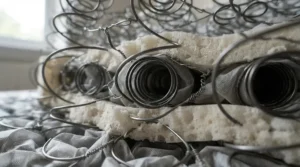
Pocketed coils matter — genuinely, measurably. Independent motion-transfer testing consistently shows individually wrapped coils absorb movement locally instead of transmitting it across the whole bed, which is the single biggest functional upgrade a hybrid offers over a plain innerspring. If a listing doesn’t specify pocketed coils, assume it’s using a cheaper connected coil sheet and price accordingly.
Foam density and CertiPUR-US certification matter more than foam type names. Certified foam is flexible polyurethane foam that meets standards for content, emissions, and durability, verified by independent accredited testing labs — that’s a genuinely useful, checkable fact rather than a vague marketing claim, and it applies regardless of whether a brand calls its foam “gel-infused,” “copper-infused,” or a proprietary trademarked name.
Marketing terms like “cooling technology” and “orthopedic support,” on the other hand, deserve skepticism until you check what’s actually underneath them. Copper and gel infusions do measurably help with heat dissipation, but the effect is modest — a breathable cover and good bedroom ventilation often matter just as much. “Orthopedic” has no regulated definition in mattress marketing at all; it’s a comfort claim, not a certification, so don’t let it override your own sleep-position math from the section above.
Value Mattress Brands Worth Watching in 2026
Among value mattress brands, a few patterns separate the genuinely solid options from beds built purely to hit a shelf price. Zinus and Linenspa compete almost entirely on price and fast Amazon fulfillment, which makes sense for secondary bedrooms but means their coil gauges and long-term durability trail the rest of this list. Allswell, as a Walmart-owned brand, benefits from tighter manufacturing oversight across its tiered lineup — the jump in quality from the base Allswell Hybrid to the Allswell Luxe Hybrid is one of the more noticeable step-ups in this price bracket. Vaya and DreamCloud both lean into direct-to-consumer pricing with frequent promotional discounts, which is genuinely useful for shoppers but means their advertised list price and their real-world selling price can differ by $100 or more — always check the current price rather than assuming the sticker figure is what you’ll pay.
Long-Term Cost & Maintenance
| Price Tier | Typical Queen Price | Realistic Lifespan | Cost-Per-Year (Approx.) |
|---|---|---|---|
| Entry ($230–$300) | Zinus, Linenspa | 4–6 years | ~$45–$65/year |
| Mid ($350–$550) | Allswell (Original), Allswell Supreme | 6–8 years | ~$50–$75/year |
| Upper ($600–$700) | Allswell Luxe, Vaya, DreamCloud | 7–10 years | ~$65–$90/year |
Interpreting this table, the entry-tier beds actually carry a comparable cost-per-year to the pricier options, since a lighter coil gauge tends to sag or soften sooner — you’re not necessarily saving money long-term by buying the cheapest option, just deferring the cost of a replacement. Where the math clearly favors spending more is edge durability and coil longevity specifically: reinforced-perimeter builds like the Vaya Hybrid and DreamCloud Hybrid hold their shape years longer than unreinforced entry beds, which is the main driver behind their longer realistic lifespan. Sleep needs change throughout life, and the National Sleep Foundation’s research-backed recommendation for adults is seven to nine hours per night — worth remembering when weighing a $70-a-year difference against years of consistently disrupted sleep from a sagging mattress.
Maintenance costs stay modest across every tier: a mattress protector (roughly $20–$40) and periodic rotation are the only real ongoing expenses, assuming you paired the mattress with an adequately slatted foundation from day one.
Safety, Certifications & Regulations
Every mattress legally sold in the United States, regardless of price tier, must meet federal flammability standards before it ever reaches a warehouse. Mattresses must comply with two federal flammability standards: the Standard for the Flammability (Smoldering) of Mattresses and Mattress Pads under 16 CFR part 1632, and the Standard for the Flammability (Open Flame) of Mattress Sets under 16 CFR part 1633. That’s not a premium-brand perk — every one of the seven mattresses in this guide is required to meet it, so it shouldn’t factor into your budget-versus-luxury decision at all.
What’s worth checking independently is foam-specific certification, since flammability compliance and foam-content certification are two different things entirely. CertiPUR-US labeling confirms the foam itself was tested for banned chemicals, heavy metals, and VOC emission limits by an accredited third-party lab — a meaningfully higher bar than simply meeting the legal minimum. If a budget hybrid mattress queen listing doesn’t mention CertiPUR-US anywhere in its description, it’s worth an extra few minutes of research before buying, particularly if anyone in the household has respiratory sensitivities.

Frequently Asked Questions
❓ Is a hybrid mattress under $700 actually good quality?
❓ Can you get a queen hybrid mattress with pocketed coils for under $300?
❓ How long does a budget hybrid mattress typically last?
❓ What's the difference between a foam-coil combination and a traditional innerspring?
❓ Do affordable hybrid mattresses need a special foundation?
Conclusion
A genuinely comfortable hybrid mattress under $700 isn’t a compromise so much as a different set of trade-offs than a luxury bed — you’re trading a cashmere cover for a value-engineered coil gauge, and honestly, most sleepers won’t notice the cashmere at 2 a.m. Across the seven beds in this guide, the throughline is that pocketed coils and adequate comfort-foam depth matter far more to real-world comfort than brand names or marketing buzzwords like “orthopedic” ever will.
If your budget tops out under $300, the Zinus Cooling Copper Adaptive Hybrid and Linenspa 12″ Memory Foam Hybrid both deliver a real foam-coil combination without pretending to be something they’re not. Land in the middle of the range, and the Allswell Hybrid (Original) or Allswell Supreme offer the clearest value-per-dollar depending on your sleep position. Push right up to the $700 ceiling, and the Vaya Hybrid and DreamCloud Hybrid both deliver a noticeably more refined feel — reinforced edges on one, plush contouring on the other — that closes most of the gap with beds costing twice as much.
Whichever you choose, give it the full break-in window before judging it, pair it with a proper slatted foundation, and don’t skip the mattress protector. A great mattress at a fair price is really just a good decision plus a little patience while the foam finishes expanding.
Recommended for You
- Mattress Topper To Soften A Firm Mattress: 7 Best Fixes 2026
- Mattress for Heavy People Over 250 lbs: 7 Best Picks (2026)
- Mattress for Platform Bed Frame Compatibility: 7 Best Picks for 2026
Disclaimer: This article contains affiliate links. As an Amazon Associate, I earn from qualifying purchases. If you purchase products through these links, we may earn a small commission at no additional cost to you.
✨ Found this helpful? Share it with your friends! 💬🤗
