
In This Article
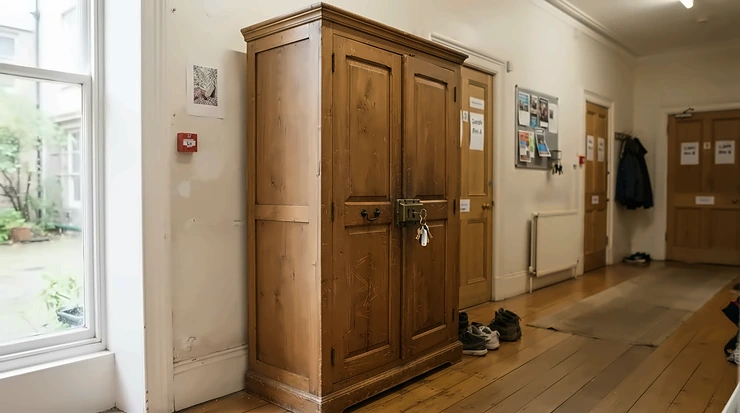
Here’s a scene every roommate, renter, and parent of a curious toddler knows. You own a few things that matter: a grandmother’s ring, a passport, a laptop, a small stash of cash. And you own a bedroom that closes with a hollow door and a prayer. A locking armoire for storing valuables fixes that gap without asking you to bolt a safe into the floor or sign a lease amendment.
The idea is older than you’d think. The armoire began life as a cabinet for weapons, and the word comes from the Old French for exactly that, according to Britannica’s overview of the armoire. Somewhere between the Middle Ages and your bedroom, the armoire swapped swords for sweaters. Now it’s coming full circle: a lockable wardrobe cabinet that guards what’s precious while still hanging your coats.
This guide compares seven real, currently listed options across wood, laminate, and steel. It translates every spec into plain-English meaning, explains which lockable cabinet hardware actually deters trouble, and walks through setup, shared-housing scenarios, and tip-over safety. One honest note up front: this is analysis built on published specs and aggregated retailer ratings, not a hands-on lab test. Where reviews couldn’t be verified, I say so rather than invent them.
Quick Comparison: Locking Armoire for Storing Valuables at a Glance
Skim this table first, then dig into the details below. Prices are ranges at the time of research and shift often, so check current price before you buy.
| Product | Material | What Locks | Price Range | Best For |
|---|---|---|---|---|
| Hives & Honey Nora Jewelry Armoire | Wood | Top compartment | Low $200s and up | Rings, watches, small heirlooms |
| Best Choice Products Jewelry Armoire Cabinet | Engineered wood | Door | About $90-$130 | Budget buyers wanting a mirror |
| HOMCOM 3-Door Wardrobe with Lockable Drawer | Engineered wood | One large drawer | Check current price | Clothes plus a private drawer |
| Better Home Products Grace 2-Door Wardrobe | Laminated wood | Doors and one drawer | Check current price | Full bedroom wardrobe with a lock |
| STANI Metal Locker Storage Cabinet (72″) | Steel | Doors | Mid-$160s to about $170 | Garages, shared houses, laundry rooms |
| Fesbos Steel Wardrobe Cabinet Locker (55.1″) | Steel | Doors via padlock hasps | About $140 to high $220s | Buyers who want to pick their own lock |
| Lorell Steel Wardrobe Storage Cabinet (36x18x72) | Welded steel | Removable lock system | Check current price | Heavy-duty, long-term security |
Look at the pattern in that table. The cheapest picks lock the least: one door, one drawer, one compartment. The steel options lock the entire cabinet, which is a different category of protection. If your priority is a Best Choice Products Jewelry Armoire Cabinet for small treasures on a tight budget, the top of the table serves you. If you need whole-cabinet coverage in a shared space, the bottom half is where your shortlist lives.
💬 Just one click — help others make better buying decisions too!😊
Top 7 Locking Armoire for Storing Valuables: Expert Analysis
Seven real products, ordered roughly from small-and-pretty to big-and-armored. Each one gets honest analysis: what the specs mean in practice, who it suits, and where it falls short.
1. Hives & Honey Nora Jewelry Armoire — best top-locking compartment for small treasures
The Nora’s headline feature is a secure locking compartment at the top, per its retailer listing. That placement is smart design: small, high-value items like rings, watches, and spare keys live in the lockable zone, while everyday pieces stay in the drawers below.
On paper, this means the lock protects a part of the cabinet rather than all of it. That suits jewelry perfectly, but it won’t secure a laptop or a stack of documents. The traditional wood styling reads as furniture, not a vault, which is a quiet security advantage. Nobody eyes it as a target.
Aggregated ratings on a major retailer’s listings sit in the mid-4s out of 5 across roughly 500 ratings, a strong general-satisfaction signal. I couldn’t verify detailed complaint themes, so treat the score as a mood, not a diagnosis.
Pros:
- ✅ Dedicated locking compartment sized for small valuables
- ✅ Furniture-style look that doesn’t advertise security
- ✅ Multiple finishes to match bedroom décor
Cons:
- ❌ Lock covers only the top compartment
- ❌ Wood construction offers deterrence, not true burglary resistance
Price range: roughly the low-to-mid $200s at the time of research. Verdict: fair value if your valuables are jewelry-sized.
2. Best Choice Products Jewelry Armoire Cabinet — most mirror and storage per dollar
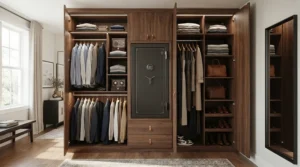
This is the budget hero of the lineup. Retailer listings describe a full-length mirror with adjustable angles, velvet-lined interior storage, and a built-in lock, with one summary counting 43 compartments. That compartment count matters more than it sounds: when every ring and earring has a home, you notice instantly when something’s missing.
The lock is a standard cabinet lock, so think “keeps out kids, roommates, and casual snoopers,” not “stops a prying bar.” The engineered-wood body supports that read. Where it shines is organization plus mirror plus lock in one footprint, which saves you buying a separate full-length mirror.
The rating hovers around 4.4 stars across more than a thousand ratings on a major retailer’s listing. At least one reviewer reports the lock works fine, though others raise assorted issues I couldn’t pin down. Verify assembly notes before buying. A tall, mirror-fronted cabinet should also be anchored to the wall (more on that in the safety section).
Pros:
- ✅ Full-length mirror built into the door
- ✅ Velvet-lined interior protects delicate pieces
- ✅ Lowest entry price among wood options
Cons:
- ❌ Basic lock suits deterrence, not security
- ❌ Tall and light, so anchoring is essential
Price range: about $90-$130 at the time of research. Verdict: outstanding value for jewelry and accessories.
3. HOMCOM 3-Door Wardrobe with Lockable Drawer — best for clothes plus one private drawer
The HOMCOM pairs a three-door wardrobe with two drawers, a hanging rod, and storage shelves. The large drawer includes a lock with two keys, which the listing pitches for documents, jewelry, and personal essentials in shared living spaces.
Think of it as a hybrid: ninety percent ordinary wardrobe, ten percent private vault. That ratio is perfect when your valuables are flat and modest, such as passports, spare cash, a tablet, or a jewelry roll. The doors themselves don’t lock, so anything on the hanging rod or shelves is fair game.
I couldn’t verify a stable review count or rating for this model, so there’s no sentiment to report. Check the listing’s reviews for notes on drawer glide quality and assembly time, both common friction points with flat-pack wardrobes.
Pros:
- ✅ Lockable drawer ships with two keys
- ✅ Doors, rod, and shelves handle real clothing storage
- ✅ Clean white finish suits most bedrooms
Cons:
- ❌ Only the drawer locks; doors stay open to anyone
- ❌ Flat-pack engineered wood limits break-in resistance
Price range: check current price, as it varies by finish and seller. Verdict: sensible if you want mostly a wardrobe with a private drawer.
4. Better Home Products Grace 2-Door Wardrobe Armoire — best full-wardrobe lock in laminate
The Grace goes further than the HOMCOM. Its listing describes two lockable doors with European-style metal hinges, plus two full-size drawers, one of which locks. Metal drawer glides with safety stops keep drawers from sliding out.
The practical upside is coverage. Lock the doors and the hanging space becomes private, lock the drawer and you’ve got a second tier for small items. The double-faced melamine finish is listed as stain-, heat-, and scratch-resistant, which counts in a bedroom where perfume, lamps, and jewelry trays share a top surface.
Those European hinges tell a story too: concealed hinges mean no exposed pins for someone to tap out. That’s a small detail, but it separates thoughtful lockable wardrobe cabinet designs from lazy ones.
Reviews weren’t verifiable for this entry, so check listing feedback for drawer-lock fit and door alignment.
Pros:
- ✅ Locks on both doors and one drawer
- ✅ Concealed European hinges, no exposed hinge pins
- ✅ Durable melamine finish resists everyday wear
Cons:
- ❌ Laminate over engineered wood can be pried
- ❌ Only one drawer locks
Price range: check current price. Verdict: strong mid-range pick for a secure storage armoire that still looks like bedroom furniture.
5. STANI Metal Locker Storage Cabinet (72″) — best steel value for shared spaces
Now the armor arrives. The STANI is a 72-inch tall steel wardrobe with a hanging rod, shelves, and lockable doors, assembled at home. Color variants listed at the time of research sat in the mid-$160s to about $170.
Steel changes the equation. A hollow-core wood door can be shouldered or pried; a steel door asks for real tools and real noise. In shared housing, that noise is the point, because most unwanted access happens quietly and quickly. The locker styling won’t win design awards, though a garage, laundry room, or spare room doesn’t care.
Retailer ratings average about 4.4 stars from roughly 70 ratings, a modest sample, so read it as encouraging rather than conclusive. Assembly is required, so budget an hour and a helper.
Pros:
- ✅ Steel construction raises effort required to force entry
- ✅ Tall interior fits hanging clothes plus shelf storage
- ✅ Affordable for a whole-cabinet lock
Cons:
- ❌ Industrial look suits utility rooms better than bedrooms
- ❌ Standard locker lock is still a basic keyed mechanism
Price range: mid-$160s to roughly $170 at the time of research. Verdict: the best value for a lockable wardrobe cabinet with genuine metal heft.
6. Fesbos Steel Wardrobe Cabinet Locker (55.1″) — best for choosing your own padlock
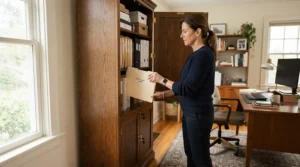
Instead of a built-in lock, the Fesbos uses steel hasps on each of its four flat doors. You fit a combination or key padlock of your choice. That sounds like a downgrade until you think it through: the lock becomes the thing you control.
Buy a hardened-shackle padlock and you’ve upgraded the security without replacing the cabinet. Lose a key? Swap the padlock for a few dollars. Four doors also means four separate compartments, so you can lock your valuables behind one door and leave the rest to housemates.
At 55.1 inches tall and 29.5 inches wide, it’s more compact than a 72-inch locker, with a rustic rivet look that fits loft and garage vibes. I couldn’t verify review volume for this model, and the same specs appear under other brand names at higher prices. Compare listings carefully.
Pros:
- ✅ Padlock hasps let you upgrade the lock yourself
- ✅ Four doors create separate lockable compartments
- ✅ Compact steel body fits tighter spaces
Cons:
- ❌ Padlock is not included, so budget extra
- ❌ Hasp-and-padlock security depends on padlock quality
Price range: roughly $140 to the high $220s depending on seller and brand name. Verdict: a flexible, smart pick for tinkerers.
7. Lorell Steel Wardrobe Storage Cabinet (36x18x72) — best heavy-duty build for long-term use
The Lorell comes from commercial furniture, and it shows. Listings describe fully welded steel construction, a recessed handle, a locking system with a removable lock, and an adjustable shelf, in a 36-by-18-by-72-inch footprint.
Each detail has a security payoff. Welded seams resist flexing at the corners, where bolted cabinets often give way. A recessed handle leaves less to grab, hook, or lever. And a removable lock, in commercial cabinets, typically means you can swap or rekey it without replacing the whole cabinet. Confirm that in the listing before buying.
Because this is a commercial line, consumer-style review counts are thin, and I couldn’t verify a rating. What’s verifiable is the build spec, and for security furniture, build is most of the story.
Pros:
- ✅ Fully welded steel resists racking and prying
- ✅ Recessed handle offers less leverage to attackers
- ✅ Removable lock supports re-keying over time
Cons:
- ❌ Utilitarian look and limited consumer styling
- ❌ Likely pricier than consumer metal wardrobes
Price range: check current price, as commercial pricing varies by reseller. Verdict: worth paying for if the contents truly matter.
What Is a Locking Armoire for Storing Valuables?
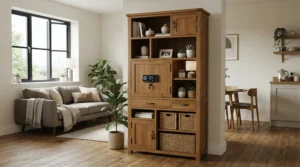
A locking armoire for storing valuables is a freestanding wardrobe or cabinet fitted with a keyed or padlock-ready mechanism that secures its doors, drawers, or an internal compartment. It combines everyday clothing or accessory storage with deterrence against casual access, sitting between a plain closet and a purpose-built safe.
Notice the phrase “deterrence against casual access.” It’s the honest center of this whole topic. Most lockable wardrobe cabinet designs are meant to stop curious kids, nosy guests, and opportunistic housemates, not professional burglars. Understanding that line keeps you from either overpaying for a feature you don’t need or underprotecting something irreplaceable.
Three designs dominate the market. Jewelry armoires lock small, delicate items behind a mirrored or velvet-lined door. Wood wardrobes add a locking drawer or doors to bedroom furniture. Steel lockers lock the whole body, trading beauty for brawn. Your best fit depends on what you’re protecting and who you’re protecting it from.
How to Choose a Locking Armoire for Storing Valuables
Run through these seven checks in order. Each one eliminates a chunk of the market.
- Define the threat. Kids and roommates call for a basic lock; real theft concerns call for steel and a better lock. Matching protection to risk avoids both waste and false confidence.
- List what’s going inside. Jewelry needs compartments, documents need a flat drawer, and electronics need depth. Measure your largest item first.
- Decide what must lock. A locking drawer protects less than locking doors. Count how much of your valuable stuff would still sit exposed.
- Check the material. Steel resists prying far better than laminate or engineered wood. That’s physics, not marketing.
- Inspect the hardware. Concealed hinges, recessed handles, and replaceable locks all indicate deliberate security design.
- Measure your space. Armoire depths commonly range from roughly 19.5 to 24 inches, so confirm door-swing clearance too.
- Plan for anchoring. Tall furniture should attach to the wall. If your walls or lease make that difficult, favor shorter or heavier models.
Skip any of these steps and you’ll likely end up with a handsome cabinet that fails at its one job.
Lockable Cabinet Hardware: What the Lock Can and Can’t Do
The lock is the soul of the whole project, so it deserves a close look. Lockable cabinet hardware comes in a few flavors, and they differ more than product photos suggest.
Cam locks are the most common type. A small metal plate (the cam) rotates when you turn the key, either catching behind a ledge or releasing. Many inexpensive furniture locks use a wafer design, and the Wikipedia entry on wafer tumbler locks explains how flat wafers block the plug until the correct key lifts them into alignment. Lockwiki classifies wafer locks as low-to-medium security, which is fine for privacy and weak for serious threats.
Tubular cam locks, with round keys that are harder to duplicate, raise the bar modestly. Deadbolt-style cabinet locks with thicker bodies and longer bolts resist prying better still. Then there’s the padlock-and-hasp setup on the Fesbos, where lock quality is entirely your call.
The takeaway: a lock is only as strong as the door it’s mounted in. A premium lock on a thin laminate door is like a deadbolt on a screen door. For a genuine secure storage armoire, pair decent hardware with a sturdy body.
Home Security Furniture: Where an Armoire Fits in Your Setup
“Home security furniture” sounds like a gimmick until you notice how burglaries actually play out. According to FBI data as summarized by SafeWise, most residential burglaries happen in daylight, and the average loss per incident runs into the thousands of dollars. Intruders are in a hurry. They grab what’s visible and fast.
That’s where home security furniture earns its keep. A locked armoire does three jobs:
- Hides valuables inside what looks like ordinary furniture
- Delays access, since forcing a lock takes time and makes noise
- Separates your precious items from the easy grab-and-go zone
Layering matters. A locking armoire for storing valuables won’t replace door locks, cameras, or a safe for the truly irreplaceable. Instead, it fills the middle tier: more protection than a nightstand drawer, far less hassle than a floor safe. Think of it as the speed bump between “unlocked” and “fortress.”
Locking Armoire vs Safe vs Lockbox
Which container fits which situation? The comparison below sorts it out.
| Option | Security Level | Capacity | Cost Range | Best For |
|---|---|---|---|---|
| Locking armoire (wood) | Low | High | Roughly $90-$250 | Kids, guests, casual snooping |
| Locking armoire (steel) | Medium | Very high | Roughly $140-$250+ | Shared housing, garages, bulk storage |
| Small home safe | High | Low | Varies widely | Cash, documents, small valuables |
| Portable lockbox | Low | Very low | Typically under $50 | Travel, quick privacy |
An armoire wins on capacity and everyday convenience. A safe wins on raw protection, particularly for fire and serious theft. Most people don’t need to choose: store the truly irreplaceable in a safe, and use the armoire for everything else that deserves a lock.
Notice the steel armoire’s middle position. It’s cheaper than most safes, holds far more, and still makes forced entry noisy and slow. For shared-housing storage, that balance is hard to beat. If you only own one item worth more than the cabinet, though, a safe is the smarter spend.
Shared-Housing Storage: Roommates, Dorms, and Subletters
Shared living adds a social wrinkle: you’re protecting belongings from people you like. That changes what you need. Here are three profiles, with matched picks.
The college student in a four-person house. Budget under $200, a shared hallway, and a hollow bedroom door. A STANI Metal Locker Storage Cabinet in the bedroom covers clothes plus a lockable laptop shelf. Steel also survives the move-out shuffle.
The remote worker subletting a furnished room. The landlord’s furniture stays, and drilling is off-limits. A freestanding Better Home Products Grace wardrobe locks doors and a drawer without touching the walls. Use furniture straps rated for no-drill mounting if your lease allows.
The roommate who shares a garage. Cheap, tough, and customizable wins. The Fesbos Steel Wardrobe Cabinet Locker with a good padlock gives you a private compartment and a lock you can carry to the next address.
Whichever you choose, the human side matters. Tell your housemates the cabinet exists and why. Framing it as “privacy, not suspicion” prevents resentment, and a lock that offends someone has failed in a different way.
Setup and Practical Usage Guide
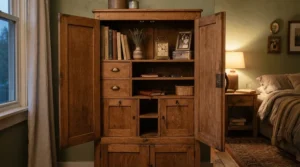
Most listings stop at “assembly required.” Here’s what they leave out.
Assembly and Placement
- Assemble on the floor near the final spot, then tilt it up. Dragging a built armoire across hardwood is how doors misalign.
- Place it against a solid wall, not in a doorway line of sight.
- Anchor it before loading it. Weight in the upper shelves raises tipping risk.
First-Week Tips
- Test every lock with the door open first, then closed. Misaligned strike plates are the most common early failure.
- Number your keys and store spares outside the armoire, ideally off-site. A spare key taped inside defeats the purpose.
- Keep a short written inventory of what’s inside. It speeds up insurance claims.
Maintenance Schedule
- Monthly: wipe the keyhole area and check for loose screws.
- Quarterly: apply a graphite-based lock lubricant, not oil, which attracts dust.
- Annually: re-tighten hinges and recheck anchors.
Common first-month mistakes include overloading drawers, skipping the anchor, and leaving keys in the lock “just for now.” That last one has ended many a secure-storage plan.
Problem and Solution Guide
Even good setups hit snags. Here are the five most common, with fixes.
The lock feels flimsy. Wafer locks often feel loose. Replace it with a tubular cam lock sized to the same hole, or add a hasp and padlock.
The door sags or won’t align. Tighten hinge screws, then shim the lower hinge with a thin washer. European-style concealed hinges usually include adjustment screws.
Everything fits except one tall item. Remove a shelf or choose a model with an adjustable shelf like the Lorell Steel Wardrobe Storage Cabinet.
Keys keep disappearing. Buy a keyed-alike set, then store one key off-site. A key safe or trusted friend works.
Roommates complain about the lock. Offer shared access to the unlocked section and keep only your private area locked. Fairness defuses most conflict.
Safety, Anchoring, and Compliance Guide
Security means little if the furniture falls on someone. The U.S. Consumer Product Safety Commission has pushed hard on furniture stability, and its Anchor It campaign explains how to secure tall furniture to the wall. Under the STURDY Act, CPSC adopted a mandatory stability standard for clothing storage units, and CPSC estimates furniture tip-overs cause thousands of injuries annually.
Whether your specific locking armoire falls inside that regulation depends on its size and design, so don’t assume compliance from a product photo. The practical rule is simple: anchor anything tall, especially anything with a mirror or heavy contents on upper shelves.
A few safety habits to adopt:
- Use the wall-anchor kit if one’s included, or buy one at a hardware store.
- Put heavier items low and lighter ones high.
- Never let children climb on open drawers or doors.
- Keep keys out of reach of small children.
Lease-friendly option: if drilling is prohibited, ask your landlord about approved anchoring methods before you assume the answer is no.
Long-Term Cost and Maintenance
The sticker price is only the opening chapter. Total cost of ownership includes the lock, the anchor, any replacement parts, and time. A $100 wood armoire that needs replacing in three years costs more per year than a steel cabinet that lasts fifteen.
| Tier | Typical Up-Front Range | Expected Lifespan | Hidden Costs |
|---|---|---|---|
| Budget wood | About $90-$130 | Shorter | Replacement locks, wobble repairs |
| Mid-range laminate | Check current price | Moderate | Hinge adjustments, drawer glides |
| Steel locker | About $140-$250 | Long | Better padlock, assembly time |
| Commercial welded steel | Check current price | Very long | Higher entry cost |
Looking at the table, steel’s higher entry price tends to even out over time, since welded or heavy-gauge metal rarely warps or loosens. Budget buyers who plan to relocate often should still weigh weight and flat-pack assembly: heavy steel is a pain to move, while light wood can fall apart after several disassemblies. Value, in the end, depends on how long you’ll keep the piece.
✨ Don’t Miss These Exclusive Deals!
🔍 Ready to protect what matters most? Click any highlighted product above to check current pricing and availability. These picks will help you build a secure, organized space your whole household can trust!
FAQ
❓ Can a locking armoire for storing valuables stop a determined thief?
❓ Can I use a lockable wardrobe cabinet in a rental?
❓ What lock type works best for a secure storage armoire?
❓ Where should I keep the spare key?
❓ Is steel really safer than wood for valuables?
Conclusion
A locking armoire for storing valuables isn’t a vault, and it doesn’t pretend to be. It’s a smart middle layer: more private than a drawer, more practical than a safe, and far more livable than a steel strongbox in your bedroom. The seven options here cover the spectrum, from the jewelry-focused Hives & Honey Nora Jewelry Armoire and budget-friendly Best Choice Products Jewelry Armoire Cabinet to the practical HOMCOM 3-Door Wardrobe with Lockable Drawer and Better Home Products Grace 2-Door Wardrobe Armoire, then up to the steel trio of STANI, Fesbos, and Lorell.
Remember the decision rules. Small valuables and a tight budget point toward the jewelry armoires. Clothes plus privacy point toward the wood wardrobes. Shared housing, garages, and genuine security concerns point toward steel. Whatever you buy, anchor it, number the keys, and keep the spare off-site.
Prices and availability shift constantly, so check current listings and reviews before you commit. Your valuables will thank you, quietly, from behind a locked door.
Recommended for You
- Mirrored Armoire For Small Bedroom Storage: 7 Best Picks 2026
- Portable Wardrobe Armoire For Dorm Rooms: 7 Best Picks 2026
- Wardrobe With Drawers And Hanging Space Combined: 7 Best 2026
Disclaimer: This article contains affiliate links. As an Amazon Associate, I earn from qualifying purchases. If you purchase products through these links, we may earn a small commission at no additional cost to you.
✨ Found this helpful? Share it with your friends! 💬🤗
