

In This Article
You know the corner. It sits between the window and the wardrobe, currently holding a laundry basket and a vague sense of potential. Somewhere along the way you decided it should hold a chair, a lamp, and a stack of unread paperbacks. Then you opened a shopping tab and discovered that the chair you want has two completely different identities.
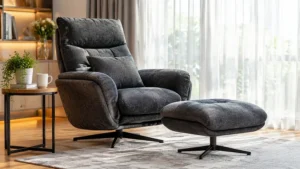
What is reading chair vs accent chair for a bedroom nook? It is a choice between a seat engineered for long, posture-friendly sessions and a seat chosen first for how it looks. A reading chair puts back angle, seat depth, and footrest options first. An accent chair puts silhouette, fabric, and color first, and its comfort varies a lot from model to model.
Here’s the twist: the line between them is blurrier than the marketing suggests. Plenty of “lazy chairs” are sold with an ottoman and a curved back, while plenty of mid-century accent chairs are surprisingly cozy. The real question for a reading chair vs accent chair for a bedroom nook is where you want to land on the comfort vs style tradeoff.
There is also no single “correct” way to sit. As the ANSI overview of sitting ergonomically explains, the HFES 100 standard recognizes several acceptable postures rather than one perfect one. That’s good news for readers, because books pull us through upright, reclined, and sideways-with-legs-over-the-arm positions in a single chapter.
Below you’ll find seven real chairs, honest analysis, and a decision framework. Let’s find your corner’s roommate.
Quick Comparison: 7 Chairs at a Glance
| Chair | Type | Standout Trait | Price Tier | Best For |
|---|---|---|---|---|
| Welnow Lazy Chair with Ottoman | Reading-first | Curved back, foldable footrest | Budget | Budget-conscious readers |
| Congermom Lazy Chair | Reading-first | Detachable ottoman folds away | Budget | Tiny floor plans |
| Furlide Lazy Chair | Reading-first | Included lumbar pillow | Budget | Lower-back sensitivity |
| Yaheetech Sherpa Barrel Accent Chair | Hybrid | Compact upright profile | Budget | Narrow corners |
| Lohoms Sherpa Accent Chair | Hybrid | Soft teddy-style fabric | Budget | Cozy, small nooks |
| Christopher Knight Home Evelyn | Accent-first | Mid-century lines, medium firmness | Low-to-mid $200s | Style-led bedrooms |
| Christopher Knight Home Marston | Accent-first | Hidden recliner mechanism | Around the low $300s | Reclined reading without the bulk |
The pattern is clear. The reading-first chairs bundle the footrest and recline that make long sessions comfortable, while the accent-first chairs charge more for design polish. Notice that the hybrids, the Yaheetech Sherpa Barrel Accent Chair and the Lohoms Sherpa Accent Chair, split the difference and stay in the budget tier. If you want comfort and style without a premium price, they’re the most interesting rows in the table.
💬 Just one click — help others make better buying decisions too!😊
Top 7 Chairs for a Bedroom Reading Nook: Expert Analysis
A quick honesty note before we dive in. Everything below is built from published specs, comparison roundups, and the review themes that keep surfacing across them. I haven’t sat in these chairs myself, and I won’t pretend otherwise. Check live listings for star ratings and current prices.
1. Welnow Lazy Chair with Ottoman — curved back, built-in footrest
The headline here is the curved backrest paired with a foldable ottoman, a combination that lets you shift from upright to feet-up without rearranging anything.
On paper, the chair carries a 400 lb weight capacity and PP cotton filling. A high weight rating usually signals a sturdy frame, which matters because a wobbly chair ruins reading faster than a bad plot. The curved back cradles the shoulders instead of forcing a ruler-straight spine, which suits the slightly reclined, long-session posture most bedroom readers drift into.
This is a strong fit for budget shoppers who want a true reading setup. It’s less ideal if you want the chair to disappear into a styled room, since the lounge look is more casual than curated.
Roundup reviewers repeatedly rank it as a top or best-value pick, and the themes they cite are comfort, the footrest, and easy fit in small rooms. I couldn’t verify individual owner reviews directly, so read the current ones before buying.
Pros:
- ✅ Curved backrest supports relaxed posture
- ✅ Foldable ottoman included
- ✅ Heavy-duty 400 lb capacity
Cons:
- ❌ Casual look limits decor flexibility
- ❌ Fixed back angle, no recline mechanism
Price tier: budget. Check current price. For pure reading comfort per dollar, it’s among the strongest values here.
2. Congermom Lazy Chair — ottoman folds away to reclaim floor space
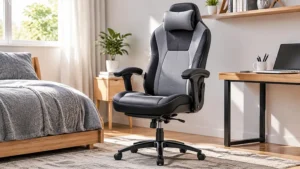
Small bedroom? This is the chair that thinks like a floor plan. The detachable ottoman folds for storage, so your walkway returns the moment you stand up.
The listed depth sits around 22.8 inches with a continuous back, meaning one uninterrupted support surface from lumbar to shoulders rather than a separate cushion that slides around. The alloy steel frame is a reassuring detail, though frame material alone doesn’t guarantee longevity; joint quality and assembly matter too.
Here’s the practical read: if your nook sits near a door or bed edge, ottoman storage is no small perk. A footrest that stays out permanently turns into a shin-finder at 2 a.m. This chair suits renters, dorm dwellers, and anyone sharing a room.
One caveat from the spec comparison is that a continuous back means less visual lightness, so in a very tight corner it can look chunky. Roundup reviewers tend to praise its space-saving ottoman and straightforward comfort, though I couldn’t verify individual owner reviews.
Pros:
- ✅ Ottoman folds for tidy storage
- ✅ Continuous back offers steady support
- ✅ Practical depth for small rooms
Cons:
- ❌ Looks bulkier in very tight corners
- ❌ Style leans functional, not designer
Price tier: budget. Check current price. Verdict: the smartest space-per-dollar choice for tiny layouts.
3. Furlide Lazy Chair — lumbar pillow included for lower-back support
The standout detail is that the lumbar pillow comes in the box. It does what a lot of chairs ignore: it fills the gap between your lower back and the seat.
The lumbar curve is where reading chairs most often fail. Without support there, people slump, and slumping is the usual precursor to the shifting and squirming that ends a reading session early. A lumbar pillow isn’t a medical device, but as a removable, repositionable support it’s a sensible low-cost solution. Combined with the included ottoman, it covers the two features that matter most for an ergonomic reading chair bedroom setup.
Who should care? Anyone who feels end-of-chapter back stiffness, and especially people who read for an hour or more at a stretch. If you prefer an upright, formal posture, you may find the lounge geometry too relaxed.
Roundups specifically call out the lumbar pillow and ottoman combination as its selling point. Again, individual owner feedback isn’t something I could confirm, so scan current reviews for comments on seat firmness over time.
Pros:
- ✅ Lumbar pillow adds repositionable back support
- ✅ Ottoman included for leg elevation
- ✅ Versatile in bedrooms and offices
Cons:
- ❌ Lounge posture is too slouchy for some
- ❌ Pillow position needs occasional re-adjusting
Price tier: budget. Check current price. Verdict: the best bargain for lower-back comfort.
4. Yaheetech Sherpa Barrel Accent Chair — compact barrel for narrow corners
The barrel shape is the hero here: a rounded, enveloping back that fits a narrow corner and nudges you toward an upright reading posture.
An upright position suits paper books you hold in your hands, since your arms can rest against the arms while the book stays at a comfortable height. The sherpa fabric adds warmth, though textured fabrics collect lint and pet hair more than smooth weaves.
This is the chair for readers who want a cozy bedroom look without surrendering a whole wall. The tradeoff, based on its profile, is that it lacks a built-in footrest, so you’ll want a pouf or small ottoman for long sessions. That’s a cheap fix, and it keeps the nook looking intentional.
Roundup writers consistently recommend it for compact nooks and upright reading. I couldn’t confirm individual reviews directly, so check recent buyer comments about seat cushion firmness.
Pros:
- ✅ Compact footprint suits narrow corners
- ✅ Encourages upright, book-friendly posture
- ✅ Warm, textured sherpa look
Cons:
- ❌ No built-in footrest
- ❌ Textured fabric traps lint and hair
Price tier: budget. Check current price. Verdict: the best hybrid for style-conscious small spaces.
5. Lohoms Sherpa Accent Chair — softest-looking pick for small bedroom nooks
What stands out is the soft teddy-style sherpa fabric, which turns a bedroom corner into something between a cloud and a stuffed animal.
Roundups rank it as best for small bedroom nooks, and that tracks with its scaled-down accent proportions. In practice that means you gain visual softness and lose some of the support structure that dedicated reading chairs provide. It leans more “gorgeous place to sit” than “ergonomic workhorse.”
It works best as a secondary reading seat for shorter sessions, or for readers who mix chapters with phone time, journaling, and getting dressed. For marathon reading, I’d pair it with a lumbar pillow and a footstool, which brings the comfort closer to a reading chair without sacrificing the look.
Reviewers in the roundups I reviewed praise the fabric’s coziness and the way it suits small nooks. I couldn’t verify individual owner reviews, so check recent ones for notes on cushion sag.
Pros:
- ✅ Cozy teddy-style fabric
- ✅ Scaled for small bedroom nooks
- ✅ Easy visual pairing with neutral decor
Cons:
- ❌ Lighter on structured back support
- ❌ Soft fabric shows wear and stains
Price tier: budget. Check current price. Verdict: pick it when ambiance leads and your sessions run short.

6. Christopher Knight Home Evelyn Arm Chair — mid-century style that’s actually comfortable
Mid-century accent chairs have a reputation for looking better than they sit. The Evelyn is often cited as the exception.
Independent testing outlets rate it as a top accent chair and describe medium firmness, which helps because medium cushions tend to support for longer than very soft ones that bottom out. Assembly is also reportedly quick, around ten minutes according to one testing site.
The honest analysis: this is the chair for a bedroom that already has a design point of view. Wood legs and a slim profile make a small room feel more open, which is the key visual benefit of accent chairs over bulky lounge chairs. The cost is that you’ll likely want a separate ottoman and lumbar pillow for marathon sessions, since the chair doesn’t bundle them.
Comfort commentary in the roundups is generally favorable, with reviewers noting it exceeds expectations for its style class. I couldn’t verify individual owner ratings, so check current reviews for notes on seat depth for taller readers.
Pros:
- ✅ Mid-century lines open up small rooms
- ✅ Medium-firm seat resists bottoming out
- ✅ Quick, simple assembly
Cons:
- ❌ No bundled ottoman or lumbar support
- ❌ Seat depth may feel shallow for taller readers
Price tier: roughly the low-to-mid $200s at the time of research. Verdict: worth it if style is half the equation.
7. Christopher Knight Home Marston Recliner — a mid-century accent chair with a hidden recliner
The standout idea is the disguise: it looks like an ordinary armchair, then reclines when you want it to.
That’s the sharpest answer to the comfort vs style tradeoff in this lineup. A recliner mechanism gives you the one thing most accent chairs can’t, which is a genuinely adjustable back angle. The mid-century silhouette keeps it from announcing “man cave,” and it can sit in a bedroom without looking out of place.
The cost is the footprint. Recliner mechanisms need clearance behind the chair, so measure before you buy; a corner that works for a fixed accent chair may not accommodate a reclining one. It’s also the priciest chair here.
For readers who enjoy a shifting posture, from upright for the first chapter to reclined for the last, this is the most adaptable option of the seven. Roundups position it as a stylish way to add recline to a living space, and I couldn’t verify individual owner reviews, so check current ones on mechanism smoothness.
Pros:
- ✅ Genuine recline in an accent-chair body
- ✅ Looks like regular mid-century seating
- ✅ Most posture variety of the seven
Cons:
- ❌ Needs wall clearance to recline
- ❌ Priciest chair in this lineup
Price tier: around the low $300s at the time of research. Check current price. Verdict: the premium pick for readers who change positions often.
Ergonomic Reading Chair Bedroom: What “Ergonomic” Really Means Here
Let’s cut through the marketing. When a product page promises an ergonomic reading chair bedroom setup, what should you actually check?
Most formal ergonomic guidance comes from office settings, but the underlying body geometry carries over. Take Chapman University’s ergonomic chair guidelines: they cite a seat height range of roughly 15 to 22 inches and a seat-to-backrest angle between about 90 and 120 degrees. That second number is gold for readers. A back angle near the upper end suggests a relaxed, reclined session; the lower end suits upright study reading.
Seat depth matters just as much. A general rule from furniture ergonomics is leaving two to four fingers of clearance between the seat’s front edge and the back of your knee. Too deep, and you slide forward to reach the back support; too shallow, and your thighs lack support.
Here’s the translation for bedroom chairs, which rarely offer adjustments: choose based on fit, not features. A lounge chair with a curved back and ottoman delivers reclined support by design, while an accent chair demands a pillow or two to approximate it. Neither is “more ergonomic” universally. The best ergonomic seating is the one that matches your posture and body proportions.
How to Choose Between a Reading Chair and an Accent Chair
Use these seven steps when weighing a reading chair vs accent chair for a bedroom nook:
- Measure the nook first. Include clearance for a footrest or recline, because the corner has to work when you’re in the chair, not just when it’s empty.
- Decide your typical session length. Under 30 minutes favors accent chairs; more than an hour favors reading-first designs.
- Check seat depth and height. Aim for feet flat or on a footrest and a two-finger gap behind the knees. Design guides for reading nooks suggest a seat height around 16 to 18 inches and a depth of 18 to 21 inches.
- Look at back angle. A slight recline spreads load across the back, while a perfectly upright seat suits short, focused sessions.
- Plan for the feet. If the chair lacks an ottoman, budget for a pouf; legs-up reading changes everything.
- Test the fabric against your life. Pets, kids, and sun exposure punish some weaves faster than others.
- Set your style floor. Decide what the chair must look like to stay in your room, then buy the most comfortable chair above that floor.
Step seven resolves most dilemmas. Style is a requirement, and comfort is the thing you optimize.
Comfortable Lounge Chair for Books: What to Expect in Real Life
A comfortable lounge chair for books isn’t about plushness; it’s about staying comfortable across the whole length of a novel. Here’s what to expect.
In the first fifteen minutes, almost any cushion feels great. That’s the showroom effect. The real test arrives around the sixty-minute mark, when thin padding compresses, shoulders creep forward, and your feet fall asleep. This is why spec-sheet details like frame strength, cushion filling, and back curvature matter more than “plush” descriptors.
Lounge-style reading chairs, like the Welnow Lazy Chair with Ottoman and the Furlide Lazy Chair, handle long sessions through geometry: a reclined back angle and raised legs spread your weight. Accent chairs such as the Christopher Knight Home Evelyn Arm Chair handle it through firmer, more structured seating, which works best for upright reading.
Expect to adjust. Even the best comfortable lounge chair for books benefits from a throw pillow, a footrest, and a lamp positioned to avoid shadowing the page. Think of the chair as the foundation, not the whole house.
Comfort vs Style Tradeoff: Where to Compromise
The comfort vs style tradeoff is real, but it’s smaller than it feels. Most buyers assume they must sacrifice one for the other. In practice, the split usually comes down to three variables: back angle, footrest, and silhouette.
| Factor | Reading Chair | Accent Chair |
|---|---|---|
| Back angle | Often curved or reclined | Often upright and structured |
| Footrest | Usually included, as with the Congermom Lazy Chair | Usually separate |
| Footprint | Larger, but folds help | Slim, open legs |
| Best For | Long sessions | Style-led rooms, short sessions |
Looking at the table above, reading chairs win on built-in support and accent chairs win on visual lightness. The Marston Recliner is the notable exception, packing recline into a stylish shell. If you can’t choose, the hybrids, like the Yaheetech Sherpa Barrel Accent Chair, plus a pouf and lumbar pillow, close most of the gap.
Here’s the real compromise: spend your style budget on fabric and color, since those are visible, and spend your comfort budget on back shape and footrest, since those are felt. Done well, you get both.
Features That Actually Matter (And Those That Don’t)
Marketing pages love to list features. Most don’t matter. Here’s the filter.
Features that matter: a back shape that supports the lower spine, a footrest or an easy way to add one, a stable frame, and a seat height that lets your feet rest comfortably. Frame capacity, like the 400 lb rating on the Welnow Lazy Chair with Ottoman, is a quiet indicator of build quality. Livingspaces notes that cushion firmness, back height, and padded arms also shape comfort in small-space chairs.
Features that matter less: fancy stitching, decorative tufting, trendy fabric names, and “premium” labels without specs. A tufted back can look great but may compress unevenly with long use.
Features that depend on you: swivel bases (great for turning toward a window, unnecessary in a tight corner), side pockets (handy for a bookmark or glasses), and removable covers (a bonus if you eat snacks while reading).
When two chairs look similar, the winner is almost always the one with the more supportive geometry, not the more decorative finish. Prioritize the structure; style the rest.
Reading Chair vs Accent Chair for Different Readers
Different readers want different things from a nook.
Night owls reading before sleep do best with a reclined, low-effort chair like the Furlide Lazy Chair, since softer geometry matches winding down.
Students and remote workers who read or study in the same corner need upright support. The Yaheetech Sherpa Barrel Accent Chair encourages that posture, and a lumbar pillow improves it.
Style-first renters can lean on the Christopher Knight Home Evelyn Arm Chair, which looks furnished rather than improvised.
Tall readers should prioritize seat depth and back height, and test whether the seat feels shallow, as accent chairs often run smaller.
Shorter readers benefit from lower seats and an ottoman that raises their feet, as legs dangling off a deep seat compress the thighs.
Parents sharing a room need quiet, compact furniture, which favors the Congermom Lazy Chair for its fold-away ottoman.
The takeaway is that “best” is a fit question. Match your body, habits, and floor space, and the right chair becomes obvious.
Book Nook Furniture: A Practical Setup Guide
Great book nook furniture goes beyond the chair. Here’s a simple setup process that Amazon listings never provide.
Step 1: Place the chair at an angle. A slight diagonal into the corner feels cozier and keeps your sightline off the bed.
Step 2: Add light from the side or behind. A floor or clip-on lamp positioned over your shoulder avoids shadows on the page.
Step 3: Plan the footrest. If your chair lacks an ottoman, add a pouf or low stool before the first session, not after.
Step 4: Add a tiny surface. A narrow side table or a stool holds tea, a phone, or a bookmark.
Step 5: Keep books within arm’s reach. A slim shelf or basket keeps the nook functional.
Maintenance in the first 30 days: rotate cushions if possible, tighten any visible bolts after the first week, and vacuum textured fabrics weekly. Common first-month mistakes include blocking the walkway, placing the lamp too low, and skipping a footrest. Fix those and the nook works.
Real-World Scenarios: Which Chair Fits Your Life?
Scenario 1: The college student in a shared dorm. Budget is tight, floor space is tiny, and sessions mix reading with laptop time. The Congermom Lazy Chair and its folding ottoman clear the floor in seconds, and the continuous back supports both reading and studying.
Scenario 2: The renter with a curated bedroom. She reads about thirty minutes a night and wants the room to look styled. The Christopher Knight Home Evelyn Arm Chair, paired with a small pouf, delivers the look and enough comfort for short sessions.
Scenario 3: The marathon reader with a sore lower back. He reads two hours on weekends. The Furlide Lazy Chair, with its lumbar pillow and ottoman, covers the key supports, and he can reposition the pillow as he shifts.
Scenario 4: The couple who changes positions often. She reads upright, he reclines. The Christopher Knight Home Marston Recliner gives them the adjustability of a reading chair inside an accent-chair body, as long as the corner offers clearance.
In each case, the choice flowed from session length, posture, and room, never from the product page’s adjectives.
Common Mistakes When Buying a Bedroom Reading Chair
Most regrets come from the same handful of errors.
Buying for the first fifteen minutes. Showroom softness lies. Judge by structure, since long-session comfort depends on support more than plush padding.
Ignoring clearance. A recliner or ottoman that blocks the door is a daily irritation. Measure with the footrest extended.
Skipping the footrest. Legs hanging off a seat is a common cause of reading fatigue, and a pouf costs far less than a new chair.
Choosing fabric for photos. Lighter sherpa and boucle look dreamy online but show wear sooner, particularly with pets.
Treating one posture as correct. The Wikipedia overview of ergonomic hazards highlights awkward posture as a core ergonomic risk, and the practical lesson is variety. Choose a chair that lets you shift, and add pillows to vary support.
Overbuying. A chair that costs three times as much isn’t three times more comfortable. Spend where you feel it: back shape and footrest.
Long-Term Cost & Maintenance: Ergonomic Seating on a Budget
Good ergonomic seating doesn’t need a big budget, but it does need a long-term view.
| Tier | Example Chairs | Typical Range | Best For |
|---|---|---|---|
| Budget | Welnow Lazy Chair with Ottoman, Congermom Lazy Chair, Furlide Lazy Chair, Yaheetech Sherpa Barrel Accent Chair, Lohoms Sherpa Accent Chair | Under roughly $200 (check current price) | Tight budgets, small rooms |
| Mid-range | Christopher Knight Home Evelyn Arm Chair | Low-to-mid $200s | Style-conscious readers |
| Premium | Christopher Knight Home Marston Recliner | Around the low $300s | Posture variety |
The numbers show that all seven chairs sit within a modest range, so the real cost difference is in what you’ll add later. Budget chairs often include the ottoman, while accent chairs often need a separate one. Factor in the roughly cost of a pouf and lumbar pillow, and the pricing gap narrows. Over several years, cost-per-hour-read favors durable frames and replaceable cushions.
For maintenance, vacuum textured fabrics weekly, rotate cushions monthly, and re-check fasteners every few months. For general ergonomics principles, Penn State’s environmental health and safety overview of ergonomics is a useful reference.
✨ Don’t Miss These Exclusive Deals!
🔍 Ready to build your reading corner? Click on any highlighted chair above to check current pricing and availability. These carefully selected picks help you create a cozy, supportive reading nook you’ll actually want to live in!
Frequently Asked Questions
❓ Is a reading chair or accent chair better for a small bedroom?
❓ Do I need an ottoman for a bedroom reading chair?
❓ What seat height is best for a reading nook?
❓ Can an accent chair be comfortable for long reading sessions?
❓ How much should I spend on a bedroom reading chair?
Conclusion: Choose the Chair That Fits Your Posture, Then Dress It Up
So, who wins the reading chair vs accent chair for a bedroom nook contest? Neither, and both. If you read for long stretches, a reading-first chair like the Welnow Lazy Chair with Ottoman or Furlide Lazy Chair gives you supportive geometry and a built-in footrest. If your room’s look comes first, the Christopher Knight Home Evelyn Arm Chair earns its place. If you want both, the Yaheetech Sherpa Barrel Accent Chair, Lohoms Sherpa Accent Chair, or the recline-capable Christopher Knight Home Marston Recliner bridge the gap.
The practical rule: pick the most comfortable chair that clears your style floor, then add a footrest, a lumbar pillow, and good lighting. That combination delivers genuinely ergonomic seating without wrecking your decor. Measure the corner, decide how long you really read, and choose accordingly.
✨ Ready to claim your corner? 📚 Click any chair above to check current price and availability, and start your next chapter in comfort!
Recommended for You
- Accent Chair For A Bedroom Reading Corner: 7 Best Picks 2026
- Wardrobe Armoire For Shared Bedrooms: 7 Best Picks 2026
- Locking Armoire For Storing Valuables: 7 Top Secure Picks (2026)
Disclaimer: This article contains affiliate links. As an Amazon Associate, I earn from qualifying purchases. If you purchase products through these links, we may earn a small commission at no additional cost to you.
✨ Found this helpful? Share it with your friends! 💬🤗
