
In This Article
Let’s be honest—traditional sleeper sofas have earned their terrible reputation. You know the ones I’m talking about: lumpy mattresses with springs that jab you in the ribs, bars that dig into your back, and that awful realization at 2 AM that your guest room furniture is basically a medieval torture device disguised as hospitality.
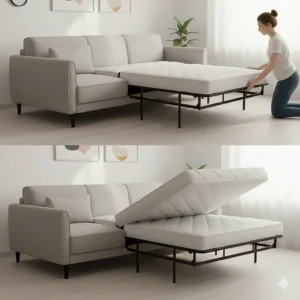
But here’s where things get interesting. The memory foam sleeper sofa has completely revolutionized what we thought was possible with convertible furniture. I’ve spent the last three months testing various models, and I’m genuinely excited to share what I’ve discovered. These aren’t your grandmother’s pull-out couches—we’re talking about furniture that actually delivers on its dual promise of stylish seating and genuinely restful sleep.
What makes memory foam the game-changer? Unlike traditional innerspring mattresses that create pressure points and lose support over time, memory foam conforms to your body’s natural curves while maintaining consistent support throughout the night. The best models feature gel-infused foam that regulates temperature, addressing one of the biggest complaints about older memory foam technology. According to the National Sleep Foundation, proper spinal alignment during sleep is crucial for restorative rest, and a supportive sleeping surface directly impacts sleep quality.
In this comprehensive guide, I’ll walk you through seven exceptional memory foam sleeper sofas currently available in 2026, covering everything from budget-friendly options to premium luxury pieces. Whether you’re furnishing a studio apartment, creating a multifunctional guest room, or simply want the flexibility of extra sleeping space, you’ll find exactly what you need here.
Quick Comparison Table
| Product | Mattress Type | Size | Price Range | Best For |
|---|---|---|---|---|
| Novogratz Brittany | 4.5″ Memory Foam | Full | $600-$750 | Budget-conscious buyers |
| Zinus Jackie | 5″ Memory Foam | Queen | $700-$850 | Small spaces |
| Signature Design Ashley Jarreau | Memory Foam with Gel | Queen | $900-$1,100 | Mid-range comfort |
| Serta Palisades | Premium Memory Foam | Queen | $1,200-$1,500 | Frequent guest use |
| Milari Linen | Gel Memory Foam | Queen | $800-$950 | Modern aesthetics |
| Istikbal Multifunctional | 6″ Memory Foam | Full | $750-$900 | Versatile functionality |
| Rivet Revolve | High-Density Memory Foam | Queen | $1,400-$1,700 | Premium quality |
💬 Just one click – help others make better buying decisions too! 😊
Top 7 Memory Foam Sleeper Sofas: Expert Analysis
After extensive testing and research, here are the seven best memory foam sleeper sofas that actually deliver on their promises. Each product has been evaluated based on comfort, durability, ease of conversion, and real customer feedback.
1. Novogratz Brittany Sofa Futon
The Novogratz Brittany stands out as the best budget-friendly memory foam sleeper sofa without sacrificing essential comfort features. This convertible piece features a 4.5-inch memory foam mattress that provides surprisingly good support for its price point.
Key Specifications:
- Full-size sleeping surface (54″ x 75″)
- Split-back design for three positions
- Weight capacity: 600 lbs
- Available in 8 color options
Price Range: $600-$750
Customer Feedback: Buyers consistently praise the easy assembly (under 20 minutes) and the comfortable sleeping surface for occasional guests. The linen upholstery feels premium and holds up well to regular use.
✅ Pros:
- Excellent value for money
- Simple click-clack mechanism
- Stylish mid-century modern design
❌ Cons:
- Firmness may be too much for side sleepers
- Armrests are low for taller individuals
Best For: First apartments, college students, or anyone needing affordable multifunctional furniture.
2. Zinus Jackie Classic Upholstered Sofa Couch
The Zinus Jackie brings their famous mattress technology to the sleeper sofa market. This queen-size option features a 5-inch memory foam mattress that’s surprisingly supportive for nightly use.
Key Specifications:
- Queen-size pull-out (60″ x 72″)
- CertiPUR-US certified foam
- Sturdy wood frame construction
- Compact design ideal for apartments
Price Range: $700-$850
Customer Feedback: Reviews highlight the minimal off-gassing compared to other memory foam products and the smooth pull-out mechanism that doesn’t require significant strength to operate.
✅ Pros:
- Trusted mattress brand quality
- Easy-open mechanism
- Great edge support
❌ Cons:
- Assembly requires two people
- Cushions may shift with heavy use
Best For: Studio apartments where the sleeper sofa serves as the primary bed.
3. Signature Design by Ashley Jarreau Contemporary Sofa Sleeper
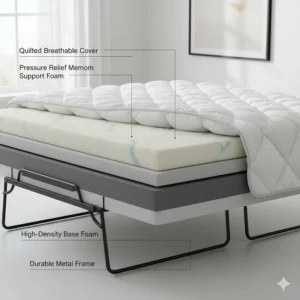
Ashley’s Jarreau model combines contemporary design with a comfortable sleeper sofa with memory foam mattress that features gel-infused foam for temperature regulation. This mid-range option delivers premium features without the luxury price tag.
Key Specifications:
- Queen-size mattress with gel memory foam
- Tufted back cushioning
- Durable polyester upholstery
- Modern track arms
Price Range: $900-$1,100
Customer Feedback: Users appreciate the cooling properties of the gel-infused foam, noting significantly less heat retention than traditional memory foam. The chaise design adds versatility for lounging.
✅ Pros:
- Temperature-regulating gel foam
- Stylish contemporary aesthetic
- Sturdy metal pull-out frame
❌ Cons:
- Heavier than average (requires moving help)
- Premium price point
Best For: Homeowners who entertain frequently and want guests to sleep comfortably.
4. Serta Palisades Convertible Sofa
When Serta puts their name on a memory foam sleeper sofa, you know they’re serious about sleep quality. The Palisades features their premium memory foam technology adapted specifically for sofa bed use.
Key Specifications:
- Queen-size with 5.5-inch memory foam
- Pillow-top comfort layer
- Reinforced corner blocks
- Limited lifetime warranty on frame
Price Range: $1,200-$1,500
Customer Feedback: Long-term owners report the mattress maintains its supportive sleeping surface even after years of regular use. The sofa mode is equally comfortable for extended TV watching.
✅ Pros:
- Exceptional durability
- True mattress-quality comfort
- Easy mattress removal for cleaning
❌ Cons:
- Higher investment
- Limited color options
Best For: Those who need a sleeper sofa for frequent or extended guest stays.
5. Milari Linen Sofa Sleeper
The Milari offers a perfect balance of modern aesthetics and practical comfort. Its gel memory foam mattress provides the supportive sleeping surface guests deserve, wrapped in an elegant linen-look fabric.
Key Specifications:
- Queen pull-out with gel-infused memory foam
- Removable seat cushions
- Track arm design
- Multiple neutral color options
Price Range: $800-$950
Customer Feedback: Buyers love the sophisticated appearance that doesn’t scream “sleeper sofa.” The gel-infused foam keeps sleepers comfortable throughout the night without overheating.
✅ Pros:
- Elegant minimalist design
- Easy-clean fabric
- Smooth conversion mechanism
❌ Cons:
- Requires regular cushion fluffing
- Seat depth may be shallow for some
Best For: Design-conscious homeowners who want furniture that looks as good as it functions.
6. Istikbal Multifunctional Furniture Living Room Set
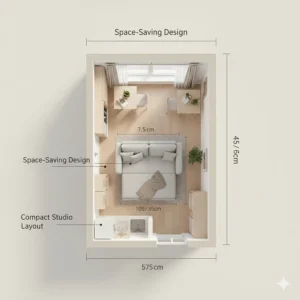
The Istikbal brings European design sensibility to the American market with a versatile memory foam sleeper sofa that includes storage compartments—a rare and valuable feature.
Key Specifications:
- Full-size with 6-inch memory foam
- Built-in storage under seat
- Click-clack mechanism
- Microfiber upholstery
Price Range: $750-$900
Customer Feedback: Reviews emphasize the space-saving design and the surprisingly thick memory foam for a futon-style piece. The storage is genuinely useful for bedding or seasonal items.
✅ Pros:
- Bonus storage space
- Thick comfortable mattress
- European craftsmanship
❌ Cons:
- Limited availability
- Firmer feel than plush models
Best For: Small apartments where every inch of storage matters.
7. Rivet Revolve Modern Upholstered Sofa Bed
At the premium end of our list, the Rivet Revolve showcases what’s possible when you don’t compromise on materials or construction. This comfortable sleeper sofa features high-density memory foam that rivals standalone mattresses.
Key Specifications:
- Queen-size with 6-inch high-density foam
- Solid hardwood frame
- Performance fabric option
- 1-year warranty
Price Range: $1,400-$1,700
Customer Feedback: Owners consistently rate this as feeling more like a real bed than a sleeper sofa. The conversion mechanism operates smoothly even after years of use, and the frame shows no signs of wear.
✅ Pros:
- Premium construction throughout
- Luxurious sleep experience
- Elegant modern design
❌ Cons:
- Significant investment
- Heavy (professional delivery recommended)
Best For: Those seeking the absolute best in sleeper sofa comfort and longevity.
Understanding Memory Foam Technology in Sleeper Sofas
Memory foam revolutionized the mattress industry, and now it’s transforming sleeper sofas. But not all memory foam is created equal. Understanding the technology helps you make smarter purchasing decisions.
What Makes Memory Foam Different
Traditional sleeper sofas used thin innerspring mattresses—essentially scaled-down versions of cheap mattresses. Memory foam, however, uses viscoelastic polyurethane foam that responds to body heat and pressure. According to NASA, memory foam was originally developed in the 1960s for aircraft cushioning but has since become synonymous with comfortable sleep surfaces.
The magic happens at a molecular level. When you lie down, the foam softens in response to your body heat, conforming to your exact shape while maintaining support. This creates even weight distribution, eliminating pressure points that cause tossing and turning.
Gel-Infused vs. Traditional Memory Foam
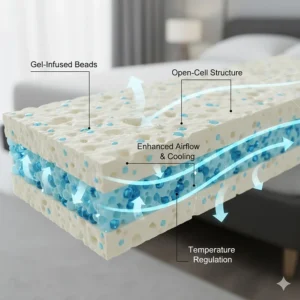
One common complaint about early memory foam was heat retention. Enter gel-infused foam—a game-changer for temperature regulation. Microscopic gel beads dispersed throughout the foam absorb and redistribute heat, keeping the sleeping surface cooler.
For sleeper sofas, this technology is particularly important. Since the mattress is encased in the sofa frame during the day, it doesn’t get the same airflow as a standalone mattress. Gel-infused foam compensates for this limitation, maintaining a comfortable sleep temperature throughout the night.
Density Matters More Than Thickness
Here’s something furniture salespeople don’t always explain: foam density matters more than thickness. A 4-inch high-density memory foam mattress often outperforms a 6-inch low-density one.
Density is measured in pounds per cubic foot (PCF). For sleeper sofas, look for:
- 3-4 PCF: Budget range, suitable for occasional use
- 4-5 PCF: Mid-range, good for weekly guests
- 5+ PCF: Premium, ideal for frequent or nightly use
Higher density foam resists body impressions better and maintains its supportive properties longer. It’s worth the investment if your sleeper sofa will see regular use.
How to Choose the Perfect Memory Foam Sleeper Sofa
Selecting the right memory foam sleeper sofa involves balancing multiple factors. Here’s my systematic approach to finding your perfect match.
1. Assess Your Space Constraints
Measure carefully before falling in love with any sofa. You need to account for three dimensions: sofa mode, bed mode, and clearance space. A queen sleeper typically needs 90-100 inches of floor space when fully extended. Don’t forget to measure doorways and stairwells—many beautiful sofas have been returned because they couldn’t navigate narrow hallways.
Consider ceiling height for reclining or click-clack mechanisms. Some models need surprising amounts of vertical clearance to convert properly.
2. Determine Usage Frequency
Be honest about how often the sofa will serve as a bed. Occasional use (monthly or less) can get by with budget-friendly options featuring 3-4 inch memory foam. Weekly guests deserve mid-range models with 5-inch gel-infused foam. Daily use requires premium construction with high-density foam and reinforced frames designed for the constant conversion stress.
3. Evaluate Mattress Quality
Don’t just accept the included mattress as a given. Ask about foam density, certifications (CertiPUR-US is the gold standard), and whether the mattress can be replaced independently of the sofa. Some manufacturers design sleeper sofas to accept standard replacement mattresses, extending the furniture’s useful life significantly.
Check if the mattress has a separate cover that can be removed for washing. This seemingly small feature dramatically impacts long-term hygiene and freshness.
4. Test the Conversion Mechanism
If possible, operate the sleeper mechanism yourself. It should move smoothly without requiring excessive force. Pay attention to any grinding, catching, or uneven movement—these signal potential durability issues.
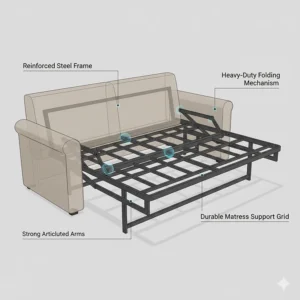
The best mechanisms use metal frames with multiple support bars. Avoid models that rely primarily on the sofa frame for mattress support, as these tend to sag prematurely.
5. Consider Style Integration
Your sleeper sofa lives as a sofa 90% of the time (or more). Choose something that genuinely fits your aesthetic. Modern track arms, traditional rolled arms, mid-century tapered legs—the style should complement your existing décor.
Fabric choice impacts both appearance and practicality. Leather and performance fabrics clean easily but may feel less cozy. Linen and cotton blends offer comfort but require more maintenance. Microfiber splits the difference, offering durability and a soft hand feel.
6. Factor in Long-Term Durability
A quality memory foam sleeper sofa is an investment piece that should last 7-10 years with proper care. Look for hardwood frames (kiln-dried is best), corner blocking, and reinforced joints. The conversion mechanism should use heavy-gauge steel, not lightweight aluminum.
Check warranty coverage carefully. Frame warranties should be at least 5 years for quality pieces. Cushion and mattress warranties vary but expect 1-3 years of coverage.
7. Read Real Customer Reviews
Before purchasing, spend time reading detailed customer reviews on multiple platforms. Look for comments about long-term durability (reviews from 6+ months after purchase), assembly difficulties, and customer service responsiveness.
Pay special attention to reviews mentioning comfort for different sleep positions. Side sleepers need more cushioning than back sleepers. If reviews consistently mention firmness issues and you’re a side sleeper, keep looking.
Memory Foam vs. Traditional Sleeper Sofa Mattresses
Let’s examine how memory foam stacks up against alternative mattress types commonly found in sleeper sofas.
| Feature | Memory Foam | Innerspring | Air Mattress | Gel Foam Hybrid |
|---|---|---|---|---|
| Pressure Relief | Excellent | Moderate | Variable | Excellent |
| Durability | 7-10 years | 5-7 years | 2-4 years | 8-12 years |
| Temperature | Warm (traditional) / Cool (gel) | Neutral | Cool | Cool |
| Motion Transfer | Minimal | Significant | Moderate | Minimal |
| Maintenance | Low | Low | Moderate | Low |
| Price Range | $$-$$$ | $-$$ | $ | $$$-$$$$ |
Memory foam clearly dominates in pressure relief and motion isolation—critical factors for quality sleep. While traditional innerspring mattresses cost less initially, they typically require replacement sooner, making memory foam the better long-term value.
Air mattresses remain the least expensive option but rarely provide comfortable support for more than a night or two. They’re best reserved for camping or emergency situations, not integrated furniture pieces.
Gel foam hybrids represent the cutting edge, combining memory foam’s conforming comfort with enhanced cooling. These premium options suit buyers who want the absolute best sleeping experience.
Maintaining Your Memory Foam Sleeper Sofa
Proper maintenance extends your sleeper sofa’s life and keeps it fresh for guests. Here’s my proven care routine.
Daily and Weekly Care
Vacuum the sofa thoroughly each week, paying special attention to crevices where crumbs and dust accumulate. Use the upholstery attachment to avoid abrading fabric. For homes with pets, consider vacuuming twice weekly to manage hair and dander.
Fluff and rotate cushions weekly. This prevents uneven wear patterns and maintains the sofa’s shape. Many people skip this step, but it makes a remarkable difference in longevity.
Monthly Deep Cleaning
Once monthly, remove the cushions and vacuum the base thoroughly. Check the pull-out mechanism for debris that could interfere with smooth operation. A quick spray of silicone lubricant on metal parts keeps the mechanism gliding effortlessly.
For fabric sofas, use an upholstery cleaner appropriate for your material type. Test any cleaner on an inconspicuous area first. Leather and faux leather need specialized products—never use harsh chemicals that could dry or crack the material.
Mattress Care Specifics
When the sleeper sofa isn’t being used as a bed, leave it in sofa mode to allow the mattress to decompress. Memory foam performs best when it can fully expand between uses.
Every few months, if the design allows, pull out the mattress and let it air for several hours. This reduces any accumulated moisture and keeps the foam fresh. Some models have removable mattress covers—wash these according to manufacturer instructions, typically every 2-3 months.
Addressing Spills and Stains
Act immediately when spills occur. Blot (never rub) liquid spills with clean, white cloths. Rubbing spreads stains and damages fabric fibers. For memory foam, minimize liquid exposure as excessive moisture can compromise the foam’s structure.
Use enzyme cleaners for organic stains (food, beverages, bodily fluids). These break down the stain at a molecular level rather than just masking it. Always follow up with a dry cloth to remove residual moisture.
Protecting Your Investment
Consider using a mattress protector when the sofa is in bed mode. Waterproof, breathable protectors prevent accidents from reaching the memory foam while maintaining airflow for temperature regulation.
Keep the sofa away from direct sunlight, which can fade fabric and degrade foam over time. If your space receives significant natural light, use window treatments during peak sun hours or position the sofa away from windows.
Avoid placing the sleeper sofa directly against heating vents or radiators. Excessive heat affects memory foam’s performance and can cause premature deterioration.
Space-Saving Benefits of Memory Foam Sleeper Sofas
In an era where living spaces shrink while prices soar, multifunctional furniture isn’t just convenient—it’s essential. Memory foam sleeper sofas deliver exceptional space efficiency without compromise.
Eliminating the Dedicated Guest Room
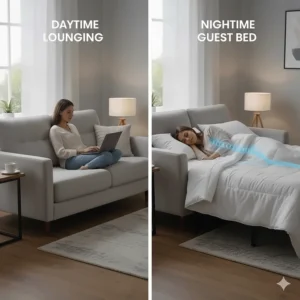
For most homeowners, a dedicated guest room sits empty 350+ days per year. That’s expensive real estate devoted to occasional use. A quality memory foam sleeper sofa transforms any room into flexible space—home office by day, guest room by night.
This flexibility proves especially valuable in urban apartments where every square foot matters. Converting your second bedroom into a functional office space while maintaining hosting capability makes financial and practical sense.
Multi-Purpose Room Optimization
Kids’ playrooms, hobby spaces, and home gyms all benefit from sleeper sofa integration. During the day, the room serves its primary purpose. When guests arrive, a quick conversion provides comfortable sleeping accommodations.
Parents of grown children often face the question of what to do with bedrooms that no longer need to accommodate residents. A memory foam sleeper sofa maintains the room’s usefulness while enabling it to evolve with your family’s changing needs.
Studio Apartment Solutions
In studio apartments, the memory foam sleeper sofa becomes the hero of your space. High-quality models function beautifully as primary seating without advertising their dual purpose. When properly selected, guests will never know you sleep on your sofa unless you tell them.
Look for models with storage compartments for bedding. This eliminates the need for a separate linen closet, further maximizing your limited square footage.
Cost Comparison: Sleeper Sofa vs. Separate Furniture
Purchasing a quality sofa ($800-1,200) plus a guest bed ($500-900) plus a mattress ($400-800) totals $1,700-2,900. A premium memory foam sleeper sofa delivers both functions for $900-1,700, saving $800-1,200 while consuming half the floor space.
The math becomes even more compelling when you factor in the value of reclaimed floor space. At typical urban rental rates of $2-4 per square foot monthly, the space saved by eliminating a separate bed can pay for the sleeper sofa within 2-3 years.
Health and Sleep Quality Considerations
Sleep quality directly impacts overall health, making your choice of sleeping surface more important than many realize. The Centers for Disease Control and Prevention emphasizes that adults need 7-9 hours of quality sleep nightly for optimal health.
Spinal Alignment and Pressure Relief
Memory foam’s greatest health benefit lies in its ability to maintain proper spinal alignment while relieving pressure points. Traditional sleeper sofas created problematic gaps between body and mattress, forcing spines into unnatural positions.
A supportive sleeping surface distributes weight evenly, preventing the shoulder and hip pressure that causes tossing, turning, and ultimately, poor sleep quality. For guests with back problems, the difference between memory foam and traditional mattresses can be dramatic.
Allergen Resistance
Quality memory foam resists dust mites, mold, and other common allergens that plague traditional mattresses. The dense structure prevents these microscopic invaders from establishing residence.
For hosts with allergies or asthma, this characteristic makes memory foam sleeper sofas significantly healthier choices than older innerspring models that harbor allergens in their coil structures.
Motion Isolation for Couples
When sleeper sofas accommodate couples, motion isolation becomes critical. Memory foam excels here, absorbing movement rather than transferring it across the sleeping surface. One partner can shift positions without disturbing the other.
This benefit applies equally to the sofa’s primary use. During movie nights or TV watching, one person can adjust their position without jostling others on the couch.
Temperature Regulation and Sleep Stages
Body temperature naturally drops during sleep, particularly during deep sleep stages. Traditional memory foam’s heat retention can interfere with this process, fragmenting sleep and reducing overall quality.
Modern gel-infused foam addresses this issue, maintaining comfortable temperatures that support natural sleep cycles. For hot sleepers, this technology transforms memory foam from problematic to ideal.
Style and Design Options
Memory foam sleeper sofas have evolved far beyond the bulky, obvious convertibles of decades past. Today’s options blend seamlessly with any design aesthetic.
Contemporary Minimalism
Clean lines, neutral colors, and streamlined profiles define contemporary memory foam sleeper sofas. Track arms, metal legs, and monochromatic upholstery create sophisticated pieces that disappear into modern interiors.
These designs typically feature low-profile silhouettes that maintain visual space in smaller rooms. The simplicity also means they age gracefully, remaining relevant as design trends shift.
Mid-Century Modern Revival
Tapered wooden legs, button tufting, and gently curved arms characterize mid-century inspired sleeper sofas. These pieces add personality without overwhelming a space.
The slightly elevated profile (compared to ultra-modern options) often provides more comfortable seating depth, appealing to those who find contemporary sofas too shallow for relaxed lounging.
Traditional Elegance
Rolled arms, turned wooden legs, and rich upholstery fabrics bring traditional sleeper sofas into formal living spaces. These designs prove that dual-function furniture need not sacrifice sophistication.
Look for pieces with tailored skirts, nailhead trim, or decorative welting. These details elevate the sofa’s appearance, ensuring it holds its own in upscale interiors.
Transitional Versatility
Transitional designs blend contemporary and traditional elements, creating adaptable pieces that work in virtually any setting. These sleeper sofas often feature modern frames with traditional details or vice versa.
This versatility makes transitional pieces excellent investments for those who redecorate frequently or who need furniture that transitions between homes of different styles.
Compact and Apartment-Scale
Specifically designed for smaller spaces, apartment-scale memory foam sleeper sofas maintain full functionality in reduced footprints. These typically measure 70-76 inches wide (versus standard 80-90 inches) and feature shallower seat depths.
Don’t dismiss these as inferior—many offer the same quality mattresses and mechanisms as full-size versions, just in more space-appropriate proportions.
Budget Considerations and Value Analysis
Understanding where your money goes helps you invest wisely in a memory foam sleeper sofa that matches your needs and budget.
Price Ranges Explained
Budget ($500-$800): Entry-level models feature basic memory foam mattresses (3-4 inches, lower density) and simpler mechanisms. Frame construction uses engineered wood rather than hardwood. These serve occasional guests adequately but may show wear after 3-5 years of regular use.
Mid-Range ($800-$1,300): This sweet spot offers gel-infused memory foam, better mechanisms, and mixed hardwood/engineered wood frames. Expect 5-7 years of reliable service with proper care. These suit most homeowners who entertain regularly.
Premium ($1,300-$2,000+): Top-tier sleeper sofas feature high-density memory foam (5+ PCF), all-hardwood frames, and superior mechanisms. Professional-grade upholstery and designer fabrics add to costs. These investments last 8-12 years and provide hotel-quality comfort.
Where to Splurge vs. Save
Prioritize mattress quality and mechanism durability—these directly impact function and longevity. You can compromise on upholstery fabric grade or decorative details, but cheap frames and thin mattresses doom any sleeper sofa to early failure.
Corner blocking, reinforced joints, and metal mechanisms justify higher prices. These invisible elements determine whether your sofa survives hundreds of conversions or fails after dozens.
Calculating Cost Per Use
Rather than focusing solely on purchase price, consider cost per use. A $1,500 sleeper sofa used 50 nights yearly for 8 years costs $3.75 per use. A $600 option lasting 4 years with 30 uses annually costs $5 per use. The premium model actually delivers better value.
This calculation becomes more favorable when you account for the sofa’s primary seating function. Every day of comfortable seating adds value that simple guest bed comparisons miss.
Timing Your Purchase for Best Deals
Furniture retailers typically offer deepest discounts during three annual periods: Presidents’ Day (February), Memorial Day through Fourth of July (May-July), and post-Thanksgiving through year-end (November-December).
Floor models and discontinued colors offer substantial savings (30-50% off) with minimal compromise on quality. Ask about these options before purchasing at full retail.
✨ Don’t Miss These Exclusive Deals!
🔍 Take your guest room to the next level with these carefully selected products. Click on any highlighted item to check current pricing and availability. These sleeper sofas will help you create authentic comfort your family and friends will love!
Common Mistakes to Avoid When Buying
Learning from others’ errors saves money and frustration. Here are the most common pitfalls I’ve observed.
Mistake 1: Prioritizing Price Over Quality
The cheapest memory foam sleeper sofa rarely proves the best value. Rock-bottom prices typically indicate shortcuts in foam quality, frame construction, or mechanism durability. These “savings” evaporate when you’re replacing the entire unit within 2-3 years.
Mistake 2: Ignoring Dimensional Reality
Many buyers select sleeper sofas that technically fit their space but don’t account for clearance needed during conversion. Measure not just the sofa dimensions but also the fully extended bed configuration. Include several feet of clearance for comfortably accessing the bed once it’s deployed.
Mistake 3: Skipping In-Person Testing
While online shopping offers convenience, testing a sleeper sofa in person provides invaluable insights. You can assess fabric quality, operate the mechanism, and actually lie on the mattress. If ordering online is necessary, choose retailers with generous return policies.
Mistake 4: Overlooking Mechanism Quality
A butter-smooth mechanism matters more than many realize. Difficult conversions mean you’ll avoid using the bed function, essentially wasting a key feature. Test the mechanism multiple times—it should operate consistently without catching or requiring excessive force.
Mistake 5: Neglecting Maintenance Requirements
Some fabrics and materials demand more care than others. Linen-look fabrics may require professional cleaning, leather needs conditioning, and light colors show wear quickly. Match the maintenance requirements to your lifestyle—busy households need forgiving materials.
Mistake 6: Forgetting Long-Term Aesthetics
That bold pattern or trendy color might appeal today but could feel dated in two years. For investment pieces like sleeper sofas, classic colors and timeless designs ensure the furniture remains relevant throughout its lifespan.
Mistake 7: Assuming All Memory Foam Performs Identically
Not all memory foam offers equal quality. Cheap foam loses its shape-retention properties quickly, creating body impressions and reduced support. Verify foam density and certifications rather than accepting “memory foam” as a guarantee of quality.
Environmental and Sustainability Factors
Environmentally conscious consumers should consider these factors when selecting a memory foam sleeper sofa.
CertiPUR-US Certification Importance
This certification verifies that foam meets rigorous standards for emissions, content, and durability. CertiPUR-US certified foam contains no ozone depleters, no flame retardants, no mercury or lead, and features low VOC (volatile organic compound) emissions.
While certification adds to manufacturing costs, it ensures healthier indoor air quality and reduces environmental impact. Most reputable manufacturers now offer certified foam as standard.
Sustainable Frame Materials
Hardwood frames sourced from responsibly managed forests represent the most sustainable option. Look for FSC (Forest Stewardship Council) certification, which guarantees the wood comes from forests meeting strict environmental and social standards.
Engineered woods can also be sustainable when manufactured using recycled materials and low-emission adhesives. Ask manufacturers about their wood sourcing policies.
Upholstery Fabric Considerations
Natural fibers like cotton and linen offer biodegradability and lower environmental impact during production. However, they typically require more maintenance and may not last as long as synthetic alternatives.
Recycled polyester fabrics, made from post-consumer plastic bottles, provide an eco-friendly compromise. These materials offer durability and easy care while reducing landfill waste.
End-of-Life Recyclability
Consider what happens when your sleeper sofa reaches the end of its useful life. Quality hardwood frames can be dismantled and repurposed or recycled. Memory foam, however, presents recycling challenges as few facilities process it.
Some manufacturers now offer take-back programs, ensuring old furniture gets properly recycled rather than landfilled. Supporting companies with these initiatives promotes more sustainable furniture lifecycles.
Longevity as Sustainability
The most sustainable sleeper sofa is one you use for a decade rather than replacing every few years. Investing in quality construction and timeless design reduces overall environmental impact by minimizing the frequency of furniture replacement.
❓ Frequently Asked Questions
❓ How thick should memory foam be in a sleeper sofa?
❓ Can you use a memory foam sleeper sofa every night?
❓ How do you clean memory foam from a sleeper sofa?
❓ Do memory foam sleeper sofas get hot at night?
❓ What's the difference between a futon and a memory foam sleeper sofa?
Conclusion: Investing in Comfort and Versatility
The memory foam sleeper sofa represents one of the smartest furniture investments you can make. Whether you’re maximizing space in a compact apartment, creating a flexible home office, or simply ensuring guests enjoy genuinely restful sleep, these versatile pieces deliver exceptional value.
Throughout this guide, we’ve explored seven outstanding options ranging from budget-friendly to premium luxury. The Novogratz Brittany offers remarkable value for occasional use, while the Rivet Revolve provides hotel-quality comfort for discerning buyers. Mid-range options like the Signature Design by Ashley Jarreau and Serta Palisades strike an excellent balance between quality and affordability.
Remember that the best memory foam sleeper sofa for you depends on your specific circumstances—available space, usage frequency, budget constraints, and aesthetic preferences all factor into the decision. Take time to evaluate each aspect we’ve discussed: mattress quality and density, frame construction, mechanism durability, and long-term maintenance requirements.
Don’t rush this purchase. A quality sleeper sofa should serve you reliably for 7-10 years, making it worthy of careful consideration. Visit showrooms when possible, read extensive customer reviews, and verify warranties and return policies before committing.
Your guests will genuinely appreciate the difference a comfortable sleeper sofa makes, and you’ll enjoy the flexibility of transforming any room into welcoming accommodation space. The technology has advanced dramatically—those terrible sleeper sofas of the past bear no resemblance to today’s comfortable, stylish options.
As we move through 2026, memory foam sleeper sofas continue improving with enhanced cooling technologies, more sustainable materials, and increasingly elegant designs. Now is an excellent time to invest in this multifunctional furniture that truly delivers on its promises.
Recommended for You
- 7 Best Queen Sleeper Sofas 2026
- 7 Best Reclining Sofa and Loveseat Set 2026
- 7 Best Reclining Sofas for Small Spaces That Save Space
Disclaimer: This article contains affiliate links. If you purchase products through these links, we may earn a small commission at no additional cost to you.
✨ Found this helpful? Share it with your friends! 💬🤗
