
In This Article
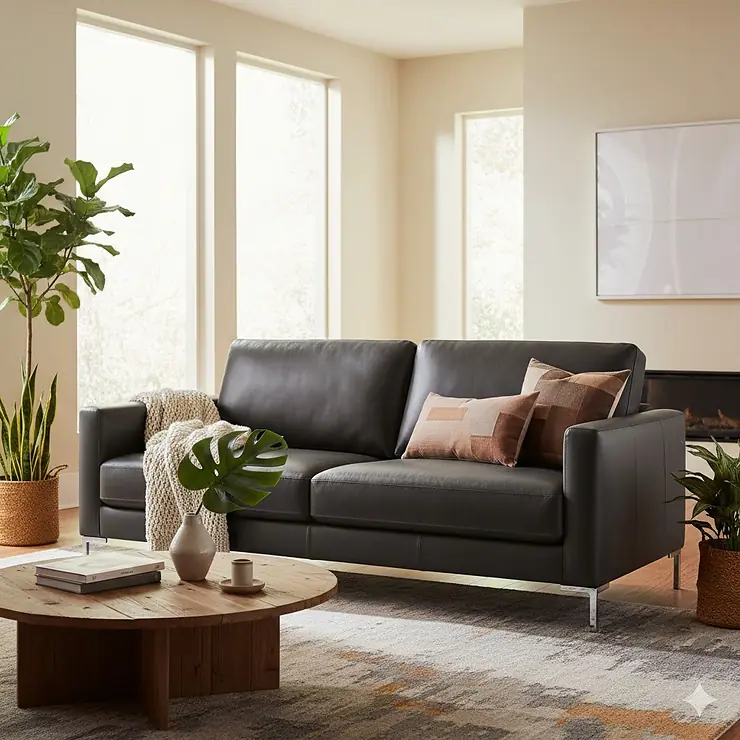
Picture this: you walk into your living room after a long day, and there it sits—a gorgeous modern leather sofa that practically begs you to sink in. Not just any sofa, but one with clean lines that could make a minimalist weep with joy and a sleek silhouette that transforms your entire space from “meh” to “magazine-worthy.”
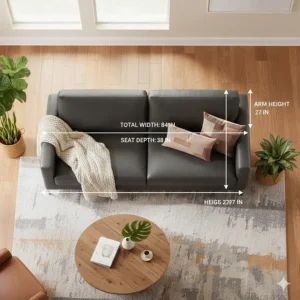
Here’s the thing about modern leather sofas—they’re not your grandmother’s stiff, formal parlor furniture. Today’s contemporary leather sofa designs blend Italian craftsmanship with everyday comfort, creating pieces that look expensive but actually improve with age. That’s right, unlike your car or your knees, a quality leather sofa gets better over time, developing a rich patina that tells your story.
What exactly makes a modern leather sofa different from traditional options? It’s all about the aesthetic philosophy. We’re talking about furniture inspired by the mid-century modern movement from 1945 to 1970, characterized by clean, simple lines and lack of embellishment. Think minimalist frames, tapered legs, and that effortlessly cool vibe that never goes out of style.
Whether you’re hunting for a black leather sofa to anchor your monochrome scheme or an italian leather sofa that screams luxury without the scream-inducing price tag, you’re in the right place. I’ve spent weeks researching, comparing, and yes, sitting on dozens of sofas (tough job, I know) to bring you this comprehensive guide to the best modern leather sofas available in 2026.
Quick Comparison Table
| Sofa Model | Style | Size | Price Range | Best For | Rating |
|---|---|---|---|---|---|
| POLY & BARK Napa | Italian Modern | 88.5″W | $2,000-$2,500 | Premium quality seekers | 4.5/5 |
| SSC SATISUNCASA | Italian Luxury | 92.5″W | $3,500-$4,500 | Complete living room sets | 4.6/5 |
| Modway Engage | Mid-Century | 90.5″W | $800-$1,200 | Budget-conscious buyers | 4.2/5 |
| Emma Italian Set | Contemporary | 88.5″W | $1,500-$2,000 | Traditional elegance | 4.3/5 |
| FOTOSOK 78″ | Modern Minimalist | 78″W | $400-$600 | Small spaces | 4.0/5 |
| Rivet Aiden Sectional | Mid-Century | 86″W | $1,300-$1,800 | Versatile layouts | 4.4/5 |
| Modway Loft | Industrial Modern | 91″W | $900-$1,400 | Statement pieces | 4.1/5 |
💬 Just one click – help others make better buying decisions too! 😊
✨ Don’t Miss These Exclusive Deals!
🔍 Take your living room to the next level with these carefully selected products. Click on any highlighted item to check current pricing and availability. These sofas will help you create authentic style your family will love!
Top 7 Modern Leather Sofas – Expert Analysis
1. POLY & BARK Napa 88.5″ Leather Sofa – The Italian Dream
If you’re serious about investing in a contemporary leather sofa that’ll last decades, the POLY & BARK Napa deserves your attention. This beauty features full-grain Italian-tanned aniline leather that develops a stunning vintage patina over time—think of it as wine for furniture.
Key Specifications:
- Dimensions: 88.5″W x 38″D x 32″H
- Material: Full-grain pure-aniline Italian leather
- Frame: Solid kiln-dried wood with walnut legs
- Weight capacity: Designed for everyday family use
The feather-down comfort layer transforms this from just another sofa into your new favorite reading spot. One customer mentioned, “The more you sit, the better it gets,” which perfectly captures how genuine leather matures beautifully. Available in onyx black, cognac tan, and midnight blue, this piece adapts to various design aesthetics.
✅ Pros:
- Authentic Italian leather that ages gracefully
- Feather-down cushioning for cloud-like comfort
- Solid wood construction ensures longevity
❌ Cons:
- Premium price point
- Requires regular conditioning
Price Range: $2,000-$2,500 | Best For: Those who view furniture as a long-term investment
2. SSC SATISUNCASA 2026 New Luxury Italian-Style Leather Sofa – Complete Living Room Transformation
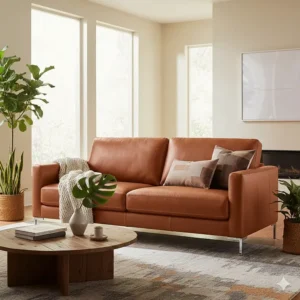
Want to completely reimagine your space? The SSC SATISUNCASA set doesn’t just give you a sofa—it delivers a 92.5″ curved modern leather sofa paired with two stunning velvet swivel chairs. Talk about making an entrance.
Key Specifications:
- Dimensions: 92.5″W curved sofa design
- Material: Natural milled leather with rich tonal depth
- Included: 2 green velvet swivel chairs
- Frame: Solid wood with Pirelli webbing support
What sets this apart is the Italian-inspired curved back design combined with those swivel accent chairs. The natural milled leather develops unique character over time—each piece tells its own story. The high-density foam layered seating offers that relaxed-yet-supportive feel perfect for marathon Netflix sessions or deep conversations.
✅ Pros:
- Complete living room set for cohesive design
- Curved silhouette adds architectural interest
- Arrives ready to use—minimal assembly
❌ Cons:
- Higher investment required
- Large footprint needs spacious rooms
Price Range: $3,500-$4,500 | Best For: Homeowners wanting a complete, coordinated look
3. Modway Engage Mid-Century Modern Leather Sofa – Affordable Elegance
The Modway Engage proves you don’t need to drain your savings for that coveted mid-century modern aesthetic. With its gently sloping curves and button-tufted design, this tan beauty delivers serious style points.
Key Specifications:
- Dimensions: 90.5″W x 33″L x 32.5″H
- Material: Quality leather upholstery
- Frame: Cherry rubber wood with solid base
- Weight capacity: Up to 1,700 lbs
Seven eye-catching buttons create depth and visual interest, while the cherry-colored rubber wood legs supply that quintessential retro vibe. Customer feedback highlights the easy assembly—literally just screwing on four legs. One reviewer noted it arrived well-packaged and looked “great next to my fireplace.”
✅ Pros:
- Exceptional value for genuine leather
- Simple 15-minute assembly
- Classic mid-century design
❌ Cons:
- Mixed reviews on leather thickness
- Tan color may appear lighter than photos
Price Range: $800-$1,200 | Best For: Budget-conscious mid-century modern enthusiasts
4. Emma Black Italian Leather Sofa and Chair Set – Timeless Sophistication
The Emma set channels pure contemporary elegance with its black italian leather sofa and matching chair. This isn’t trying to be trendy—it’s aiming for timeless, and it nails the landing.
Key Specifications:
- Sofa Dimensions: 88.5″W x 37.5″D x 38″H
- Material: 100% top-grain aniline-dyed Italian leather
- Frame: Kiln-dried hardwood construction
- Suspension: 9-gauge steel sinuous springs
The deeply tufted cushions on both seat and back create that luxurious aesthetic, while walnut-stained wood legs add warmth to the sleek black leather. The 9-gauge steel spring suspension system ensures this beauty maintains its comfort for years. Plus, the leather match on sides and outside back keeps costs reasonable while prioritizing visible surfaces.
✅ Pros:
- Authentic Italian leather on all visible areas
- Durable hardwood frame construction
- Classic tufted design never goes out of style
❌ Cons:
- Leather match (not full leather throughout)
- Limited color options
Price Range: $1,500-$2,000 | Best For: Traditional design lovers seeking modern touches
5. FOTOSOK 78″ Modern Leather Couch – Smart Small-Space Solution
Don’t let your cozy apartment or compact living room limit your style. The FOTOSOK brown leather sofa packs impressive features into a more manageable 78-inch frame.
Key Specifications:
- Dimensions: 78″W with deep 21.26″ seat depth
- Material: Faux leather (waterproof, wrinkle-resistant)
- Frame: All-metal construction
- Weight capacity: 1,000 lbs
Here’s what impressed me: 100% brand-new memory high-density foam (not recycled sponge or springs). The 7.1-inch thick cushions and 13-inch height armrests create that sink-in comfort without the sink-in-forever problem of cheap foam. Gold metal legs add a touch of glamour to the brown and gold color scheme.
✅ Pros:
- Seriously affordable entry point
- Easy-care waterproof surface
- Substantial weight capacity
❌ Cons:
- Faux leather rather than genuine
- Smaller size limits seating capacity
Price Range: $400-$600 | Best For: Budget shoppers and small living spaces
6. Rivet Aiden Mid-Century Reversible Sectional – Ultimate Flexibility
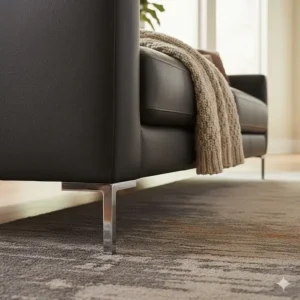
The Rivet Aiden sectional solves that age-old problem: what if you need to rearrange your living room? With its reversible chaise, this cognac leather sectional adapts to your changing needs.
Key Specifications:
- Dimensions: 86″W x 37″D x 33″H
- Chaise depth: 62.6″ total
- Material: Top-grain leather upholstery
- Frame: Solid hardwood with tapered legs
Amazon’s own furniture brand delivers here with removable, reversible cushions and that gorgeous cognac leather that develops character over time. The mid-century aesthetic shines through with clean lines and tapered wood legs. Assembly takes about 15 minutes—just attach the pieces and you’re lounging.
✅ Pros:
- Reversible chaise for layout flexibility
- Premium top-grain leather
- Amazon’s 30-day returns and 1-year warranty
❌ Cons:
- Sectional configuration requires space planning
- Limited to one color option
Price Range: $1,300-$1,800 | Best For: Those who rearrange frequently or want sectional versatility
7. Modway Loft Upholstered Genuine Leather Sofa – Industrial Chic Statement
The Modway Loft in black takes a bold approach with its external tubular stainless steel frame. This isn’t your typical leather sofa—it’s a conversation starter that bridges eras.
Key Specifications:
- Dimensions: 91″W x 30.5″L x 30.5″H
- Material: Genuine leather with button-tufted detail
- Frame: Tubular stainless steel (exposed)
- Style: Contemporary industrial modern
The exposed chrome frame gives serious mid-20th-century vibes while the button-tufted cushions add depth and texture. It’s the kind of piece Fortune 500 companies choose for their reception areas—that perfect balance of sophistication and approachability. The black leather against polished steel creates striking visual contrast.
✅ Pros:
- Unique industrial-modern aesthetic
- Exposed frame adds architectural interest
- Genuine leather at mid-range pricing
❌ Cons:
- Industrial style won’t suit all decors
- Lower profile may not suit everyone
Price Range: $900-$1,400 | Best For: Design-forward spaces and commercial settings
What Makes a Modern Leather Sofa “Modern”?
Let’s get philosophical for a second. A modern leather sofa isn’t just about slapping some clean lines on furniture and calling it a day. It’s rooted in a design movement that revolutionized how we think about our living spaces, emphasizing functionality, simplicity, and clean aesthetics over ornate decoration.
The “modern” designation specifically refers to pieces inspired by the revolutionary design period of the mid-20th century. We’re talking about furniture that rejects unnecessary embellishment in favor of purposeful design. Every curve serves a function. Every line has meaning. It’s design democracy at its finest—beautiful furniture shouldn’t be reserved for mansions.
Contemporary leather sofa designs take these principles and run with them. You’ll notice characteristics like tapered legs (often angled outward), low-profile frames, and neutral color palettes. The sleek silhouette isn’t just for looks—it actually makes rooms feel more spacious and less cluttered. Who doesn’t want that?
What about those clean lines everyone keeps mentioning? They’re the visual equivalent of decluttering your space. No fussy details, no baroque carvings, no unnecessary frills. Just honest, straightforward design that lets the quality materials shine. When you invest in an italian leather sofa with these characteristics, you’re buying into a design philosophy that’s lasted over 70 years for good reason.
Understanding Leather Types and Quality Grades
Not all leather is created equal, and knowing the difference can save you from expensive mistakes. Let’s break down the leather hierarchy from “wow, that’s amazing” to “well, it’s technically leather.”
Full-Grain Leather sits at the top of the quality pyramid. This is the real deal—the entire grain layer with all its natural imperfections intact. Think of it like an unfiltered photo versus an Instagram filter. Those natural marks, scars, and variations? They’re features, not bugs. Full-grain develops that gorgeous patina everyone obsesses over.
Top-Grain Leather comes in second. The surface gets sanded slightly to remove imperfections, then refinished. It’s more uniform than full-grain but still high quality. Most mid-range sofas use top-grain, and honestly, it’s an excellent choice for families who need durability without the premium price tag.
Corrected-Grain Leather has been heavily processed to create a uniform surface. The natural grain gets buffed away, then an artificial grain is stamped on. It’s more stain-resistant and consistent, but you sacrifice that authentic leather character.
Bonded Leather barely deserves the name—it’s basically leather scraps ground up and glued onto a fabric backing. Think of it as the hot dog of leather furniture. Sure, it contains leather, but…just no.
When shopping for a black leather sofa or any modern leather piece, ask specifically about the leather grade. A quality retailer will proudly share this information. If they’re vague or evasive? That’s your cue to keep shopping.
Why Italian Leather Sofas Command Premium Prices
You’ve probably noticed italian leather sofa options cost more than their counterparts. Is it just marketing hype, or is there substance behind the premium? Spoiler alert: there’s a lot of substance.
Italian tanneries have perfected leather processing over centuries—we’re talking about craft traditions passed down through generations. The region around Tuscany and Veneto produces some of the world’s finest hides, using vegetable tanning methods that take months instead of days. This slow process creates leather that’s softer, more supple, and more durable than quick-tanned alternatives.
The difference shows in how the leather ages. Italian leather develops that coveted patina gracefully, with color variations and soft sheen that add character over time. Cheaper leather? It just looks worn out. Italian leather tells your story in style.
But it’s not just the tanning process. Italian furniture makers approach their craft with an almost obsessive attention to detail. Hand-stitched seams, carefully matched panels, precise cuts that minimize waste—these aren’t shortcuts in the Italian playbook. When you invest in an italian leather sofa, you’re paying for expertise that simply can’t be rushed or automated.
That said, not everything labeled “Italian leather” comes from Italy. Some manufacturers use Italian leather for visible surfaces only (a practice called “leather match”). Others import Italian-tanned leather but manufacture elsewhere. Always verify what you’re actually getting—authentic Italian leather throughout, Italian leather on visible surfaces, or Italian-style leather (which might not be from Italy at all).
Color Psychology: Choosing Between Black, Brown, and Tan
Color choice goes way beyond aesthetics—it actually affects how your space feels and functions. Research from the National Institutes of Health shows that interior color significantly impacts psychological functioning and satisfaction in living environments. Let me walk you through the psychology and practicality of the most popular modern leather sofa colors.
Black Leather Sofas make powerful statements. They anchor a room with sophistication and create dramatic contrast in lighter spaces. I love how a black leather sofa grounds eclectic decor, preventing rooms from feeling too busy or chaotic. However, black shows dust and light scratches more readily than other colors, requiring more frequent maintenance. It also absorbs heat in sunny rooms, which might matter if you live somewhere warm.
Brown and Cognac options bring warmth and versatility. These earthy tones hide minor wear beautifully—scuffs and scratches blend into the natural color variation rather than standing out. Brown leather creates cozy, inviting atmospheres perfect for family rooms and casual spaces. Cognac specifically has this rich, whiskey-barrel vibe that gets better with age. It’s the color that makes guests say, “Your living room feels so comfortable.”
Tan and Lighter Shades brighten spaces and create that airy, Scandinavian-inspired aesthetic. Light leather makes rooms feel larger and more open. The trade-off? It requires more vigilant cleaning since spills and stains show immediately. But if you don’t have kids or pets (or you’re just really disciplined about the “no food on the sofa” rule), tan leather delivers an elegant, refined look.
Consider your lifestyle honestly. Have toddlers who treat furniture like jungle gyms? Maybe skip the pristine white leather. Live alone in a minimalist loft? That cream-colored contemporary leather sofa could be your dream piece.
The Science Behind Leather Durability and Longevity
Ever wonder why some leather sofas last decades while others fall apart in five years? The answer lies in a combination of factors that go deeper than just leather quality.
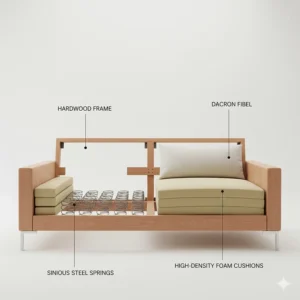
Frame Construction forms the foundation of durability. Kiln-dried hardwood frames resist warping and cracking over time. The best manufacturers use corner-block construction and mortise-and-tenon joinery—traditional woodworking techniques that create incredibly strong joints. Metal frames work too, especially in contemporary designs, but wood offers better shock absorption.
Suspension Systems determine whether your sofa maintains its shape or turns into a saggy mess. Sinuous springs (those S-shaped metal springs) offer good support at mid-range prices. Eight-way hand-tied springs represent the gold standard—craftspeople literally tie each spring to its neighbors in eight directions, creating a web of support that lasts decades. Cheaper sofas use webbing or even just solid platforms, which work initially but don’t bounce back as well over time.
Cushion Fill impacts both comfort and longevity. High-density foam (measured in pounds per cubic foot) resists sagging better than low-density alternatives. The sweet spot for seating surfaces is typically 1.8 to 2.5 density. Down-blend cushions feel luxurious but require regular fluffing. Memory foam molds to your body but some people find it too soft. Many premium sofas use layered combinations—firm foam core with softer topper—that balance support and comfort.
Leather Thickness and Treatment matters tremendously. Furniture-grade leather should be at least 1.0mm thick, with 1.2-1.4mm being ideal for high-use pieces. Thinner leather wears through faster. The finishing process also affects durability—aniline-dyed leather looks gorgeous but stains easily, while semi-aniline adds a protective layer without sacrificing too much natural beauty.
Regular maintenance extends lifespan dramatically. Condition leather every 6-12 months to prevent drying and cracking. Keep sofas away from direct sunlight and heat sources. Rotate cushions to distribute wear evenly. These simple habits can add years to your investment.
Styling Your Modern Leather Sofa: Design Tips That Actually Work
You’ve bought the perfect modern leather sofa—now what? Let’s talk about making it the centerpiece it deserves to be without turning your living room into a furniture showroom.
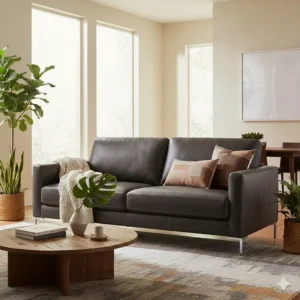
Balance Textures to create visual interest. Leather’s smooth, cool surface benefits from contrasting elements. Think chunky knit throws draped over the arm, woven jute rugs underfoot, or rough-hewn wooden coffee tables. This interplay of textures prevents spaces from feeling one-dimensional or sterile.
Embrace Negative Space around your sofa. One of the biggest mistakes I see? Cramming furniture together like a game of Tetris. Modern design thrives on breathing room. Allow at least 18 inches between your sofa and coffee table, and resist the urge to fill every corner. That empty space actually makes your contemporary leather sofa look more intentional and expensive.
Layer Your Lighting for ambiance and functionality. A stunning modern leather sofa deserves proper illumination. Combine overhead lighting with table lamps and maybe a dramatic floor lamp arcing over one end. Dimmer switches let you adjust the mood from “Sunday morning coffee” to “Friday night wine.”
Color Coordination doesn’t mean everything matches. Instead, create a cohesive palette. With a black leather sofa, try warm wood tones and pops of jewel colors—emerald, sapphire, or amber. Cognac or tan leather pairs beautifully with cool grays, crisp whites, and navy blues. The key is choosing 3-4 main colors and repeating them throughout the space in different proportions.
Scale Matters when selecting accompanying furniture. A massive modern leather sofa needs substantial coffee and side tables to avoid looking cartoonish. Conversely, a sleek, low-profile piece benefits from lighter-scale accessories that don’t overpower its minimalist aesthetic.
Add Personality Thoughtfully with throw pillows and artwork. This is where you inject your personal style without compromising the clean lines that attracted you to modern design in the first place. Choose 2-3 pillows in complementary textures and colors rather than covering your sofa like a pillow explosion. Hang artwork at eye level (typically 57-60 inches from floor to center), and don’t be afraid of larger pieces—they often work better with substantial furniture than clusters of small frames.
Maintenance and Care: Keep Your Investment Looking New
Let’s be honest—buying a modern leather sofa represents a significant investment. Proper care ensures it stays gorgeous for decades, not just years. According to HGTV’s furniture care experts, avoiding common cleaning mistakes can dramatically extend your leather furniture’s lifespan. Here’s what actually works, minus the marketing fluff.
Weekly Maintenance takes about five minutes. Dust your sofa with a soft, dry microfiber cloth or vacuum using an upholstery attachment on low suction. This prevents dirt from grinding into the leather’s pores. Seriously, this simple habit prevents 80% of premature wear.
Immediate Spill Response can save you hundreds in professional cleaning. Blot (don’t rub!) liquid spills immediately with a clean, absorbent cloth. Rubbing pushes the liquid deeper into the leather. For sticky substances, gently scrape with a dull knife or plastic card, then wipe with a barely damp cloth. Pat dry immediately.
Deep Cleaning Quarterly maintains leather’s suppleness and appearance. Mix a few drops of mild soap (like baby shampoo or saddle soap) in warm water. Dampen—not soak—a soft cloth, wring it out well, then gently wipe your sofa. Work in small sections and dry immediately with another soft cloth. Never leave leather wet.
Conditioning Every 6-12 Months prevents cracking and drying. Use a leather conditioner specifically formulated for furniture (not shoe polish or car products). Apply a small amount to a soft cloth and rub into the leather using circular motions. Let it absorb for 20-30 minutes, then buff with a clean cloth. Your leather should feel slightly softer and look richer.
What to Avoid:
- Direct sunlight, which fades color and dries leather
- Heat sources like radiators or fireplaces closer than 2 feet
- Harsh chemicals, including household cleaners and alcohol
- Sitting on leather with keys, pens, or sharp objects in pockets
- Placing leather furniture on heated floors without protective pads
Professional Cleaning every 2-3 years gives your sofa a deep refresh that home methods can’t match. Professionals have specialized products and techniques that remove embedded dirt and restore protective coatings without damaging the leather.
Scratch Repair depends on severity. Light scratches often buff out with leather conditioner. Deeper scratches might need leather filler or professional repair. Some people embrace minor scratches as part of their sofa’s developing patina—it’s perfectly valid if that works for your aesthetic.
Budget Breakdown: What to Expect at Different Price Points
Understanding furniture pricing helps you spot both bargains and rip-offs. Let’s break down what you’re actually paying for at each price tier.
Under $800: Entry-Level Territory
At this price point, expect faux leather or bonded leather on lower-end frames. You’re primarily paying for the design and basic functionality. Some legitimate values exist here—like our featured FOTOSOK sofa—but scrutinize construction carefully. Look for metal or engineered wood frames, basic foam cushions, and simple assembly. These sofas can serve well in low-traffic spaces or as temporary solutions, but don’t expect heirloom quality.
$800-$1,500: Sweet Spot for Value
This range delivers the best bang for your buck. You’ll find genuine leather (often top-grain or corrected-grain) on solid wood frames with decent suspension systems. Brands like Modway dominate here, offering classic designs with reasonable quality. At the upper end of this range, you might score Italian leather on visible surfaces with leather match on backs and sides—a smart compromise that prioritizes what shows.
$1,500-$3,000: Premium Comfort Zone
Here’s where quality takes a noticeable jump. Full-grain or top-grain leather throughout, kiln-dried hardwood frames, hand-tied springs, and high-density foam cushions become standard. Brands invest in better leather selection, meaning fewer blemishes and more consistent color. Warranty coverage typically improves too. This is the tier I recommend for most families planning to keep their sofa 10+ years.
$3,000-$6,000: Luxury Segment
You’re paying for exceptional materials and craftsmanship. Think Italian-tanned full-grain leather, hand-stitched details, innovative suspension systems, and often customization options. Customer service upgrades significantly—white-glove delivery, extended warranties, and responsive support become standard. These sofas often feature heirloom-quality construction designed to last 20-30 years.
$6,000+: Investment Pieces
At this stratosphere, you’re acquiring furniture art. Designer names, exclusive materials, limited editions, and truly exceptional craftsmanship justify the prices. These pieces often appreciate in value or at minimum retain resale value far better than cheaper alternatives. Unless you’re seriously into furniture design or have significant disposable income, you can probably achieve 90% of the quality at half the price by shopping smart in the $2,000-$4,000 range.
Hidden Costs to Consider:
- Delivery fees (can range from free to $300+)
- Professional assembly if you can’t DIY
- Warranty extensions (sometimes worth it)
- Leather protection treatments
- Future reupholstering (though quality pieces rarely need it)
Space Planning: Will It Actually Fit?
I’ve seen too many people fall in love with a sofa online, order it, then discover it doesn’t fit through their doorway or overwhelms their space. Let’s avoid that heartbreak with some practical planning.
Critical Measurements You Need:
First, measure your room’s dimensions, noting any architectural features like windows, radiators, or electrical outlets that affect placement. Create a rough floor plan—you don’t need architectural skills, just a sketch noting measurements.
Measure all doorways, hallways, and staircases the sofa must navigate to reach its final destination. Furniture movers use the “magic 36-inch rule”—if your sofa’s longest dimension exceeds your doorway’s diagonal measurement, you might have problems. Most modern leather sofas ship in pieces or have removable legs specifically to avoid this issue, but verify before ordering.
The Golden Ratio for Sofa Sizing:
Your sofa should occupy roughly 60-80% of your wall’s length (assuming it’s against a wall). So if you have a 10-foot (120-inch) wall, you want an 84-96 inch sofa. Any smaller feels lost; any larger cramps the space.
Traffic Flow Requirements:
Maintain at least 30 inches of clearance for primary walkways and 18-24 inches for secondary paths. People should be able to walk behind seated guests without gymnastics. If your room’s too small for proper clearance, consider a loveseat or apartment-sized sofa instead of forcing a full-size piece.
Coffee Table Distance:
Position your coffee table 14-18 inches from your sofa’s front edge. Closer than 14 inches and you’re banging knees. Further than 18 inches and reaching for your drink becomes a stretch.
Sectional Considerations:
Sectionals need even more planning. Sketch the configuration carefully, remembering that reversible chaise options (like the Rivet Aiden) offer flexibility if you change your mind. Account for the chaise’s depth—it often extends 24-30 inches beyond the sofa’s main footprint.
Ceiling Height Balance:
Low-profile modern sofas (under 32 inches high) look best in rooms with 8-9 foot ceilings. Higher-backed pieces suit rooms with 10+ foot ceilings better. Proportion matters—a low sofa in a room with soaring ceilings can feel underwhelming.
Pro Tip: Before ordering, tape out the sofa’s dimensions on your floor using painter’s tape. Live with this outline for a few days. Walk around it, place other furniture around it, sit in the space. This simple exercise reveals problems you’d never spot on paper.
Modern vs. Contemporary: Clearing Up the Confusion
People use “modern” and “contemporary” interchangeably, but they’re not actually the same thing—and understanding the difference helps you shop smarter.
Modern Furniture refers to a specific design era and philosophy. The mid-century modern movement from roughly 1945 to 1970 championed clean lines, minimal ornamentation, and functionality over decoration. When you shop for a modern leather sofa, you’re looking for pieces inspired by this historical movement—think Eames-era design principles applied to contemporary manufacturing.
Modern design principles remain constant: natural materials (wood, leather, metal), organic shapes that reference nature, neutral color palettes, and visible craftsmanship. A modern leather sofa today looks remarkably similar to quality pieces from 1960, and that consistency is intentional. The aesthetic has proven itself timeless.
Contemporary Furniture simply means “current” or “of-the-moment.” It’s a moving target that shifts with design trends. What’s contemporary in 2026 differs from 2016 and will differ from 2036. Contemporary design might incorporate modern elements, but it also pulls from other styles—minimalism, industrial, even traditional with modern twists.
A contemporary leather sofa might feature unexpected elements: mixed materials like leather with velvet panels, bold colors beyond neutrals, or asymmetrical designs. Contemporary embraces experimentation while modern stays faithful to established principles.
Why This Matters for Shopping:
When a retailer calls something a “modern contemporary leather sofa,” they’re often hedging their bets linguistically. Look at the actual design. Does it have those characteristic mid-century elements—tapered legs, clean lines, minimal ornamentation? That’s genuinely modern. Does it blend multiple style influences or push design boundaries? That’s contemporary.
Neither is better—they serve different purposes. Modern offers timelessness and proven durability in design. Contemporary feels fresh and current. Many of the best sofas thoughtfully blend both, taking mid-century foundations and updating them with current manufacturing techniques and subtle contemporary flourishes.
Environmental Considerations: Sustainable Leather Sourcing
Let’s address the elephant (or cow) in the room: leather’s environmental impact. If you care about sustainability—and in 2026, most of us do—understanding your sofa’s production matters. Making informed choices about furniture sustainability extends beyond just the material itself to encompass the entire production process.
The Leather Industry Reality
Leather is technically a byproduct of meat production. Cows aren’t raised specifically for furniture leather; the hides come from animals already slaughtered for food. This makes leather more sustainable than synthetic alternatives in some ways—it uses what would otherwise become waste.
However, the tanning process presents environmental challenges. Traditional chrome tanning uses harsh chemicals that can pollute water sources if not managed properly. Vegetable tanning—the process many Italian tanneries prefer—takes longer but uses natural tannins from tree bark, making it far more eco-friendly.
What to Look For:
Reputable manufacturers increasingly highlight their environmental practices. Look for certifications like:
- Leather Working Group certification (ensures responsible tanning)
- FSC-certified wood frames (sustainably harvested forests)
- CertiPUR-US foam (low emissions, no harmful chemicals)
Carbon Footprint Considerations
A quality leather sofa’s longevity actually makes it more sustainable than cheaper alternatives you’d replace every 5-7 years. One well-made piece lasting 25 years beats five disposable sofas environmentally, even accounting for production impact.
Italian leather’s overseas shipping adds carbon costs, but many manufacturers now carbon-offset their shipping. Some even use reclaimed or recycled materials in non-visible components, reducing overall environmental impact.
Ethical Sourcing
If animal welfare concerns you, research brands’ sourcing practices. Some manufacturers trace their leather to specific tanneries and farms with verified humane practices. Others remain vague—a potential red flag.
Alternatives Worth Considering
Modern vegan leather has improved dramatically. High-quality synthetic options like Ultrafabric or recycled polyurethane can convincingly mimic leather’s look and feel while avoiding animal products entirely. They’re not perfect environmentally (petroleum-based production), but they might align better with your values.
The most sustainable choice? Buying quality once rather than cheap replacements repeatedly. Whether you choose genuine leather, vegetable-tanned Italian leather, or innovative synthetics, invest in pieces built to last.

Frequently Asked Questions
❓ How long does a modern leather sofa typically last?
❓ Can you mix a modern leather sofa with other furniture styles?
❓ What's the best way to protect leather sofas from pet damage?
❓ Do modern leather sofas work in small apartments?
❓ How do you remove water stains from an italian leather sofa?
Conclusion: Your Perfect Modern Leather Sofa Awaits
After exploring everything from Italian tanning processes to space planning geometry, you’re armed with serious knowledge about modern leather sofas. You understand that those clean lines and sleek silhouettes represent more than just aesthetic choices—they’re design principles proven over 70+ years.
Whether you’re drawn to the premium luxury of the POLY & BARK Napa with its full-grain Italian leather, the budget-friendly appeal of the FOTOSOK option, or the mid-century perfection of Modway’s offerings, the right sofa exists for your space, style, and budget. Remember that a contemporary leather sofa represents an investment, not just a purchase. The difference between a $500 and $2,500 sofa isn’t just $2,000—it’s potentially decades of additional use and satisfaction.
Don’t rush this decision. Measure your space carefully. Consider your lifestyle honestly—those pets and kids won’t magically become furniture-gentle. Think about how you actually use your living room. Are you a “feet-up lounger” who needs deep seats, or a “sit properly” person who prefers firmer cushions?
The beauty of modern design lies in its timelessness. Buy right now, and your black leather sofa or italian leather sofa will look just as relevant in 2036 as it does today. That’s the power of choosing pieces based on enduring principles rather than fleeting trends.
Recommended for You
- 7 Best Brown Leather Sofas That Transform Your Living Room (2026)
- 7 Best Top Grain Leather Sofas for 2026
- 7 Best Sleeper Sofa for Everyday Use 2026 (Expert Tested)
Disclaimer: This article contains affiliate links. If you purchase products through these links, we may earn a small commission at no additional cost to you.
✨ Found this helpful? Share it with your friends! 💬🤗
