
In This Article
If you’re among the 84% of adults who will experience at least one episode of low back pain in their lifetime according to research published by the National Institutes of Health, you understand that finding comfortable seating isn’t just a luxury—it’s a necessity. The wrong chair can transform a relaxing evening into hours of discomfort, but the right recliner can become your most valuable ally in managing chronic pain.
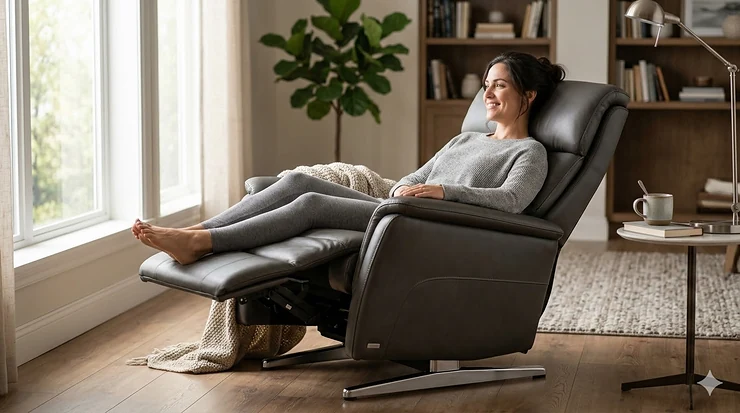
I’ve spent years working with back pain sufferers, and here’s what most people don’t realize: your standard sofa or dining chair forces you into positions that actually worsen spinal compression. A high-quality recliner for back support does something fundamentally different—it allows you to recline to at least 135 degrees, a position proven to reduce spinal pressure significantly. Think of it as giving your vertebrae permission to breathe after being compressed all day.
The therapeutic seating market has exploded in 2026, offering everything from budget-friendly manual recliners to premium zero-gravity models with massage functions. This guide cuts through the noise to help you find a lumbar support recliner that matches your specific needs, body type, and budget. Whether you’re recovering from surgery, managing chronic conditions, or simply want to prevent future problems, the right ergonomic recliner can transform your quality of life.
Quick Comparison Table
| Recliner Model | Type | Key Features | Price Range | Best For |
|---|---|---|---|---|
| MCombo 7040 | Power Lift | Lumbar heat, 8-point massage, USB ports | $400-$600 | Budget-conscious buyers |
| MCombo 7890 | Dual Motor | Infinite positions, extended footrest | $500-$700 | Customizable comfort |
| Best Choice Products | Power Lift | 3 massage modes, heat, cup holders | $300-$450 | Entry-level option |
| Signature Design Ashley 4Z-Relax | Power Lift | Zero gravity, adjustable lumbar, headrest | $800-$1,200 | Premium features |
| La-Z-Boy Randell | Power Rocker | Extra-tall back, deep cushions | $1,200-$2,000 | Tall users (5’10”-6’3″) |
| Homall Massage Recliner | Manual | Zero gravity mode, heating, compact | $200-$350 | Small spaces |
| Signature Design Ashley Vassalboro | Power Glider | Audio system, air massage, LED lighting | $1,500-$2,500 | Tech enthusiasts |
💬 Just one click – help others make better buying decisions too! 😊
Top 7 Best Recliner for Back Pain: Expert Analysis
1. MCombo Power Lift Recliner 7040 – Best Overall Value
The MCombo 7040 has earned its reputation as an Amazon bestseller for good reason. This power lift chair combines therapeutic features with practical design, making it accessible for those who need assistance standing without sacrificing comfort.
Key Specifications:
- TUV-certified lift mechanism with counter-balanced design
- 8 vibration nodes with 5 massage modes and 2 intensity levels
- Independent lumbar heating zone with 15/30/60-minute timers
- FSC-certified wooden frame
- Available in petite, medium, and large sizes
Price: $400-$600 depending on size and upholstery
Customer feedback consistently highlights the chair’s smooth, quiet operation and the fact that assembly takes only 15-20 minutes with no tools required. One verified buyer shared that after her husband’s heart surgery, this chair provided both autonomy and comfort during recovery, making daily tasks significantly easier.
✅ Pros: Affordable, easy assembly, separate heat/massage controls, 2-year warranty
❌ Cons: Faux leather may not be as durable as genuine leather, moves slowly for some users
Perfect for: Elderly users, post-surgery recovery, anyone needing lift assistance with back pain relief
2. MCombo Dual Motor 7890 – Best for Infinite Positioning
For those who need precise control over their seating position, the MCombo 7890 takes customization to another level with its dual-motor system that controls the backrest and footrest independently.
Key Specifications:
- Dual motors for infinite position adjustability
- Lay-flat capability for extended relaxation or sleeping
- 4.7-inch extended footrest for better leg circulation
- USB and Type-C charging ports
- Home button returns chair to upright in 16 seconds
Price: $500-$700
This model addresses a common complaint with single-motor recliners: you can’t adjust the back and leg positions separately. With the dual motor system, you can find your perfect spine alignment regardless of whether you’re reading, watching TV, or napping.
✅ Pros: Independent footrest/backrest control, extended footrest, fast home button feature
❌ Cons: Slightly higher price point, more motors mean more potential maintenance
Perfect for: Users who spend extended time in their recliner, those with circulation issues
3. Best Choice Products Power Lift Recliner – Best Budget Option
Don’t let the lower price fool you—the Best Choice Products lift recliner packs impressive therapeutic features into an affordable package.
Key Specifications:
- 3 massage modes targeting back, lumbar, thighs, and legs
- 2 heat settings in lumbar area
- Anti-tipping base design for stability
- Side pockets and USB charging port
- 330 lbs weight capacity
Price: $300-$450
Customer reviews reveal this chair performs well above its price point, with many comparing it favorably to models costing twice as much. The massage function provides genuine vibration rather than just token buzzing, though it’s not as powerful as premium models.
✅ Pros: Excellent value, stable base, good for beginners, multiple color options
❌ Cons: Vibration massage less powerful than air massage, basic upholstery
Perfect for: First-time buyers, renters, anyone on a tight budget
4. Signature Design by Ashley 4Z-Relax Retreat – Best Zero Gravity Feature
The Signature Design Ashley 4Z-Relax brings true zero gravity positioning to the mid-premium range, offering features typically found in chairs costing thousands more.
Key Specifications:
- Zero-gravity mechanism for optimal spinal decompression
- Power lumbar support with independent adjustment
- Easy View adjustable headrest
- Zero-draw USB technology (only consumes power when in use)
- Next-Gen Durapella water-repellent faux leather
Price: $800-$1,200
The zero-gravity position elevates your legs above your heart while reclining your torso at the optimal angle, creating what doctors describe as a neutral spine position that reduces pressure on the lumbar spine and promotes proper spinal alignment. This position mimics how astronauts sit during launch to minimize gravitational stress.
✅ Pros: True zero gravity, water-repellent fabric, adjustable lumbar, energy-efficient USB
❌ Cons: Higher price, requires space to fully recline, some assembly needed
Perfect for: Chronic back pain sufferers, those with disc issues, users wanting medical-grade positioning
5. La-Z-Boy Randell Power Rocker – Best for Tall Users
La-Z-Boy invented the recliner in 1927, and the Randell represents nearly a century of refinement specifically designed for tall body types (5’10” to 6’3″+).
Key Specifications:
- Extra-tall back with deep cushioning
- Generously scaled proportions for larger frames
- Power reclining with simultaneous rock function
- Contour-cut foam adapts to body shape
- Multiple locking positions for footrest and rocker
Price: $1,200-$2,000
Based on 2025 sales data across all eight La-Z-Boy Southeast locations, the Randell consistently ranks as the #1 best-selling recliner, earning its reputation through exceptional support for taller users who often feel cramped in standard chairs.
✅ Pros: Perfect fit for tall users, legendary durability, ability to rock while reclined
❌ Cons: Premium pricing, heavy (difficult to move), requires professional delivery
Perfect for: Users 5’10” and taller, those wanting investment-quality furniture
6. Homall Manual Recliner – Best for Small Spaces
The Homall Manual Recliner proves that effective back pain relief doesn’t require power motors or massive footprints.
Key Specifications:
- Compact design (32″W x 28″D upright)
- Reclines to 170 degrees (more than average 160)
- Zero gravity-inspired positioning
- PU leather upholstery (easy cleaning)
- 265 lbs weight capacity
Price: $200-$350
This gaming chair-inspired design uses a push-back mechanism that’s remarkably smooth and easy to operate. The adjustable backrest angle and footrest can be positioned anywhere between fully upright and nearly flat, giving you more flexibility than preset positions.
✅ Pros: Space-saving design, modern aesthetic, exceeds average recline angle, affordable
❌ Cons: Manual operation, lower weight limit, not suitable for larger users
Perfect for: Apartments, home offices, younger users with back pain
7. Signature Design by Ashley Vassalboro – Best Tech-Integrated Option
For those who want their ergonomic recliner to double as an entertainment hub, the Vassalboro delivers an immersive experience alongside therapeutic benefits.
Key Specifications:
- Thunder Seating audio system with wireless connectivity
- Sonic bass vibrations in seat
- Air massage system with heating
- Power lumbar support and adjustable headrest
- LED lighting and hidden control panel in armrests
Price: $1,500-$2,500
This recliner transforms movie nights and gaming sessions by integrating premium audio that delivers vibrations directly to the seat, creating an experience that goes beyond traditional massage functions. The air massage system provides more targeted relief than standard vibration, using airbags that inflate and deflate to mimic a massage therapist’s hands.
✅ Pros: Immersive entertainment, advanced air massage, multiple tech features
❌ Cons: Highest price point, complex features may overwhelm some users, requires adequate space
Perfect for: Home theater enthusiasts, gamers, those wanting luxury features
Understanding Spine Alignment and Pressure Relief
Your spine isn’t meant to sit at a 90-degree angle for extended periods, yet that’s exactly what most seating forces you to do. Sitting upright at a 90-degree angle, once thought to be ideal, actually places significant pressure on your spinal discs. Over time, this constant compression can lead to disc degeneration, herniation, and chronic inflammation.
A quality recliner for back support works by allowing you to recline to 135-170 degrees, depending on the model. This reclined position fundamentally changes how gravity affects your spine. Instead of compressing downward through your vertebrae, weight distributes more evenly across your entire back surface. The result? Your intervertebral discs get a chance to rehydrate and decompress, similar to how your spine naturally decompresses when you sleep.
The therapeutic seating position becomes even more effective when combined with leg elevation. Raising your legs reduces pressure on your lower back muscles, which no longer need to work as hard to maintain your position. This dual approach—reclined torso plus elevated legs—explains why zero-gravity recliners have become so popular for managing chronic back conditions.
How Zero Gravity Technology Transforms Back Pain Relief
Zero gravity isn’t just marketing hype—it’s a NASA-developed position that slightly elevates the legs and reclines the upper body, reducing the pressure on the lumbar spine. When your legs are positioned above your heart while your back reclines at an optimal angle (typically 127-135 degrees), several therapeutic benefits occur simultaneously.
First, the position achieves what doctors call “neutral spine” alignment. Your natural S-curve is maintained without forcing your lower back into an unhealthy C-shape slouch. This neutral position minimizes stress on your facet joints—the small joints between vertebrae that often become inflamed with improper seating.
Second, zero gravity improves circulation by making it easier for blood to return from your legs to your heart. Better circulation means more oxygen and nutrients reach inflamed tissues in your back, speeding healing and reducing swelling. Many users report that their legs feel less heavy and swollen after spending time in this position.
Third, muscle tension decreases dramatically. When properly supported in zero gravity, your back muscles don’t need to constantly fire to maintain posture. This reduction in muscle tension can break the pain-spasm-pain cycle that plagues many back pain sufferers.
Lumbar Support Technology: What Actually Works
Not all lumbar support is created equal, and understanding the differences can save you from wasting money on ineffective features. The most basic recliners include fixed lumbar padding—essentially a thicker cushion in the lower back area. While better than nothing, fixed support can’t adjust to your unique spine shape or accommodate different activities.
Adjustable lumbar support represents a significant upgrade. These systems use either mechanical or powered mechanisms to move the lumbar pad forward, backward, up, or down. This adjustability matters because your ideal lumbar position changes throughout the day and varies by activity. Reading requires different support than sleeping.
The premium option involves active lumbar support with airbags or additional motors. These systems can apply gentle, rhythmic pressure to your lower back, combining support with massage therapy. Research shows that while evidence for lumbar supports varies, they can be effective when properly fitted and consistently used.
For maximum effectiveness, your lumbar support recliner should allow adjustment while seated, shouldn’t create pressure points, and should maintain support across the full recline range. Many cheaper models only support your lower back when upright, leaving you unsupported when fully reclined—exactly when you need it most. Research published in the Annals of Physical and Rehabilitation Medicine demonstrates that non-rigid lumbar supports can provide meaningful improvements in both disability and pain scores when properly utilized.
Massage and Heat: Beyond Comfort to Healing
Massage features in recliners range from simple vibration motors to sophisticated air massage systems with multiple zones. Simple vibration provides gentle stimulation that can help relax tense muscles, though it won’t provide the deep-tissue relief of professional massage. These systems typically use 4-8 motors placed throughout the chair.
Air massage systems represent a more advanced approach. Instead of simple vibration, they use airbags that inflate and deflate in programmed sequences. This creates a compression massage similar to what a massage therapist provides. The best systems offer multiple programs—some for relaxation, others for more intense muscle work.
Heat therapy deserves special mention for back pain relief. Warmth increases blood flow to the affected area, helping flush out inflammatory chemicals while delivering fresh oxygen and nutrients. Studies on therapeutic heat application show that combining heat with massage creates synergistic effects for pain management. Most recliners place heating elements in the lumbar region, though premium models may include heat in the seat cushion as well. The combination of heat and massage creates a synergistic effect that’s greater than either feature alone.
One often-overlooked detail: look for systems that let you control heat and massage independently. You might want heat without vibration when reading, or massage without heat after exercise. Separating these controls gives you much more flexibility.
Choosing the Right Recliner Size and Fit
Here’s a truth that manufacturers don’t emphasize enough: a recliner that doesn’t fit your body type will never provide adequate relief, regardless of how many features it includes. Your height determines whether the headrest supports your neck properly, if your feet reach the footrest without cutting off circulation, and whether the seat depth allows you to sit back against the lumbar support.
For users under 5’4″, petite or small-sized recliners are essential. Standard chairs will leave your feet dangling and force you to slouch forward to use the footrest. Users between 5’5″ and 5’9″ typically fit standard medium sizes well. Tall users (5’10” to 6’2″) need chairs with extra back height and deeper seat depth. Users over 6’3″ should seek out extra-tall models specifically designed for their proportions.
Weight capacity matters too, but not just for structural reasons. Higher weight capacity usually indicates a more robust frame and denser foam that won’t compress excessively over time. Even if you’re well under the weight limit, choosing a chair rated for 50-100 lbs more than you weigh can ensure better long-term performance.
Don’t forget width. If you like to curl up or shift positions frequently, you’ll want a wider seat. If you prefer a more secure, cocooning feel, a snugger fit might work better. Most manufacturers provide detailed dimensions—use them before ordering.
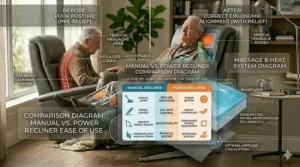
Power vs Manual: Making the Right Choice
Power recliners use electric motors to control recline, lift, and adjustment functions via remote control or buttons. Manual recliners use mechanical levers or push-back systems that you operate with body weight. Each approach has distinct advantages depending on your needs.
Power recliners excel for users with mobility limitations. If standing up from a seated position causes pain or requires assistance, power lift function becomes invaluable. The chair can literally help push you to a standing position, reducing strain on your back and knees. Power systems also offer more precise positioning—you can stop at any point in the recline range, not just preset positions.
The downsides? Power recliners require electrical outlets, cost more initially, and introduce potential mechanical failure points. If a motor fails, you’ll need professional repair. They’re also heavier and more difficult to move.
Manual recliners offer simplicity and independence from electrical power. They’re typically less expensive, lighter, and have fewer components that can break. Modern manual systems have become quite sophisticated, offering smooth, easy operation even for users with limited strength. The downside is less precise positioning and no lift assistance.
For chronic back pain sufferers, power recliners usually prove worth the extra investment. The ability to find and maintain your exact optimal position, combined with lift assistance, typically outweighs the disadvantages.
Material Considerations for Long-Term Comfort
Your recliner’s upholstery affects both comfort and maintenance. Genuine leather tops many people’s wish lists for its luxurious feel and durability, but it comes with drawbacks. Leather doesn’t breathe well, potentially causing sweating during extended use. It also requires regular conditioning and can feel cold initially.
Faux leather (PU leather, bonded leather) offers leather’s look at lower cost and with easier maintenance. Modern faux leather has improved dramatically in quality and feel. It cleans easily—usually just needing a damp cloth—and doesn’t require conditioning. The trade-off is shorter lifespan; even high-quality faux leather typically degrades faster than genuine leather.
Fabric upholstery provides the best breathability and warmth. Modern performance fabrics can be surprisingly durable and stain-resistant, some even water-repellent. Fabric also offers more color and pattern options. The downside is that fabric can trap dust and allergens, requiring more frequent vacuuming.
For back pain sufferers who spend significant time in their recliner, breathability becomes particularly important. Being comfortable for 15 minutes is very different from being comfortable for 2+ hours. If you tend to run warm or live in a hot climate, fabric or breathable faux leather will serve you better than genuine leather.
Investment vs Budget: What You Really Get
The recliner market spans from $200 budget models to $5,000+ luxury chairs. Understanding what drives these price differences helps you spend wisely rather than simply spending more.
Budget recliners ($200-$500) typically feature manual operation, basic vibration massage if any, and thinner cushioning. Frame materials might include less dense foam and lighter-duty mechanisms. These chairs work well for occasional use or temporary situations (apartments, dorm rooms), but may not hold up to daily use by chronic pain sufferers.
Mid-range options ($500-$1,200) introduce power operation, better materials, and more sophisticated massage systems. This range offers the best value for most people. You get meaningful therapeutic features without paying for luxury branding. Look for dual motors, adjustable lumbar, and heat in this range.
Premium recliners ($1,200-$2,500+) justify their cost with superior build quality, advanced features, and established brands’ customer service. La-Z-Boy’s limited lifetime warranty on frames, for instance, reflects confidence in their construction. Zero-gravity positioning, air massage systems, and genuine leather typically appear here.
The sweet spot for most chronic back pain sufferers falls in the $600-$1,000 range. You get meaningful therapeutic features and decent build quality without paying for luxury features you might not use.
Maintenance and Longevity Tips
Your recliner represents a significant investment in your health. Proper maintenance extends its lifespan and ensures it continues providing therapeutic benefits for years.
For powered recliners, periodically check all electrical connections. Loose wiring can cause inconsistent operation or complete failure. Listen for unusual sounds when operating the motors—grinding or clicking might indicate mechanical issues that are easier to fix early. Keep the remote control’s battery fresh; weak batteries can cause erratic behavior.
Mechanism maintenance matters for both power and manual recliners. Every 6-12 months, apply a silicone-based lubricant to moving parts. This prevents squeaking and ensures smooth operation. Check that all bolts and screws remain tight—vibration from use can loosen them over time.
Cushion care varies by material. Fabric requires regular vacuuming to remove dust and allergens. Spot clean spills immediately to prevent staining. Leather and faux leather need different care—use appropriate cleaners and conditioners according to manufacturer instructions. Rotate or flip cushions if removable to ensure even wear.
Frame integrity deserves attention too. Periodically inspect the frame for cracks or damage, especially if the chair has been moved. Avoid exceeding weight limits, as this stresses the frame and can lead to premature failure.
If you use your recliner daily for pain management, consider professional cleaning annually. This deep cleaning removes embedded dirt and oils that regular maintenance misses, keeping your chair fresh and extending upholstery life.
Common Mistakes When Buying a Recliner
Many back pain sufferers make predictable errors when purchasing their first therapeutic recliner. Learning from these common mistakes saves money and disappointment.
Mistake #1: Not measuring your space. Recliners need clearance behind them (unless wall-hugger style) and adequate room to extend the footrest. Measure your space and compare to the chair’s fully-reclined dimensions before buying. Many returns happen because chairs don’t fit.
Mistake #2: Prioritizing features over fit. A recliner loaded with massage modes won’t help if the lumbar support hits the wrong part of your back. Always prioritize proper fit for your body type over feature count.
Mistake #3: Testing chairs while feeling good. Visit showrooms when your back pain is bothering you, not when you feel fine. You need to know how the chair feels during a flare-up, not just on good days.
Mistake #4: Ignoring weight capacity. Even if you’re under the stated limit, choosing a chair with higher capacity often means sturdier construction and better long-term durability.
Mistake #5: Overlooking warranty details. Read what’s actually covered. Some warranties only cover specific components. Know who handles repairs—will you ship the entire chair back, or do they send parts?
Mistake #6: Buying sight-unseen online without return policy verification. Large furniture returns can be complicated and expensive. Make sure you understand the return process and who pays return shipping if needed.
Mistake #7: Assuming “zero gravity” means the same thing across brands. Some chairs achieve true zero gravity positioning; others just recline further than normal. If zero gravity is important to you, verify the specific angle and leg elevation.
FAQ
❓ How long should I sit in a recliner for back pain relief?
❓ Can a recliner help with sciatica pain?
❓ What's the difference between vibration and air massage in recliners?
❓ Do doctors recommend sleeping in a recliner for back pain?
❓ How often should I replace a therapeutic recliner?
Conclusion: Your Journey to Pain-Free Relaxation
Finding the best recliner for back pain transforms more than just your seating—it changes your entire approach to managing discomfort. Whether you choose the budget-friendly Best Choice Products model, the feature-rich MCombo 7890 with dual motors, or invest in the premium La-Z-Boy Randell for tall users, the right ergonomic recliner becomes a therapeutic tool you’ll use daily.
Remember that the most expensive option isn’t always the best choice for your specific needs. A $400 lumbar support recliner that fits your body perfectly outperforms a $2,000 model that doesn’t match your proportions. Prioritize fit, then features, then brand prestige.
Take advantage of the comparison table and detailed reviews above to narrow your options. Many users find that combining zero gravity positioning with adjustable lumbar support and heat therapy provides the most comprehensive relief. Whatever you choose, your investment in therapeutic seating pays dividends in reduced pain, better sleep, and improved quality of life.
Recommended for You
- 7 Best Power Recliner Chair Reviews 2026
- 7 Best Leather Recliner Chairs – 2026
- 7 Best Accent Chair Under $200 You’ll Actually Love (2026)
Disclaimer: This article contains affiliate links. If you purchase products through these links, we may earn a small commission at no additional cost to you.
✨ Found this helpful? Share it with your friends! 💬🤗
