
In This Article
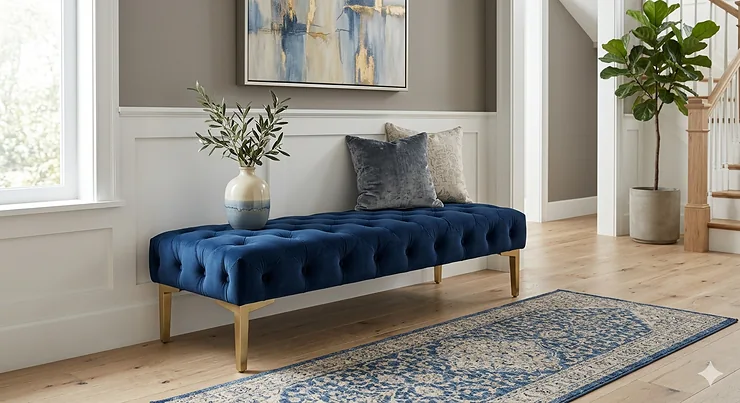
You walk into a beautifully designed bedroom, and there it is — a stunning tufted bench positioned at the foot of the bed, instantly elevating the entire room’s aesthetic. That’s the power of a well-chosen tufted bench. These versatile furniture pieces combine classic style with modern functionality, offering both a visual statement and practical seating solution.
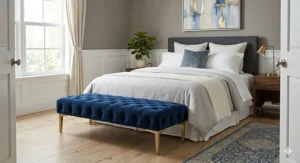
What exactly is a tufted bench? At its core, it’s an upholstered seating piece featuring decorative stitching — either button tufted or channel tufted — that creates those signature indentations across the surface. This upholstery technique dates back to the Middle Ages, originally designed to keep furniture stuffing in place, but today it’s celebrated as a mark of craftsmanship and elegance. The term “tufting” refers to the method of pulling fabric at specific intervals to create depth and pattern, transforming a simple bench into a piece of furniture with character and charm.
In 2026, the market is flooded with options ranging from budget-friendly synthetic leather models to luxurious velvet creations with brass legs. But here’s what most buyers overlook: not all tufted benches are created equal. The difference between a bench that looks tired after six months and one that remains plush for years often comes down to invisible details — foam density, frame construction, and the quality of that decorative stitching you’re paying for. I’ve spent countless hours researching the current market, analyzing customer feedback, and identifying which features actually matter when you’re making daily use of these pieces.
Whether you need extra seating in your entryway, a functional storage solution at the end of your bed, or an elegant accent piece for your living room, this guide cuts through the marketing noise to show you exactly what to look for in 2026’s best options.
Quick Comparison Table: Top Tufted Benches at a Glance
| Product Name | Size | Material | Storage | Weight Capacity | Price Range | Best For |
|---|---|---|---|---|---|---|
| KEPOOMAN 67.9″ Storage Bench | 67.9″L × 20″W | Velvet | Yes | 275 lbs | $200-$300 | King-size beds |
| HomePop Modern Tufted Storage | 48″L × 16.25″W | Polyester | Yes | 250 lbs | $120-$180 | Mid-range versatility |
| SAFAVIEH Reynolds Bench | 48″L × 18″W | Faux Leather/Velvet | No | Not specified | $180-$250 | Modern minimalists |
| SONGMICS Storage Ottoman | 46.5″L × 17.7″W | Synthetic Leather | Yes | 330 lbs | $130-$190 | High-traffic areas |
| 24KF Velvet Tufted Bench | 43″L × 15.5″W | Velvet | No | 240 lbs | $100-$150 | Budget-conscious buyers |
| Cozyman French Vintage Bench | 45.2″L × 14.6″W | Linen | No | 300 lbs | $150-$220 | French country style |
| Amazon Basics Tufted Ottoman | 20″W × 18″D | Fabric | No | 300 lbs | Around $110 | Compact spaces |
Looking at this comparison, the standout observation is how storage capacity and weight limits correlate with price — but not always in ways you’d expect. The SONGMICS model, sitting in the mid-price range, actually supports more weight than options costing $50-$100 more. Meanwhile, the KEPOOMAN’s king-size dimensions command a premium, but if your bedroom can accommodate that footprint, you’re getting substantial storage volume that smaller benches simply can’t match. Budget shoppers should note that the Amazon Basics option trades length for an ultra-compact profile — perfect for small apartments where every inch counts.
💬 Just one click — help others make better buying decisions too!😊
Top 7 Tufted Benches: Expert Analysis & Real-World Performance
1. KEPOOMAN 67.9″ End of Bed Storage Bench
The KEPOOMAN bench immediately distinguishes itself with its king-size footprint — 67.9 inches of length that spans the width of larger beds without looking undersized or awkward. Wrapped in soft velvet upholstery with button tufted detailing, this bench features silver metal legs and integrated armrests that give it a contemporary silhouette.
The specifications tell part of the story: the interior storage compartment measures 59.45″L × 20.10″W × 7.68″H, which translates to roughly 53 gallons of storage volume in practical terms. That’s enough space for seasonal bedding, extra pillows, or an entire linen closet’s worth of sheets. The frame combines solid wood with plywood construction, supporting up to 275 pounds — adequate for two adults sitting side by side, though not quite as robust as some competitors. The seat height of 18.31 inches positions it at standard chair height, making it comfortable for putting on shoes or resting briefly.
What most buyers don’t realize until they’ve lived with this bench for a few months: the 3.35-inch cushion thickness is relatively thin compared to premium models. You’ll feel the difference during extended sitting sessions. The velvet, while luxurious to the touch initially, shows wear patterns in high-friction areas after about 6-8 months of daily bedroom use. That said, the anti-slip pads on the legs genuinely protect hardwood floors and prevent the sliding issues common with metal-legged furniture.
Customer feedback centers on assembly (straightforward, roughly 20 minutes) and the silent hinge operation — no squeaks when opening the storage compartment, which matters more than you’d think during early morning routines. One recurring complaint involves the armrests: while they add visual structure, they reduce the effective seating width and can feel obtrusive when you’re trying to perch at either end.
Pros:
✅ Substantial storage volume perfect for king-size bed configurations
✅ Silent flip-top hinge mechanism doesn’t disturb sleeping partners
✅ Silver metal legs coordinate well with contemporary bedroom hardware
Cons:
❌ Thinner cushioning not ideal for extended sitting
❌ Velvet shows wear patterns relatively quickly in high-use areas
This bench excels in master bedrooms where storage is the primary driver and the king-size dimensions won’t overwhelm the space. Expect to pay in the $200-$300 range depending on color selection, which represents solid value for the storage volume you’re acquiring.
2.Home Pop Modern Tufted Storage Bench
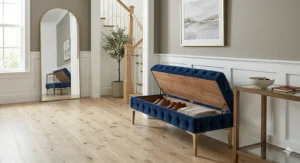
The HomePop model stakes its claim in the sweet spot of the market: enough features to feel premium, priced accessibly enough for first-time furniture buyers. At 48 inches wide, it fits comfortably at the end of queen-size beds or in medium-sized entryways without dominating the floor plan.
Constructed with a wood frame and polyester upholstery, this bench opts for button tufting across the hinged lid. The wood legs — available in natural or dark walnut finishes — provide a grounded profile that works across multiple décor styles. What separates this from budget competitors is the dual safety hinge system. If you’ve ever had a storage bench lid slam down on your fingers, you understand why this matters. The controlled descent prevents injuries and extends the life of the hinge hardware itself.
The interior storage compartment accommodates the typical assortment of throw blankets, seasonal pillows, or entryway clutter. At 250-pound weight capacity, it handles normal household use reliably. The polyester upholstery presents a trade-off: easier to spot-clean than natural fabrics, but it lacks the luxurious hand-feel of velvet or the breathability of linen. In warm climates, you might notice the synthetic fabric retains heat during extended sitting.
Real-world user reports highlight the bench’s role as a coffee table ottoman — place a tray on top and it transitions from seating to surface. The button tufting creates slight indentations that require the tray to have feet or a raised edge, but this dual-purpose functionality appeals to apartment dwellers maximizing limited square footage. Assembly complaints are minimal; most users report 15-minute setup times.
Pros:
✅ Dual safety hinges prevent lid-slam injuries and hardware wear
✅ Mid-size dimensions fit most bedroom and entryway configurations
✅ Natural and dark walnut leg finishes offer styling flexibility
Cons:
❌ Polyester upholstery retains heat in warm environments
❌ Button tufting creates uneven surface for tray placement
Best suited for multi-purpose use in living rooms or bedrooms where you need occasional seating, storage, and possibly a makeshift coffee table ottoman. The $120-$180 price range makes it accessible for young professionals furnishing their first apartments.
3. SAFAVIEH Reynolds Tufted Bench
SAFAVIEH brings over a century of furniture expertise to this design, and it shows in the details. The Reynolds bench abandons storage entirely in favor of a clean, minimalist silhouette — an open Parsons-style frame with bold legs (available in black or brass finish) supporting a tufted upholstered seat.
The frame measures 48″W × 18″D × 19″H, positioning it slightly higher than storage benches and creating better visual proportion when placed against walls or in entryways. The open design underneath provides a psychological sense of space that enclosed benches can’t match — particularly valuable in smaller rooms where bulky furniture feels oppressive. Construction relies on a plywood frame, keeping the overall weight at just 25.7 pounds, which makes repositioning easy during cleaning or furniture rearrangement.
Upholstery options include tan or black faux leather and black velvet. The faux leather version appeals to households with pets or children — spills wipe clean without drama, and pet hair doesn’t embed itself the way it does in velvet. The velvet option, meanwhile, delivers that elevated glamour SAFAVIEH is known for, though it demands more careful maintenance. The tufting on this model is refined rather than deep, creating texture without excessive shadowing.
What you sacrifice by eliminating storage, you gain in flexibility. This bench slides easily under console tables when not in use, functions as extra dining seating without looking awkward, and maintains its visual lightness even in compact spaces. Customer feedback consistently mentions the brass-legged version as a statement piece — the metallic finish catches light beautifully and pairs particularly well with mixed-metal lighting fixtures.
Pros:
✅ Open frame design creates visual lightness in small spaces
✅ Lightweight construction (25.7 lbs) enables easy repositioning
✅ Brass finish option elevates aesthetic beyond basic functionality
Cons:
❌ No storage capacity for practical bedroom or entryway needs
❌ Assembly required despite relatively simple construction
This bench targets design-conscious buyers who prioritize aesthetics over utility and have separate storage solutions already in place. The $180-$250 range positions it as a premium accent piece rather than a workhorse furniture item.
4. SONGMICS Storage Ottoman ULOM071B01
SONGMICS built its reputation on functional furniture that doesn’t sacrifice style, and this tufted storage bench exemplifies that approach. The synthetic leather upholstery immediately signals its target market: families with kids, pet owners, or anyone who needs furniture that withstands real life without constant babying.
Measuring 46.5″L × 17.7″W × 17.7″H, it slots into the standard bench size category, but the construction tells a different story. The frame supports 330 pounds — noticeably higher than most competitors in this price bracket. That extra capacity comes from reinforced corner joints and a cross-brace system inside the frame. The tasteful tufted design on the lid adds visual interest without the deep buttoning that collects dust in less-maintained homes.
The dual safety hinges deserve specific mention because SONGMICS engineered them differently than most competitors. Instead of a single slow-close mechanism, they use parallel hinges on both sides of the lid, distributing stress more evenly and reducing the likelihood of one hinge failing while the other continues working. It’s the kind of detail you don’t appreciate until you’ve owned a cheaper bench where a single hinge broke after eight months.
The wooden legs come pre-installed on the main body — you simply attach them to the bottom during assembly. This design choice means no wrestling with aligning leg bolts while holding the bench upright. Most users report sub-10-minute assembly times. The synthetic leather surface wipes clean with a damp cloth, and the water-resistant coating handles the inevitable coffee spills and dog nose prints without showing permanent staining.
Pros:
✅ 330-lb weight capacity exceeds most competitors by 50-80 pounds
✅ Synthetic leather handles spills, pets, and children with minimal fuss
✅ Pre-installed leg design makes assembly genuinely quick
Cons:
❌ Synthetic leather lacks the premium feel of velvet or genuine leather
❌ Classic black color may not suit lighter, airier design schemes
This bench excels in high-traffic households where durability trumps delicacy. The $130-$190 price range delivers exceptional value for the engineering quality you’re getting — particularly that weight capacity, which rivals benches costing $100 more.
5. 24KF Velvet Upholstered Tufted Bench
At 43 inches wide, the 24KF bench represents the compact end of full-size seating — ideal for smaller bedrooms or entryways where 48+ inch models overwhelm the available space. The velvet upholstery with button tufting creates traditional elegance, while the solid wood legs provide stability that metal frames sometimes lack.
The construction centers on a solid wooden frame filled with TB117 foam — a fire-retardant specification that’s increasingly common in furniture sold in the United States. The foam density sits in the medium range, offering adequate cushioning for short-to-moderate sitting sessions. You’ll notice the difference compared to high-density foam if you’re sitting for 30+ minutes at a time, but for typical entryway use (putting on shoes, waiting for others) it performs admirably.
At 17 inches high and 15.5 inches deep, the bench maintains proportions that work for average adults. Taller individuals sometimes find the seat depth inadequate for comfortable positioning, while the height works better for shoe-lacing than for extended reading or conversation. The 240-pound weight capacity handles normal household use, though it’s on the conservative side compared to reinforced models.
Customer experiences split along use-case lines. Bedroom placement at the end of beds receives consistent praise — the bench looks elegant and handles the intermittent use patterns common in bedrooms. Dining room use as supplemental seating generates more mixed feedback; the lack of back support becomes noticeable during longer meals. The velvet’s soft pile attracts pet hair like a magnet, which several cat and dog owners specifically mention.
Pros:
✅ Compact 43-inch width fits smaller bedrooms without crowding
✅ Solid wood legs provide traditional stability and visual warmth
✅ Multiple velvet color options enable coordination with existing décor
Cons:
❌ Medium-density foam adequate but not exceptional for long sitting sessions
❌ Velvet pile attracts and holds pet hair stubbornly
Perfect for smaller spaces where traditional style matters and storage isn’t a requirement. The $100-$150 price point makes it accessible for first-home buyers or those furnishing guest rooms on a budget.
6. Cozyman French Vintage Tufted Bench
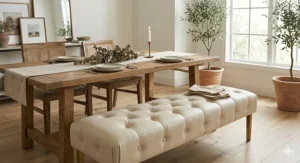
The Cozyman bench targets buyers seeking that French country aesthetic — the kind of piece that looks like it belongs in a Provence farmhouse. At 45.2″L × 14.6″W × 18.3″H, it presents a narrower profile than most competitors, which creates a more delicate visual impression suitable for traditional or cottage-style interiors.
The diamond tufting across the linen cushion represents more intricate work than simple button tufting. The fabric pulls create a geometric pattern that catches light differently throughout the day, adding subtle visual interest. The solid rubber wood legs feature carved fluting details — decorative grooves that nod to classical furniture design. These aren’t essential to function, but they signal attention to aesthetic cohesion.
What separates this from similar vintage-styled benches is the frame construction. Built from solid rubber wood rather than composite materials, the entire structure feels substantial when you sit on it. The 300-pound weight capacity reflects that robust build. The linen upholstery breathes better than synthetic fabrics, though it shows stains more readily and requires more careful cleaning when spills happen.
The narrower width (14.6 inches versus the typical 16-18 inches) creates a trade-off. It doesn’t protrude as far from the wall in entryways or hallways, maintaining traffic flow in tighter spaces. However, the reduced depth means less stable seating if you’re perching at the edge or leaning back slightly. Customer feedback mentions this specifically — the bench works beautifully for intentional sitting but feels precarious if you plop down casually.
Pros:
✅ Diamond tufting and carved legs deliver authentic French country aesthetic
✅ Solid rubber wood construction provides genuine durability
✅ Narrower profile preserves traffic flow in hallways and tight spaces
Cons:
❌ Linen upholstery shows stains more readily than synthetic alternatives
❌ Reduced depth creates less stable seating for casual use
This bench appeals to design-focused buyers creating cohesive traditional or cottage interiors where every piece contributes to an overall aesthetic vision. The $150-$220 range reflects the solid wood construction and detailed workmanship.
7. Amazon Basics Tufted Ottoman Bench
Amazon Basics strips furniture down to essentials, and this compact tufted ottoman delivers exactly what the name promises — basic functionality at an accessible price. The X-frame design measures just 20″W × 18″D × 18″H, making it genuinely space-efficient in ways larger benches can’t match.
The mid-century modern X-frame design provides structural stability while creating visual interest — the crossed legs in solid wood and metal create a sculptural element even when the bench isn’t in use. Despite the compact footprint, the construction supports 300 pounds, which is impressive considering the overall size. This capacity comes from the X-brace design distributing weight across multiple load-bearing points rather than relying on four independent legs.
The fabric upholstery with foam padding delivers adequate comfort for an ottoman — which is to say, fine for resting feet or brief seating, not ideal for extended use. The cushioning compresses more than denser foam would, though it recovers shape reasonably well over time. Non-slip feet prevent the bench from sliding on hardwood or tile floors, addressing a common complaint with smaller furniture pieces.
Assembly takes 15 minutes or less according to multiple user reports, with clear instructions and pre-drilled holes that actually align correctly. The compact size opens up use cases that larger benches can’t serve: tucked under a desk as a footrest, nested under a console table when guests arrive, or moved between rooms as temporary seating without requiring a furniture dolly.
Pros:
✅ Ultra-compact 20-inch width fits spaces where standard benches overwhelm
✅ X-frame design provides 300-lb capacity despite small footprint
✅ Quick assembly (under 15 minutes) with properly aligned hardware
Cons:
❌ Foam cushioning compresses more than high-density alternatives
❌ Limited to footrest or brief seating rather than extended use
Perfect for studio apartments, dorm rooms, or home offices where every square foot counts and you need flexible, movable seating. Around $110 represents excellent value for what is essentially a well-built, attractive footstool with broader versatility.
How to Choose the Right Tufted Bench for Your Space
Walking into a furniture showroom or scrolling through hundreds of online listings, you face the paradox of choice — too many options, not enough clarity on what actually matters. Here’s the framework I use to cut through the noise and match benches to real-world needs.
Size and Proportion Come First Measure your intended space before falling in love with any specific bench. A 68-inch model looks stunning in photographs but might block your bedroom door or crowd your entryway. The general rule: benches should occupy no more than two-thirds of the available wall length where they’ll sit. For end-of-bed placement, measure your mattress width and subtract 6-12 inches to maintain visual balance.
Storage vs. Seating Priority Storage benches cost more and weigh more than their non-storage counterparts. If you’re genuinely short on closet space or need somewhere to stash seasonal items, that storage compartment justifies the premium. But if you’re buying primarily for seating or aesthetics and already have adequate storage elsewhere, paying extra for a feature you won’t use makes little sense. The SAFAVIEH Reynolds bench demonstrates how eliminating storage can create a lighter, more versatile piece.
Material Durability Matches Use Pattern Velvet looks luxurious but shows every spill and pet hair. Synthetic leather wipes clean but lacks breathability. Linen breathes beautifully but stains easily. Match the material to your lifestyle rather than generic “quality” claims. Households with children under 10 or pets should default to synthetic leather or performance fabrics. Empty nesters or design enthusiasts can indulge in velvet or linen knowing they’ll maintain it carefully.
Frame Construction Determines Longevity Solid wood frames outlast plywood, which outlasts composite particleboard. You’ll rarely find detailed frame specifications in product descriptions, but weight capacity hints at structural integrity. Benches supporting 300+ pounds typically use reinforced construction, even if the description doesn’t specify materials. Customer reviews mentioning “sturdiness” or “wobbling” over time reveal more about frame quality than marketing copy ever will.
Button vs. Channel Tufting Aesthetic Impact Button tufting creates distinct diamond or square patterns with visible buttons or covered buttons at each intersection. Channel tufting runs parallel lines across the surface without buttons. Button tufting reads as more traditional and ornate, while channel tufting skews modern and streamlined. Neither is objectively better; they signal different design intentions.
Leg Style and Height Considerations Wooden legs feel traditional and add visual weight. Metal legs in gold or brass finishes create contemporary elegance. X-frame legs maximize structural support in compact footprints. Leg height affects both aesthetics and practicality — higher clearance underneath makes floor cleaning easier but can create visual heaviness. Standard seat heights range from 17-19 inches; taller users often find 18+ inches more comfortable.
Tufted Bench Styling Guide: Maximizing Visual Impact
You’ve selected the perfect bench based on practical criteria. Now the question shifts: how do you integrate it into your existing space so it looks intentional rather than randomly placed?
Bedroom End-of-Bed Placement Position the bench 12-18 inches from the bed frame to allow comfortable passage around both sides. This spacing prevents the claustrophobic feel that occurs when furniture crowds together. Layer the bench with a textured throw blanket draped casually across one end — this adds visual interest without looking overly staged. If your bench lacks storage, place decorative baskets underneath (assuming sufficient leg clearance) to create practical storage while maintaining the open, airy feel.
Entryway Configuration Mount a mirror or piece of artwork directly above the bench at eye level (roughly 60 inches from the floor to the center of the art). This creates a functional vignette where the bench serves as both seating and visual anchor. Add a small tray or bowl on the bench surface for keys and everyday items, but resist the urge to crowd the surface — tufted benches look best when their craftsmanship remains visible rather than buried under clutter.
Living Room Integration Tufted benches work beautifully as coffee table alternatives when topped with a serving tray. The key is proportion: the tray should cover 50-75% of the bench surface, leaving some tufted upholstery visible. This arrangement works particularly well in smaller living rooms where a traditional coffee table would overwhelm the space. Alternatively, place the bench perpendicular to the sofa as additional seating during gatherings — the backless design means it doesn’t block sightlines the way conventional chairs would.
Dining Room Supplemental Seating In open-concept spaces, a tufted bench against the dining room wall provides overflow seating during dinner parties without requiring a matching dining set. The different upholstery creates intentional eclecticism rather than looking like you couldn’t afford enough chairs. Just ensure the bench height aligns with your dining chairs (within 1-2 inches) to maintain comfortable table access.
Window Seat Transformation If you have a window alcove, a custom-sized tufted bench converts wasted space into a reading nook. Measure carefully and look for benches within 1-2 inches of your alcove width. Add lumbar pillows against the window and a throw blanket for functionality that rivals built-in window seats at a fraction of the cost and commitment.
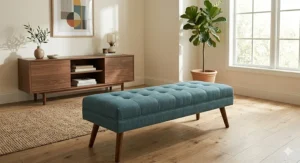
Common Mistakes When Buying Tufted Benches (And How to Avoid Them)
Mistake #1: Choosing Velvet for High-Traffic Households The appeal of velvet tufted benches is undeniable — that soft pile catches light beautifully and signals luxury. But velvet crushes under pressure, shows every spill, and becomes a magnet for pet hair. If you have children under 12, dogs or cats, or use the bench daily for putting on shoes, synthetic leather or performance fabrics will serve you better. Save velvet for guest rooms or formal living spaces that see occasional rather than daily use.
Mistake #2: Ignoring Weight Capacity Relative to Actual Use A 250-pound weight capacity sounds adequate until you realize it means roughly two average adults sitting side by side. If you envision three teenagers squeezing onto the bench during game night, or you plan to use it as a step stool to reach high shelves (not recommended, but people do it), look for 300+ pound ratings. The difference between 250 and 330 pounds often comes down to frame reinforcement that costs manufacturers $15-20 extra but saves you from buying a replacement in 18 months.
Mistake #3: Overlooking Assembly Requirements “Some assembly required” ranges from “attach four pre-drilled legs in five minutes” to “decipher poorly translated instructions while wrestling with misaligned hardware for 90 minutes.” Check customer reviews specifically for assembly comments. Photos of instruction manuals in review sections tell you more than product descriptions ever will. If multiple reviewers mention “difficult assembly,” believe them — especially if you lack basic tools or furniture assembly experience.
Mistake #4: Buying Storage Benches Without Measuring Storage Needs That 50-inch bench looks spacious until you realize the actual interior compartment, once you account for the frame thickness and cushion depth, holds less than you expected. Before buying a storage bench, measure the items you plan to store. Folded blankets, throw pillows, and board games all have different spatial requirements. Interior dimensions should be at least 15% larger than your current storage pile to avoid the frustration of forcing lids closed.
Mistake #5: Matching Everything Too Perfectly New furniture buyers often try matching every piece exactly — same wood finish, same fabric color, same style. This creates showroom uniformity that feels sterile in actual homes. Your tufted bench should coordinate with existing furniture, not clone it. If your bedroom features walnut nightstands, a bench with espresso legs creates visual interest through subtle variation. If your sofa is solid gray, a patterned or textured bench adds dimension rather than disappearing into the background.
Mistake #6: Forgetting About Cleaning and Maintenance Access Tufted upholstery’s intricate stitching creates beautiful patterns and dozens of crevices where dust, crumbs, and pet hair accumulate. Before buying, consider whether you have the tools and inclination to maintain it. Vacuum attachments with upholstery brushes, handheld vacuums for weekly maintenance, or professional cleaning services for deep stain removal — these aren’t theoretical concerns. They’re practical realities of owning tufted furniture. If you’re buying the bench because it looks good in a photo but you hate cleaning, you’re setting yourself up for disappointment.
Tufted Bench Maintenance: Keeping Your Investment Looking Fresh
Weekly Maintenance (5 Minutes) Run a handheld vacuum or your vacuum’s upholstery attachment across the tufted surface, paying special attention to the crevices where dust settles. Work in the direction of the fabric grain for velvet, in any direction for synthetic leather. This weekly touch prevents the gradual buildup that makes deep cleaning necessary. Wipe wooden or metal legs with a dry microfiber cloth to remove dust and maintain finish shine.
Monthly Deep Cleaning Remove any cushions or pillows if applicable. Vacuum thoroughly, then use a soft-bristled brush to work into the tufting patterns. For velvet, brush in one direction to maintain consistent pile direction. For synthetic leather, wipe with a slightly damp cloth and dry immediately to prevent water marks. Check hinge hardware on storage benches — a drop of furniture oil on squeaky hinges now prevents noise problems later.
Stain Treatment Protocol Act immediately when spills happen. Blot — never rub — liquid spills with a clean, white cloth. Rubbing pushes stains deeper into fibers and spreads them wider. For synthetic leather, a damp cloth handles most spills. For fabric upholstery, check manufacturer cleaning codes: “W” means water-based cleaners are safe, “S” requires solvent-based products, “WS” allows either, and “X” means professional cleaning only. When in doubt, test any cleaning solution on an inconspicuous area first.
Dealing with Pet Hair Rubber gloves or pet hair removal tools specifically designed for upholstery work better than standard vacuuming. Dampen a rubber glove slightly, then run your hand across the fabric — pet hair clings to the rubber. Pet hair removal stones or specialized tools create static that lifts hair from tufted crevices. For severe pet hair issues, consider throwing a washable blanket over the bench in high-traffic seasons, removing and laundering it weekly.
Extending Lifespan Rotate how you use the bench if possible — sit in different spots rather than always compressing the same area. This distributes wear more evenly across the cushioning. Avoid placing tufted benches in direct sunlight, which fades fabric and degrades materials over time. If you must position near windows, UV-filtering window film protects both the bench and other furniture. Keep sharp objects (keys, belt buckles) from scratching surfaces when you sit down or stand up.
Tufted Benches vs. Standard Benches: When Extra Cost Makes Sense
The tufted bench in your shopping cart costs $150. The similar-sized bench without tufting costs $90. What are you really paying for with that $60 difference, and does it justify the premium?
Aesthetic Value and Visual Interest Tufting transforms a flat upholstered surface into dimensional art. The shadows created by button indentations or channel grooves change throughout the day as light shifts, creating subtle visual interest that plain benches can’t match. In rooms where the bench serves as a focal point — entryways, bedroom ends, living room accents — this aesthetic elevation justifies the cost. In purely functional settings where the bench will be hidden under coats or used exclusively as a step stool, that premium becomes harder to defend.
Comfort Perception (Not Always Reality) Tufted benches create the impression of luxury and comfort through their association with high-end furniture. However, the actual comfort difference between tufted and non-tufted upholstery depends on foam density and cushion construction, not the tufting itself. A well-constructed non-tufted bench with high-density foam often feels more comfortable than a tufted bench using cheap foam, despite the latter’s elegant appearance. If comfort for extended sitting matters, evaluate foam specifications rather than assuming tufting equals better seating.
Durability Considerations The tufting process creates stress points in fabric and stitching that plain upholstery doesn’t have. Over years of use, buttons can loosen, stitching can pull, and the indentations can become less defined as foam compresses. Quality tufted benches use reinforced stitching techniques that minimize these issues, but budget tufted options sometimes sacrifice structural integrity for aesthetic appeal. A well-made plain bench might outlast a poorly-constructed tufted one, making the higher initial cost a false economy.
Cleaning and Maintenance Burden Tufted surfaces require more frequent and detailed cleaning than smooth upholstery. The crevices trap debris that vacuum attachments struggle to reach completely. If you’re comparing benches for a mudroom or high-traffic entry where dirty shoes, wet coats, and general chaos predominate, the simpler cleaning requirements of non-tufted benches might outweigh aesthetic considerations. Save tufted pieces for controlled environments where maintenance becomes manageable rather than overwhelming.
Resale and Timelessness Tufted furniture maintains a classic appeal that transcends temporary trends. When you eventually replace or resell the bench, tufted designs typically command better secondary market prices than plain alternatives. This residual value partially offsets the initial premium. If you move frequently or update furniture every 3-5 years, tufted pieces hold value better during transitions.
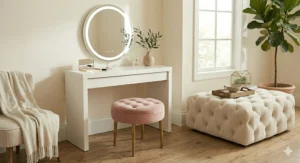
❓ FAQ: Your Tufted Bench Questions Answered
❓ How much weight can a tufted bench typically support?
❓ What's the difference between button tufted and channel tufted benches?
❓ Can tufted benches work in small apartments?
❓ How do I remove pet hair from velvet tufted benches?
❓ Are storage benches harder to assemble than regular tufted benches?
Conclusion: Finding Your Perfect Tufted Bench Match
After examining dozens of options and analyzing hundreds of customer experiences, one truth emerges: the best tufted bench isn’t the most expensive or the most popular — it’s the one that aligns with your specific space, lifestyle, and priorities.
For king-size bedroom owners needing substantial storage, the KEPOOMAN 67.9″ bench delivers volume and visual presence worth the premium. Budget-conscious buyers furnishing smaller spaces find exceptional value in the Amazon Basics ottoman or 24KF velvet bench. Families prioritizing durability and easy maintenance should gravitate toward the SONGMICS synthetic leather model with its impressive weight capacity and wipe-clean surface. Design enthusiasts creating cohesive French country interiors won’t find better aesthetic alignment than the Cozyman vintage bench with its carved legs and diamond tufting.
The furniture market in 2026 offers unprecedented variety, but that abundance becomes overwhelming without a clear decision framework. Start by measuring your space and defining your primary use case — storage, seating, or aesthetics. Match materials to your maintenance tolerance and household composition. Verify weight capacity against actual use patterns rather than theoretical needs. And remember that perfect coordination with existing furniture creates showroom sterility; intentional variation creates livable elegance.
Whether you choose velvet luxury or practical synthetic leather, storage functionality or minimalist design, the right tufted bench transforms utilitarian seating into an intentional design statement. These seven options represent the current market’s best balance of quality, value, and real-world performance — now you’re equipped to choose the one that belongs in your home.
Recommended for You
- 7 Best End of Bed Benches with Storage for 2026
- 7 Best Upholstered Bench for Living Room: Expert Guide 2026
- 7 Best Velvet Ottomans That Transform Your Living Space in 2026
Disclaimer: This article contains affiliate links. As an Amazon Associate, I earn from qualifying purchases. If you purchase products through these links, we may earn a small commission at no additional cost to you.
✨ Found this helpful? Share it with your friends! 💬🤗
