
In This Article
Here’s a fact that stops most parents cold: a dresser doesn’t need to be knocked over on purpose to hurt a child. It just needs an open drawer, a curious toddler, and about three seconds. That’s the whole recipe. If you’re shopping for a kids dresser with anti-tip safety features right now, you’re not being paranoid — you’re doing the single most overlooked piece of childproofing in the entire house.

This guide skips the marketing fluff and gets straight to what actually matters: which dressers pass real safety testing, which anti-tip mechanisms genuinely work versus which ones are decorative, and how to shop smart under the newer federal rules governing kids’ furniture. We researched real products, real specs, and real aggregated reviewer sentiment — no invented five-star quotes, no imaginary “I tested this for six months” claims. Just an honest breakdown built on what’s verifiable.
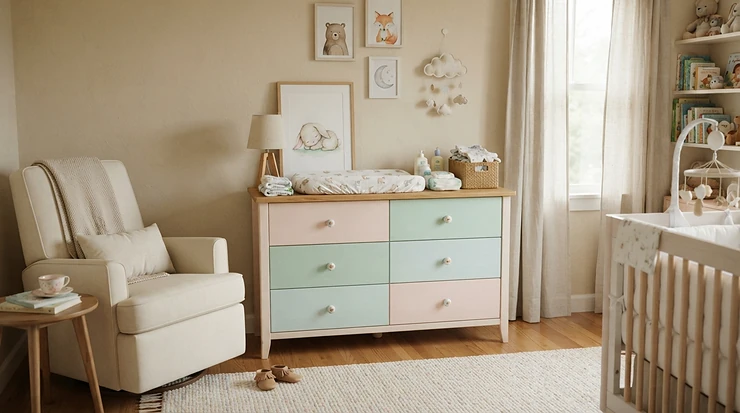
A kids dresser with anti-tip safety features is a chest of drawers engineered (and typically tested) to resist forward tipping under a child’s climbing weight, usually through interlocking drawer mechanisms, weighted bases, low centers of gravity, and an included wall-anchoring kit. Since 2023, dressers sold new in the U.S. must meet the ASTM F2057-23 stability standard enforced by the CPSC under the STURDY Act — but “compliant on paper” and “actually anchored to your wall” are two very different levels of safety, and we’ll get into exactly why that gap matters.
Below you’ll find seven real, currently available dressers spanning budget to premium, a breakdown of what CPSC compliance really means, honest talk about wall anchor kits, and a decision framework so you’re not just guessing by the time you check out.
Quick Comparison Table
| Dresser | Drawers | Anti-Tip Feature | Price Range | Best For |
|---|---|---|---|---|
| Graco Teddi 6-Drawer Dresser | 6 | Interlocking one-drawer system + anchor kit | $250–$350 | Toddlers who climb everything |
| DaVinci Jayden 6-Drawer Dresser | 6 | GREENGUARD Gold + anchor kit | $300–$400 | Nurseries with air-quality concerns |
| Storkcraft Rio 6-Drawer Dresser | 6 | Safety interlocking drawers | $220–$320 | Budget-conscious families wanting 6 drawers |
| Child Craft Denman Double Dresser | 6 | ASTM F2057-23 tested + anchor kit | $280–$380 | Families who want documented compliance |
| Child Craft Surrey Hill Dresser | 3 | Anchor kit included | $180–$260 | Small rooms, budget shoppers |
| Sorelle Farmhouse 4-Drawer Dresser | 4 | JPMA/CPSC/ASTM tested + anchor kit | $260–$360 | Full nursery-set coordination |
| DaVinci Charlie 3-Drawer Dresser | 3 | GREENGUARD + anchor kit | $150–$230 | Tightest budgets, smallest spaces |
Looking at this lineup, the pattern is clear: every dresser worth buying in 2026 ships with some anti-tip hardware, but the real differentiator is the mechanism doing the heavy lifting. The Graco Teddi 6-Drawer Dresser and Storkcraft Rio 6-Drawer Dresser rely on interlocking drawer engineering that makes it physically impossible to yank open more than one drawer at once — a meaningfully stronger defense than a strap alone. Budget shoppers eyeing the DaVinci Charlie 3-Drawer Dresser aren’t sacrificing safety, just drawer count and finish options.
💬 Found a favorite already? Bookmark this page — you’ll want the comparison table again when you’re ready to buy.
Top 7 Kids Dressers With Anti-Tip Safety Features: Expert Analysis
1. Graco Teddi 6-Drawer Dresser — one-drawer-at-a-time interlock system
What makes the Graco Teddi 6-Drawer Dresser stand out isn’t just that it includes a tip-over restraint kit — plenty of dressers do that now — it’s the interlocking drawer track that mechanically prevents a second drawer from opening while another is already out. That single design choice eliminates the classic “climbing staircase” scenario where a kid pulls open three drawers to use as steps.
The dresser spans roughly four feet wide with six drawers on smooth-gliding, pre-installed tracks, which also means assembly skips one of the more annoying flat-pack steps. Based on the spec comparison against similarly priced six-drawer units, the Teddi’s interlock system is the more robust engineering solution — a strap-only competitor still lets a determined toddler pull open every drawer, it just can’t tip forward while anchored. Here, the climbing hazard itself is reduced before the anchor kit even comes into play.
Reviewers consistently note fast shipping and accurate color representation, with a few mentioning drawers that run a bit noisier than expected and assembly taking a few hours solo. Neither is a safety issue, just a livability note.
Pros:
- ✅ Interlocking system blocks multiple drawers opening at once
- ✅ Pre-installed drawer tracks speed up assembly
- ✅ Includes a full tip-over restraint kit in the box
Cons:
- ❌ Drawers reportedly louder than some competitors
- ❌ Assembly is manageable but time-consuming alone
Priced in the $250–$350 range depending on finish, the Teddi lands as strong mid-tier value — you’re paying a modest premium over basic strap-only dressers for a meaningfully smarter safety mechanism.

2. DaVinci Jayden 6-Drawer Baby Dresser — GREENGUARD Gold air-quality certification
The DaVinci Jayden 6-Drawer Baby Dresser leads with something most anti-tip discussions skip entirely: what the furniture is actually made of and finished with. GREENGUARD Gold certification means independent testing has verified low chemical emissions, which matters more than people realize in a room where a kid spends 10+ hours a day breathing close to the furniture.
On the tip-over side, it ships with a furniture restraint kit and extra-deep, full-extension drawers — a detail that’s easy to gloss over but actually affects stability. Full-extension drawers pulled all the way out shift the dresser’s center of gravity forward more than partial-extension drawers, so pairing that feature with a properly installed wall anchor isn’t optional here, it’s the point.
Based on the spec sheet, the smooth-glide drawer mechanism reduces the jerking motion that can rock an unanchored dresser — small detail, real physics. What most buyers overlook about deep-drawer dressers like this one is that the extra storage capacity is genuinely useful for growing kids who accumulate more clothes than the drawer count suggests.
Pros:
- ✅ GREENGUARD Gold certified for low chemical emissions
- ✅ Extra-deep, full-extension drawers for real storage capacity
- ✅ Anti-tip restraint kit included in the box
Cons:
- ❌ Full-extension drawers increase forward-tip risk if unanchored
- ❌ Premium certification pushes price above basic competitors
Expect a price in the $300–$400 range. For nurseries where air quality is already a priority — think allergy-prone families — the certification alone can justify the gap over cheaper alternatives.
3. Storkcraft Rio 6-Drawer Dresser — GREENGUARD Gold with interlocking drawers at a lower price point
The Storkcraft Rio 6-Drawer Dresser is the rare unit that pairs GREENGUARD Gold certification and a safety interlocking drawer system without climbing into premium pricing territory. That combination — air-quality testing plus mechanical tip prevention — usually costs more, so seeing both here is the standout.
Six drawers on a double-wide frame give it serious capacity, and the interlocking mechanism means the same one-drawer-open logic found on pricier competitors. What most buyers overlook is that interlocking systems also tend to reduce wear on drawer slides over time, since you’re not routinely yanking multiple loaded drawers open at once — a small long-term durability bonus nobody puts in the marketing copy.
Based on aggregated buyer sentiment for the Rio collection, the finish quality reads as solid for the price tier, with the honest caveat that any engineered-wood dresser in this range will show more wear over a decade than solid hardwood alternatives costing two or three times as much.
Pros:
- ✅ Interlocking drawers plus GREENGUARD Gold at a mid-range price
- ✅ Six drawers for genuinely useful storage capacity
- ✅ Coordinates with matching Storkcraft nursery collections
Cons:
- ❌ Engineered wood construction, not solid hardwood
- ❌ Larger footprint needs adequate wall space to anchor properly
At $220–$320, this is arguably the best value-per-safety-feature dresser in the lineup — you’re not paying a premium tax for the interlock system the way you would elsewhere.
4. Child Craft Denman 6-Drawer Double Dresser — documented ASTM F2057-23 compliance
If you want paperwork, not just marketing language, the Child Craft Denman 6-Drawer Double Dresser explicitly states ASTM F2057-23 compliance in its specs — the exact mandatory stability standard the CPSC now enforces under the STURDY Act. That’s a meaningfully different claim than a vague “anti-tip design” bullet point.
At 55 inches wide and just under 34 inches tall, the Denman’s proportions already favor stability — a wider, lower profile naturally resists tipping better than a tall, narrow one, independent of any added hardware. Here’s what the spec sheet won’t tell you outright, but the math behind the standard implies: wider-based furniture requires more forward force to tip, so the Denman’s dimensions are doing real structural work before the anchor kit is even installed.
The included anti-tip kit adds the required secondary layer, and Child Craft’s broader Denman collection lets you coordinate a matching nightstand or changing table if you’re furnishing a full room at once.
Pros:
- ✅ Explicitly ASTM F2057-23 tested and documented
- ✅ Wide, low-profile design aids inherent stability
- ✅ Anti-tip kit included, matches coordinating collection pieces
Cons:
- ❌ Larger footprint may not suit smaller bedrooms
- ❌ Six-drawer capacity comes with a heavier overall unit to anchor
Priced around $280–$380, this is the pick for parents who specifically want to see the safety standard named, not implied.
5. Child Craft Surrey Hill 3-Drawer Dresser — budget-friendly with mid-century styling
Not every family needs six drawers, and the Child Craft Surrey Hill 3-Drawer Dresser proves the smaller footprint doesn’t mean skipping safety hardware. At 42 inches wide with a geometric, mid-century-modern front, it’s built for rooms where floor space is the real constraint — apartments, shared bedrooms, nurseries doubling as guest rooms.
The anti-tip kit ships included, and the baby-safe, non-toxic finish checks the same air-quality box pricier dressers charge extra for. Based on the spec comparison, a three-drawer unit inherently carries less top-heavy risk than a six-drawer tower simply because there’s less mass and drawer travel distance stacked vertically — smaller isn’t just cheaper here, it’s marginally safer by design, assuming equal anchoring.
Reviewers highlight the diamond-pattern drawer fronts as a style standout that reads more expensive than the price suggests, which lines up with the “elevated detailing” positioning in the product’s own spec sheet.
Pros:
- ✅ Compact 3-drawer footprint fits small or shared rooms
- ✅ Anti-tip kit and non-toxic finish included standard
- ✅ Mid-century styling at a genuinely budget price point
Cons:
- ❌ Limited drawer count won’t suit larger clothing volumes
- ❌ Fewer color options than larger Child Craft collections
At $180–$260, this is one of the more approachable entry points into a properly anti-tip-equipped dresser.

6. Sorelle Farmhouse 4-Drawer Dresser — full nursery-set coordination with triple-lab testing
The Sorelle Farmhouse 4-Drawer Dresser is built to be part of a matched set — it’s sold alongside a convertible crib and changing table — but it holds up fine as a standalone piece too. What earns it a spot here is the testing language: Sorelle states its furniture is verified against JPMA, CPSC, and ASTM standards by third-party labs, which is a more thorough disclosure than “meets safety standards” marketing copy typically offers.
Full-extension glider drawers make daily use easier, and the included anti-tip kit secures it to the wall using standard hardware. Based on the spec comparison, what most buyers overlook about farmhouse-style dressers like this one is that the weathered-finish aesthetic often signals a slightly heavier engineered-wood build than glossy modern finishes — more mass low in the frame is, again, a stability asset rather than just a style choice.
If you’re furnishing an entire nursery at once, the ability to add a matching changing table later without a mismatched look is a genuine convenience the standalone dressers on this list can’t offer.
Pros:
- ✅ Third-party tested against JPMA, CPSC, and ASTM standards
- ✅ Coordinates with matching crib and changing table
- ✅ Full-extension drawers with included anti-tip kit
Cons:
- ❌ Four-drawer capacity is modest for older kids’ wardrobes
- ❌ Best value requires buying into the full matched set
Standalone pricing runs $260–$360; bundled as part of the 3-piece set, per-item value improves noticeably.
7. DaVinci Charlie 3-Drawer Dresser — the tightest budget option that still checks every safety box
Rounding out the list, the DaVinci Charlie 3-Drawer Dresser proves that “cheapest” and “unsafe” aren’t the same word. At roughly 35x20x34 inches, it’s compact, GREENGUARD certified, and ships with the anti-tip kit standard — no safety features cut to hit the lower price.
It’s a genuinely no-frills piece: wooden double chest, easy assembly, nothing fancy. Based on the spec comparison against the rest of this list, what you’re trading for the lower price is drawer count and premium finish options, not stability engineering — the same wall-anchoring requirement and GREENGUARD testing apply here as on dressers costing twice as much.
For a first apartment nursery, a guest-room-turned-kid’s-room, or simply a family stretching a tight furniture budget across a full room, this is the pragmatic pick — assuming three drawers cover the wardrobe volume you’re working with.
Pros:
- ✅ GREENGUARD certified despite the entry-level price
- ✅ Anti-tip kit included, no safety features cut
- ✅ Compact size fits nearly any bedroom layout
Cons:
- ❌ Only three drawers limits long-term storage
- ❌ Minimal finish and color variety compared to pricier lines
At $150–$230, this is the lowest-cost entry point on the list without compromising on the core anti-tip requirement.
Practical Usage Guide: Installing and Maintaining Your Anti-Tip Kit
Buying a compliant dresser is step one. An anchor kit sitting unused in the box does exactly nothing — and this is the step families skip most often. Setup takes about five minutes but the details matter more than people assume.
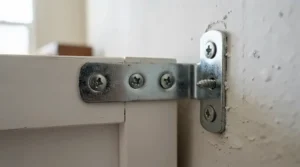
Start by locating a wall stud with a stud finder rather than relying on drywall anchors alone; drywall-only mounting can fail under sustained tension from a climbing child, while a stud connection holds real structural weight. Position the dresser against the wall first, then mark the anchor point through the pre-drilled bracket holes on the back panel — most kits include an L-bracket for the furniture side and a matching wall bracket connected by a nylon strap or metal cable. Tighten both sides fully, then physically test it: push the top of the dresser forward with real pressure. It shouldn’t shift more than an inch.
Recheck the anchor every few months, especially after moving furniture for cleaning — straps loosen, screws back out of drywall over time, and kids grow heavier, adding more force to the same connection point. If you don’t have a stud where the dresser sits, screw-free options like tension-mounted brackets exist, though a stud connection remains the gold standard whenever it’s available. Finally, keep heavier items in lower drawers and skip storing anything tempting — toys, remotes, tablets — on top, since that’s often what triggers the climbing in the first place.
Real-World Scenarios: Matching the Right Dresser to Your Family
The new-nursery family with air-quality concerns. If you’re furnishing a nursery from scratch and have any allergy or sensitivity history in the family, prioritizing GREENGUARD Gold certified options like the DaVinci Jayden 6-Drawer Baby Dresser or Storkcraft Rio 6-Drawer Dresser addresses a concern basic anti-tip compliance doesn’t cover on its own.
The budget-stretched family furnishing a whole room. When the dresser is one line item in a longer shopping list — crib, changing table, glider — a lower-cost, fully compliant option like the DaVinci Charlie 3-Drawer Dresser or Child Craft Surrey Hill Dresser frees up budget elsewhere without cutting the safety corner that actually matters.
The family with an active climber already pulling drawers open. If you’ve already caught your toddler using open drawers as a ladder, the interlocking mechanisms on the Graco Teddi 6-Drawer Dresser or Storkcraft Rio 6-Drawer Dresser solve the root behavior, not just the tip-over consequence — pair either with an immediate wall anchor install, today, not this weekend.
Problem → Solution: Common Anti-Tip Dresser Headaches, Solved
Problem: No wall stud lines up with the dresser’s ideal placement. Solution: use a zero-screw, adhesive-mounted anti-tip kit designed for stud-free walls, or relocate the dresser a few inches to align with the nearest stud — a small furniture-arrangement compromise beats a compromised anchor point.
Problem: You’re renting and can’t drill into walls. Solution: many anti-tip kits use minimal picture-hook-sized holes rather than full screw anchors, and some tension-based systems require no wall penetration at all — check kit specs before assuming anchoring is impossible in a rental.
Problem: The dresser wobbles even after anchoring. Solution: check that all four feet or the base panel sit flush on the floor; an uneven floor can make an anchored dresser feel unstable even though the anchor itself is holding — furniture shims solve this in minutes.
Problem: Kids climb even on anchored furniture. Solution: anchoring prevents tipping, not climbing — pair it with keeping tempting items off the top surface and having a direct conversation with kids about why dressers aren’t stairs.
Problem: You bought secondhand furniture with no anti-tip kit included. Solution: universal anti-tip kits are sold separately and fit most standard dresser and bookcase backs — don’t assume older furniture is exempt just because it predates the current standard.
How to Choose a Kids Dresser With Anti-Tip Safety Features
- Confirm ASTM F2057-23 compliance in the actual product specs, not just implied “safety-tested” language — look for the standard named explicitly.
- Check whether the anti-tip kit ships included versus sold separately, since it’s a required companion, not an optional accessory.
- Favor wider, lower-profile designs over tall, narrow towers — the base-to-height ratio affects inherent tip resistance before any hardware is added.
- Look for interlocking drawer mechanisms if your child is already an active climber, since they block the multi-drawer “staircase” scenario directly.
- Match drawer count to actual wardrobe volume, not aspirational storage — an oversized dresser you never fill still needs the same wall-anchoring commitment.
- Verify the finish is low-VOC or GREENGUARD certified if air quality is a household priority, particularly for infant nurseries.
- Confirm a wall stud is available near your intended placement before purchase, or budget for a screw-free anchor alternative.
CPSC Compliant Dresser: What “STURDY Act Compliant” Really Means
The phrase gets thrown around loosely, so here’s the precise version: the Stop Tip-overs of Unstable, Risky Dressers on Youth (STURDY) Act passed Congress in December 2022, and the CPSC adopted ASTM F2057-23 as the mandatory stability standard enforcing it. As of September 1, 2023, manufacturers are required to make dressers and other clothing storage furniture pass strong safety and stability tests and come with a furniture anchor.
Here’s the catch most shoppers miss: that mandate only applies to clothing storage furniture manufactured after September 1, 2023 — meaning secondhand dressers, hand-me-downs, and older retail stock can legally still be sold without meeting the newer standard. If you’re buying used or inheriting furniture, “it’s from a reputable brand” isn’t the same guarantee it is on something manufactured this year.
Practically, “CPSC compliant” on a current listing should mean the dresser passed forward-stability, drawer-extension, and weight-load testing under ASTM F2057-23, and shipped with a functional anchor kit. Every dresser on this list meets that bar. What it does not mean is that anchoring is optional — the standard assumes the anchor is installed, and testing bodies and advocacy groups alike keep reiterating that the furniture standard is a floor, not a substitute for actually screwing the kit into your wall.
Wall Anchor Kits: Do You Still Need One?
Short answer: yes, always, even on a dresser marketed as inherently anti-tip. The interlocking drawer systems and weighted bases you’ll see across this list reduce risk, but none of them replace the anchor — they supplement it. CPSC’s own public messaging has been consistent on this for a decade: “anchor TVs and furniture, such as bookcases and dressers, securely to the wall” remains the core, unqualified recommendation regardless of a piece’s built-in features.
The campaign’s track record backs up why it’s worth the five minutes. Campaign efforts contributed to a nearly 50-percent decline in tip-over-related injuries and deaths in the U.S. since the Anchor It! initiative launched in 2015 — a genuinely significant public-health win from a device that typically costs under $20.
If a dresser you already own didn’t come with a kit — common on older or secondhand pieces — universal anti-tip anchor kits are sold separately and generally fit standard dresser, bookcase, and cabinet backs. Multi-packs covering several pieces of furniture in one purchase tend to be the more economical route if you’re anchoring an entire room at once rather than buying single kits repeatedly.
Anti-Tip Dresser vs Traditional Dresser: The Real-World Difference
| Factor | Anti-Tip Dresser | Traditional/Pre-2023 Dresser |
|---|---|---|
| Stability Testing | ASTM F2057-23 tested | May predate mandatory standard |
| Drawer Mechanism | Often interlocking (one-at-a-time) | Typically unrestricted opening |
| Included Hardware | Anchor kit standard | Often sold separately, if at all |
| Best For | Households with young children | Adult-only spaces, no climbing risk |
The difference isn’t cosmetic — it’s mechanical and, in the worst case, medical. A traditional dresser can still be made reasonably safe with a separately purchased anchor kit, but you’re relying entirely on that single point of hardware doing all the work, whereas a purpose-built anti-tip dresser like the Graco Teddi 6-Drawer Dresser stacks multiple defenses: base geometry, interlocking drawers, and the anchor together. For any household with a child under roughly six years old, that layered approach is worth the modest price difference over unmodified older furniture.
Features That Actually Matter (And Those That Don’t)
Actually matters: documented ASTM F2057-23 testing, an included functional anchor kit, wide-base-to-height ratio, and interlocking drawer mechanisms for active climbers. These directly reduce tip-over physics.
Doesn’t move the needle much: soft-close drawer glides (nice, but a convenience feature, not a safety one), decorative hardware finishes, and marketing phrases like “childproof” without a named standard behind them — that word carries no regulatory weight on its own. Drawer count and finish color are legitimate style and storage decisions, but they’re not safety differentiators, so don’t let a prettier dresser without documented testing win out over a plainer one that has it.
Common Mistakes When Buying an Anti-Tip Dresser for a Kids Room
The single biggest mistake is buying a compliant dresser and then never installing the included anchor kit — the CPSC’s own footage-based PSA campaign exists specifically because so many tip-overs happen in homes where the hardware sat unused in a drawer. A close second: assuming a heavier or larger dresser is automatically safer, when actually a wide, low unit resists tipping better than a tall, narrow one regardless of overall weight. Shoppers also frequently skip checking whether their intended wall location has an accessible stud, only to discover mid-installation that they need a different anchoring approach entirely. And finally, treating secondhand or hand-me-down dressers as automatically safe simply because they’re solid wood — build quality and tip-over compliance are separate questions, and older furniture may predate the current stability standard altogether.
Child Bedroom Safety Standards Beyond the Dresser
Dresser stability is one piece of a broader child-safety picture in bedrooms. Bookcases, TV stands, and even bedside tables carry similar tip-over risk profiles and benefit from the same anchoring logic, particularly since advocacy from groups like Kids In Danger helped support the original push for the STURDY Act after years of tracking furniture-related recalls and injuries — the organization’s history is worth a look if you want the fuller advocacy backstory behind today’s standards.
Beyond furniture specifically, broader bedroom safety practices worth layering in include keeping cribs and beds away from windows and blind cords, securing any wall-mounted or freestanding TVs independently of the dresser they might sit on, and periodically walking the room at a toddler’s eye level to spot climbing temptations an adult perspective misses entirely. None of this replaces anchoring the dresser — it’s additive, not a substitute.

Frequently Asked Questions
❓ Is a dresser with anti-tip features required by law?
❓ How do I know if my current dresser is CPSC compliant?
❓ Do anti-tip dressers still need to be anchored to the wall?
❓ What's the difference between a wall anchor kit and an anti-tip dresser?
❓ Can I buy a wall anchor kit separately if my dresser didn't come with one?
Conclusion
The honest takeaway here is refreshingly simple: buying a kids dresser with anti-tip safety features solves maybe half the problem, and installing the anchor kit that comes in the box solves the rest. Every dresser on this list — from the budget-friendly DaVinci Charlie 3-Drawer Dresser to the fully documented Child Craft Denman 6-Drawer Double Dresser — clears the current ASTM F2057-23 bar, so the decision genuinely comes down to your room size, storage needs, and style preference rather than safety trade-offs.
What shouldn’t be negotiable is the five-minute installation step. A dresser sitting unanchored against a wall, no matter how well-engineered, is still relying on gravity and hope. Pick the piece that fits your space and budget from this list, then commit to anchoring it the same day it’s assembled — not next weekend.
Recommended for You
- Tall Narrow Dresser For Closet-Free Bedrooms: 7 Smart Picks (2026)
- Dresser With Mirror For Small Spaces: 7 Best Picks (2026)
- 7 Best Dressers Under $200 For Apartment Bedrooms (2026)
Disclaimer: This article contains affiliate links. As an Amazon Associate, I earn from qualifying purchases. If you purchase products through these links, we may earn a small commission at no additional cost to you.
✨ Found this helpful? Share it with your friends! 💬🤗
